





Internet, Activism, and the New Media

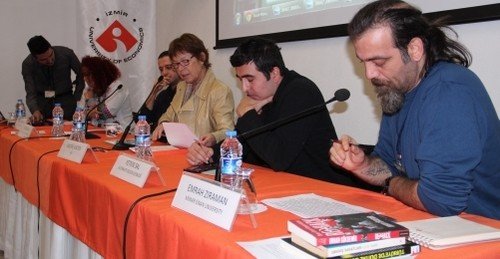


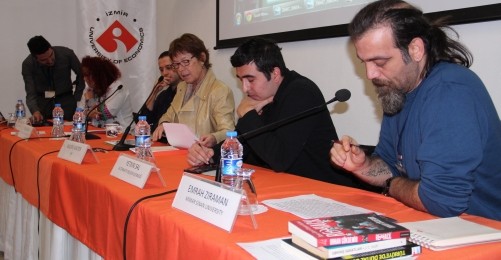
The Izmir Economy University has organised a conference on “Social Movements, Media and Politics”, supported by the Friedrich Ebert Foundation. On the second day of the conference, there was discussion of the protest movement against hydro-electric power plants, the striking Tekel workers, the online literature fanzine “Cin Ayşe” and the hacker movement Redhack, as well as the new types of media.
In the first session, chaired by Nadire Mater, the Project Advisor of the Independent Communication Network BIA, activist Anita Sezgener discussed “Cin Ayşe” as an example of independent media.
Since 2008, the fanzine with an interest in culture, art and literature has been published twice a year. It does not accept advertisement.
Most of the writers are women and visibility of LGBT individuals is considered important. In the last few issues some men have been writing, too. Sezgener hopes that “Cin Ayşe” will contribute to convincing people in Turkey that not only men can be poets.
Phorm: An eye in the computer
Then Yetin Sal from the Alternative IT Association spoke about the “phorm” system that has been banned in England but is used by the Internet provider ttnet in Turkey.
“We can liken the DPI system on the Internet to a postperson first opening letters and then posting them. In EU countries, this system is forbidden. The phorm system says that they are using DPI for advertisement purposes. This system was banned in England and has come to Turkey.”
“Imagine that there is an eye in your computer that records any sites you go to and then sends you advertisement accordingly. After we filed a complaint, ttnet was forced to pay compensation. However, somehow, and we are not sure how, the system has been activated again.”
Organised and individual internet resisters
Then Emrah Zıraman from the 9th September University and Altuğ Akın from the Izmir Economy University discussed “three forms of online resistance” in Turkey. Zıraman pointed out that the Redhack group, founded in 1997, has been able gain followers despite the increased pressure by the government. Because the Marxist group focuses on similarities and not differences between revolutionaries, it has become more popular.
Redhack has become more visible not only through attacks, but also by leaking the scenarios of the economic and political powers. Initially tried for crimes in information technology, Redhack now faces accusations of terrorist crime, as the government has redefined the crime.
While Redhack is illegal, the Alternative IT Association is legal. Akın discussed its academic, legal and street protests.
When Youtube was banned over a long time in Turkey, so Akın, this turned many individuals from passive to active users because they had to find indirect ways of accessing the site.
Alternative voices to the mainstream media
In the second session of the day Aysun Akan and Pantelis Vatikiotis from the Izmir Economy University spoke about “local resistance to hydro-electric power plants”.
According to Akan, the mainstream media portrayed hydro-electric power plants as necessary for Turkey to decrease its dependence on other energy providers and to continue developing. However, no mention was made of the locals’ resistance to the power plants or the negative impact on the environment.
Vatikiotis then introduced a variety of online protest platforms where local protesters have come together in order to mobilise and where the ecological effects of such power plants are discussed.
Reading the news from bloggers or on twitter
Erdinç Ergenç from the Dünya newspaper argued in his presentation that while television was still important, newspapers were losing influence as more and more people were reading the news on the Internet.
He estimates that by 2020, most people in the world will read the news from bloggers. Even if Turkey will lag behind a bit, already some journalists have hundreds of thousands of followers on twitter.
Burak Doğu from the Izmir Economy University compared the coverage that striking Tekel workers have received in the mainstream media and alternative websites. He found that the mainstream coverage was 20% positive, 20% negative and 60% neutral, but that websites covered the workers’ struggle mostly positively (80%) and sometimes neutrally (20%).
Alternative media could thus create a different agenda and become news sources in themselves. (NV/AG/KU)


Galatasaray Üniversitesi Gazetecilik mezunu. İstanbul Üniversitesi'nde Engellilik Araştırmaları Yüksek Lisansı yaptı. 2011-2017 yılları arasında bianet'te muhabir/editör olarak çalıştı. Greenpeace Akdeniz’de İletişim Sorumlusu olarak 4 yıl görev aldı. Şu anda Europe Beyond Coal (Türkiye ve Batı Balkanlar) İletişim Danışmanı.

Engineers Inspect Hasankeyf: Caves Damaged
Sexual, Physical Violence Against People With Disabilities Increase
Villagers on Watch in Çanakkale Against Geothermal Power Plants
Judge Replaced Ahead of Summary Judgement in Soma Trial
Most Miner Families Withdraw Complaint in Occupational Homicide Trial in Şirvan