TURKEY-ISRAEL RELATIONS
Diplomatic Tensions with Israel - Economics not Affected...




According to Bereket Kar, researcher on the field of the Middle-East, the role sharing regarding the Palestine negotiations is essential in the current dispute between Turkish and Israeli officials. However, referring to existing military and economic agreements as part of the Turkey-Israel relationships, researcher Kar emphasized that what the politicians have said is basically "public relations work" and populist politics.
Tensions during last week
Tensions rose after Prime Minister Recep Tayyip Erdoğan had commented on the Israeli bombing of Gaza last week. Erdoğan had declared that Israel was hazarding world peace by using exaggerated force against the Palestinians. The prime minster had criticized a breach of Lebanese air and sea space and Israel's concealing of details of its nuclear program. Israel said "The Turkish people are the last ones who should give us a lesson". The middle-east country protested against the negative image of Israeli soldiers conveyed by a Turkish television program. In reply, Israeli Deputy Foreign Minister Daniel Ayalon humiliated Ambassador Ahmet Oğuz Çelikkol in front of shooting TV cameras. After Turkey's reaction it was announced that the protest was justifiable whereas the style of it was inappropriate.
Military economics undisturbed
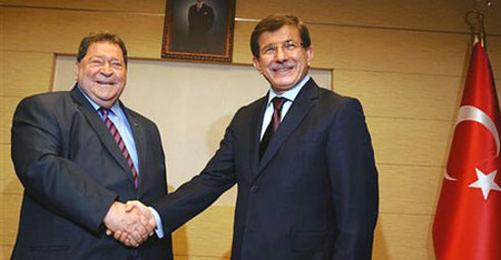
Israeli Defense Minister Ehud Barak will visit Turkey on 17 January. Haaretz newspaper recalled that three months ago ambassador Çelikkol had declared the aim of increasing trade volume with Israel to $ 8 billion. Turkey did not stop the Herons purchase process of unmanned military Heron planes and military transport planes.
Kar: Palestine is the essential problem
Regarding the latest incidents, Kar analyses the background and the positions of the involved countries and groups as follows:
Palestinian negotiations: The negotiations are stuck. Israel wants to agree on keeping the current situation whereas Palestine requires the withdrawal of existing settlements and the end of new settlements.
Not all Israelis agree with this approach. The Lieberman section of the government is in favour of an escalation of the tensions, another section expects to resolve the stuck peace negotiations by reaching an agreement with Egypt.
Hamas and Abbas: Hamas said that they do not recognize Israel and went up to Saudi Arabia. They accepted the large number of meetings concerning Egypt both for an agreement with Mahmud Abbas and for indirect negotiations with Israel.
Abbas' visit to Turkey was related to this as well. He intended to open doors for an initiative of the USA to resolve Turkey's restrains on Hamas and to solve deadlocks with Israel.
Turkey's popularity: The Arab-Islam world has recently gained a serious reputation in the eyes of the people in Turkish regions. They want this to continue. This can be achieved by opposing Israel and defending Gaza. Otherwise, the control will be snatched by Egypt. Erdoğan wants to give the impression as if Turkey sought a solution for the Palestinian question for a long time. He shows an attitude to play a role in the USA's plans for the Middle-East by strengthening his own position by mediating. At the same time he is in favour of receding the roles of the other Arab countries. Egypt and Saudi Arabia are bothered by this attitude.
Approaching Hamas: "If Islam consists of what Erdoğan is defending today, we are fully supporting it", Hamas said. A strengthening of Hamas does not serve Israel's purposes.
Egypt: Egypt also entirely objects this. Egypt has an agreement with Israel and is bothered as a country undertaking a mission allocated by the USA.
USA-Israel-Turkey: Israel is still resisting to the initiatives carried out by the USA in the Middle-East. The USA does not want a direct conflict with Israel or Turkey. Israel is trying to use this for its advantage. On the other hand military and economic relations between Turkey and Israel are being continued. Also the diplomatic relations will come back to normal. The USA has impact on both countries and does not prefer one of them in particular. Eventually, one of them is necessary for an influence in the Islamic world and the other one for the outposts in the Middle-East. (TK/VK)

INTERVIEW WITH LEYLA HALİD
"Hamas Cannot Win without Women"

Criticism on Military Partnership between Turkey and Israel
Call for Permanent Boycott of Israel for Palestine

Israel May Reject Turkish Arms Request

“Put Israel on Trial for War Crimes!”

Tens of Thousands Protested Against Israel's Offensive in Gaza

INTERVIEW WITH LEYLA HALİD
"Hamas Cannot Win without Women"
Criticism on Military Partnership between Turkey and Israel
Call for Permanent Boycott of Israel for Palestine
Israel May Reject Turkish Arms Request
“Put Israel on Trial for War Crimes!”
Tens of Thousands Protested Against Israel's Offensive in Gaza
KURDISH QUESTION
PKK Ceasefire to be Terminated on 31 October?
KCK CASE
Court Dismissed Request for Defence in Kurdish
7th Istanbul Gathering for Freedom of Thought

CONSTITUTIONAL AMENDMENTS
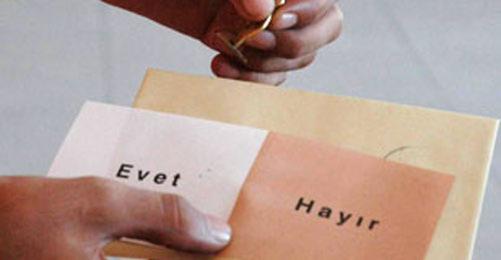
58 Percent Said "Yes" to Constitutional Reform Package
Rights Organizations 3 Years ahead of Foreign Minister