




"We Demand Kurdish at Local Level, not in Central Administration"
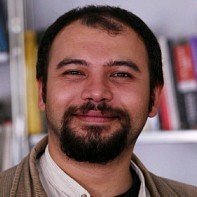
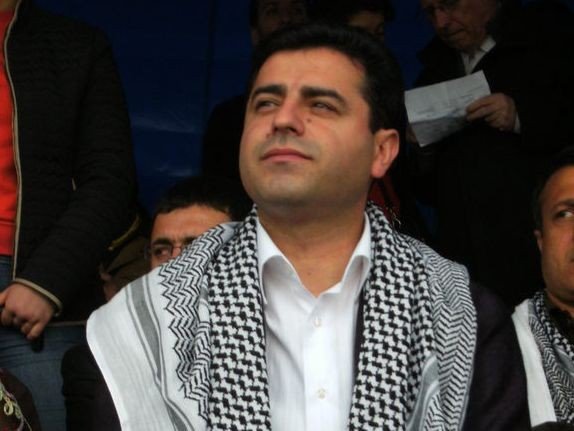



Head of the Democratic Society Party’s (DTP) parliamentary group, MP Selahattin Demirbaş evaluates his party’s co-chair Ahmet Türk’s speech in Kurdish and its repercussions. Former chair to Human Rights Association (IHD) Diyarbakır branch, lawyer Demirbaş declares that they don’t demand Kurdish to become the second official language of the republic. “It’s not realistic anyways” says Demirtas. He’s also positive about a report prepared by retired diplomats and generals, saying, “We welcome all efforts for a peaceful solution and we’re ready to discuss it”.
During Türk’s speech in Kurdish during DTP’s parliamentary group’s assembly last week, state television ceased on air broadcast and both the government and opposition parties condemned his act as provocative.
Demirtaş’s evaluations are as follows:
Türk’s speech unmasked the situation: The government proposes that improvements have been done regarding Kurdish language and the Kurdish issue in general. Although state television dedicated a channel to broadcasts in Kurdish, Türk’s speech draws reactions from all sides, including the General Staff. This shows that the improvements are not for those whose mother tongue in Kurdish, but rather for the state itself.
Generals shouldn’t get involved: General Staff spokesperson labels Türk’s speech as “illegal” but state television’s channel as a “cultural right”. This means that using Kurdish is forbidden to Kurds but available to the state. Furthermore, it’s not the General Staff’s duty to comment on a speech in the parliament. Even if journalists ask for it, General Gürak should have declined to respond.
Society is preceding the state: Mainstream media and columnists wrote positively about Türk’s act. They saw it as a legitimate right and criticized those reacting to it.
PM Erdoğan defies the law but…: PM speaks in Kurdish during electoral meetings; openly defying the Law on Political Parties, which forbids propaganda in languages other than Turkish. Nonetheless, neither the AKP nor the DTP need to change; it’s the law to be amended. All parties would be able to freely use any language they want.
Patchy projects aren’t the solution: A new constitution, a total democratization is needed to solve the Kurdish issue. Not just the Kurds, many communities face problems in Turkey.
Demanding a second official language isn’t realistic: We don’t demand Kurdish to become the second official language, like it’s in Iraq. Central government should use Turkish as its official language but local governments could be able to utilize other languages, in accordance with the needs of the population. More autonomy for local governments is needed. Furthermore, Article 42 of the constitution, which restricts education in mother tongues to Turkish; and Article 66, which defines citizenship on ethnic level should change. The constitution should be reformed to include a statement acknowledging cultural, ethnical plurality of the country; providing safeguards for preserving this plurality.
Retired diplomats’ and generals’ report on the Kurdish issue: This report seems to justify the US plan. The US was focused on dismantling the PKK before, but now foresees social, cultural and political steps as a solution. We don’t know the exact content of the report yet, but we’re open to dialogue and discussion on any effort involving a peaceful solution. Nonetheless, a demand to silence guns requires the PKK to be taken as the involved party. DTP is just one of the actors among the Kurds.(TK/AGÜ)

PEACE AND DEMOCRACY PARTY
Kurdish in Parliament Potential Reason for Shutting down BDP
KURDISH INITIATIVE AND THE RIGHT TO KURDISH POLITICS
Prison Sentence for "Propaganda in Kurdish"
"Local Elections a Referendum on Kurdish Issue"

Kurds "Not Fooled" by TRT6

US Human Rights Report Criticises Restrictions on Freedom of Expression

Retired Diplomats and Generals Urge Solution to Kurdish Issue

What Kurdish MP Said in Mother Tongue – Whole Text

PEACE AND DEMOCRACY PARTY
Kurdish in Parliament Potential Reason for Shutting down BDP
KURDISH INITIATIVE AND THE RIGHT TO KURDISH POLITICS
Prison Sentence for "Propaganda in Kurdish"
"Local Elections a Referendum on Kurdish Issue"
Kurds "Not Fooled" by TRT6
US Human Rights Report Criticises Restrictions on Freedom of Expression
Retired Diplomats and Generals Urge Solution to Kurdish Issue
What Kurdish MP Said in Mother Tongue – Whole Text
KURDISH QUESTION
PKK Ceasefire to be Terminated on 31 October?
KCK CASE
Court Dismissed Request for Defence in Kurdish
7th Istanbul Gathering for Freedom of Thought
CONSTITUTIONAL AMENDMENTS
58 Percent Said "Yes" to Constitutional Reform Package
Rights Organizations 3 Years ahead of Foreign Minister