Multicultural Creativity In The Mediterranean
Kheireddine M’kachiche: Oriental Jazz
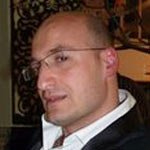



Born in Algiers, more precisely in the old district called Bab El-Oued, Kheireddine M'kachiche is a professional violinist who started his learning process in 1983. He took classes with Abdelkrim Mhamssadji, at the El Fakhardjia Association and with Harbit Rezki. In 1986, he integrates the pilot orchestra at the Conservatoire of Algiers and continues his training with Harbit Rezki. For years, participating in different projects, his favourite styles, i.e. the Andalusian, the hawzi and the chaâbi appeal to him. He collaborates with diverse Algerian artists of the same calibre as Rahma Boualem, Kamel Bourdib, Aziouz Raïs, Hamidou, Nadia Benyoucef, Naïma El Djazaïria, Karima Essaghira, and Samir Toumi...
In 1991 he opens up to the Algerian traditional musical repertoire including: chaoui, kabyle, gasba, melhoun, sahraoui, and gnawi... In 1994, he dedicates himself to raï music. It is the beginning of an adventure that leads to collaborations with well known artists like Cheb Hassan, Mohamed Lamine, Chaba Kheira, Houari Dauphin, Chaba Samira and he even participates to King Khaled's album recording.
In 1997, after his encounter with the Moroccan singer Amina Aloui, he starts an international career. He integrates her group that performs in various festivals enabling him to travel all over Europe, Japan and the Middle East. In 2002, he participates to the adventure of "les Orientales", a tribute given to the Algerian musical of the 1950's leading to a tour in France, concerts in Algiers, and a CD and DVD with MK2.
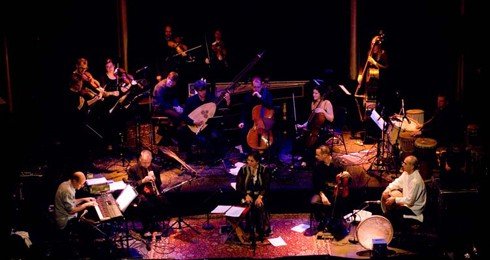
The collaboration with in Amina Aloui in the Siwan project leads to an album recorded with ECM. Since 2007, Kheireddine M'kachiche is part of the jazz group from Algiers called Madar.
He has also collaborated with well-known jazz musicians such as Jon Hassel. Recently, he started to be interested in rock and jazz, realising interesting fusions. Different artists such as Cheikh Sidi Bémol, Jean Alain Roussel and his group The One...regularly invite him as a guest star.
A few questions to Kheir-eddine M'kachiche
From Andalusian music to jazz, how did you get there?
I beleive that jazz is an essential musical genre. I entered the world of jazz thanks to the Siwan project. After that, there have been other adventures in collaboration with the Dimajazz Festival of Constantine. I then started to play with the legendary American trumpet player Jon Hassel with whom I recorded another album (with the same label of the album released in the framework of the Siwan project).
What is the significance of fusion?
It is, taking two different musical genres and trying to combine them (fusion) with the aim of creating another genre. Thus, the latter becomes a sub genre with regards to the first two from which it emerged. Like jazz-rock for example.
Why did you choose jazz for fusion?
Jazz is one of the rare musical genres that are easily combined to nearly all existing types of music. We feel so much at ease that we are carried by its numerous styles. Like in contemporary art, its different expressions are open and very accessible.
How do you define your music?
I owe my music to my deep Algerian roots. In Algeria, we are lucky to have a lot of different styles of music coming from different Mediterranean, African, Oriental, Western and Andalusian influences. Today, as an Algerian and international musician, I must defend and transmit these musical cultures.(ÇT)