









CPJ: Press Freedom in Turkey Unstable
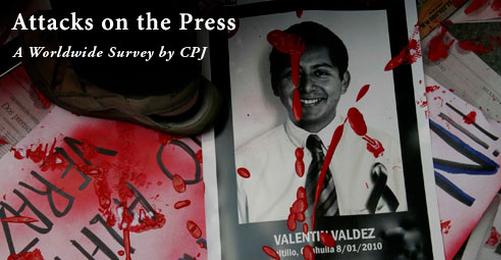



The Committee to Protect Journalists (CPJ) has published its 2010 report on "Attacks on the Press - a Worldwide Survey by CPJ". The organization works for defending journalists' rights and is based in New York. In their latest report, the committee criticized obstacles before freedom of expression in Turkey.
Joel Simon, CPJ Executive Director, and his assistants presented the report to the United Nations (UN). They claimed that global and regional organizations failed to protect press freedom and journalists worldwide.
In 2010, 44 journalists were killed worldwide and 145 journalists were arrested, the report said. The most dangerous country for journalists was Pakistan, where 14 journalists were killed throughout the last year, followed by Iraq with four murdered journalists. 34 out of 145 journalists were arrested in China, 34 in Iran. Simon also emphasized the importance of protecting internet journalists since half of the journalists who landed in jail that year were internet journalists.
Restrictions in Turkey persist
Regarding Turkey, the report points to ongoing restrictions and oppression: "Authorities paraded journalists into court on anti-terror, criminal defamation, and state security charges as they tried to suppress critical news and commentary on issues involving national identity, the Kurdish minority, and an alleged anti-government conspiracy".
* The Constitutional Reform Package said to strengthen democracy and approved by a referendum in 2010 "failed to address severe limits on press freedom".
* As far as the European Union (EU) Progress Report is concerned, the CPJ report summarized, "The European Union broadly criticized Turkey's press freedom record (...).It faulted authorities for prosecuting journalists for expressing nonviolent opinions and raised particular concerns about the high number of criminal cases brought against journalists reporting on the anti-government plot known as the Ergenekon affair".
* "Anti-terror legislation, which provides for harsh prison penalties and fines, was used against numerous critical journalists, many of them writing about Kurdish issues (...)." The convictions of İfran Aktan from the Express magazine and editor Merve Erol were quoted as related examples.
* "Journalists and editors from across the political spectrum were targeted for their coverage of the Ergenekon conspiracy". Büşra Erdal and Melih Duvaklı from the Zaman newspaper and Helin Şahin from the Star newspaper were facing several charges of violating state secrets, for instance.
* The report also touched upon Turkish-Armenian journalist Hrant Dink who was killed in 2007: "As 2010 drew to a close, nearly four years after Dink's assassination, the government had yet to obtain a conviction in the case".
* The Doğan Media Group received a heavy tax fine after reports critic of the Justice and Development Party (AKP), a decision that was believed to be politically motivated.
Answering journalists' questions after the representation of the report, Simon recalled that years ago at the beginning of their work the number of imprisoned journalists in Turkey was much higher. He added:
"Turkey considerably improved in this aspect. Journalism in Turkey is more open and vivid nowadays. But the arrests of journalists in recent time are utterly disturbing and worrying. It is alarming to see the achievements in the area of press freedom in Turkey vulnerable and open to attacks." (NV/EÜ/VK)
Click here for the CPJ report on Turkey.
EUROPEAN COURT OF HUMAN RIGHTS
Turkey Takes the Lead in Europe in Violations in 2010

Readers of Alınteri Newspapers Arrested

HUMAN RIGHTS ASSOCIATION
Increase of Rights Violations in South-Eastern Turkey
HUMAN RIGHTS WATCH
Turkey Failed in HRW World Report 2011
"The Prime Minister May Suspend a Broadcast"

BİA 2010 MEDIA MONITORING REPORT
Legal Landscape of 2010 Dominated by Anti-Terror Law

Journalist Attacked for News on Smuggling

Freedom House Critic of Press Freedom in Turkey

WORD PRESS FREEDOM INDEX
Turkey in Free Fall
11-month Prison Sentence for Criticizing "Co-Wife" Proposal
EUROPEAN COURT OF HUMAN RIGHTS
Turkey Takes the Lead in Europe in Violations in 2010
Readers of Alınteri Newspapers Arrested
HUMAN RIGHTS ASSOCIATION
Increase of Rights Violations in South-Eastern Turkey
HUMAN RIGHTS WATCH
Turkey Failed in HRW World Report 2011
"The Prime Minister May Suspend a Broadcast"
BİA 2010 MEDIA MONITORING REPORT
Legal Landscape of 2010 Dominated by Anti-Terror Law
Journalist Attacked for News on Smuggling
Freedom House Critic of Press Freedom in Turkey
WORD PRESS FREEDOM INDEX
Turkey in Free Fall
11-month Prison Sentence for Criticizing "Co-Wife" Proposal