




Trial against Kurdish Politician Stirs up History
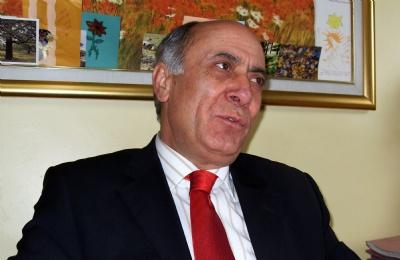



Upon the demand of defendant Mahmut Alınak, the 2nd Criminal Court of First Instance of Kars (north-eastern Turkey) is going to investigate the historic background related to Kurdish politics and the referring utterances made by Alınak. The Kurdish politician stands accused of "inciting the public to hatred and hostility" and faces imprisonment.
Alınak argued that he is prosecuted because he lodged a complaint with Prime Minister Recep Tayyip Erdoğan and the Chief of General Staff, İlker Başbuğ, at the United Nations (UN). "If the questions of the court will be answered correctly, many things may change", he said.
"Penal code does not work for state officials"
Alınak accused the Prime Minister and the Chief of General staff of misconduct in office and believes that both officials should be in the dock right now instead of him. "The penal code applied to us does not work for government officials. I did not expect it to be otherwise anyway", Alınak indicated.
According to a decision made on 21 April this year, the court ordered the prosecution to send a complete list of all unsolved murders registered after 1993 in the districts and provinces of Diyarbakır, Batman and Şırnak in the pre-dominantly Kurdish region of south-eastern Anatolia.
The court requested another list from the prosecution regarding casualties during mass demonstrations in the districts and provinces of Diyarbakır, Van and Hakkari for the year 1997. The trial was continued on 11 May.
Court requests report prepared for Atatürk
Moreover, the court accepted the demand to ask the Presidency of the Republic for the report prepared by İsmet İnönü (successor-to-be of Atatürk) in 1935. The report was prepared for Mustafa Kemal Atatürk, founder of the Turkish republic and then President, and was an analysis of the "Kurdish issue".
Additionally, the court decided to request the report about the Kurdish issue prepared and presented to the parliament by Marshal Fevzi Çakmak in 1930 from the Turkish Grand National Assembly (TBMM). The court furthermore ordered to obtain a transcript of Atatürk's unaltered Address to the parliament.
Investigating history
In his statement to the court Alınak claimed that the confidential report presented to Atatürk by İsmet İnönü stated the following: "Turkish and Kurdish people should study at the same schools. This will be an effective measure to make the Kurds more Turkish. Diyarbakır is ready to easily take action in respect of forming a strong centre of 'Turkishness'".
The Kurdish politician maintained that Marshal Fevzi Çakmak "suggested expelling the Kurdish people form Kurdistan for the sake of Turkicizing them". Alınak stated that this proposal was approved. (EÖ/VK)


A graduate of the French Language and Literature Department at İstanbul University. He has served as the Turkey representative for the international organization Reporters Without Borders (RSF), where he began as a reporter in 1996. Since 1999, he has worked at bianet, a project of the IPS Communication Foundation, as the coordinator of the Legal Support Desk, editor for freedom of expression, and editor-in-chief. He has authored more than 4,800 signed news articles and opinion pieces. He has also written for Bizim Gazete and the journal Güncel Hukuk. He currently prepares the Media Monitoring Reports at bianet.

Former MP Mahmut Alınak Detained
First Application in Kurdish to ECHR
"Criminal" Politician Alınak Sentenced to 1 Year in Jail
Kurdish Politician Faces Prison for “Insult”

Kurdish Politician Sentenced to Plant Trees for Criticizing PM

Kurdish Politician Alınak May End Up In Prison Again

Former MP Mahmut Alınak Detained
First Application in Kurdish to ECHR
"Criminal" Politician Alınak Sentenced to 1 Year in Jail
Kurdish Politician Faces Prison for “Insult”
Kurdish Politician Sentenced to Plant Trees for Criticizing PM
Kurdish Politician Alınak May End Up In Prison Again
MAY 3 WORLD PRESS FREEDOM DAY
Journalism rights thrive on reader support!
BİA MEDIA MONITORING REPORT 2025
Those who want to silence journalists are now more brazen!
BİA MEDIA MONITORING OCTOBER-NOVEMBER-DECEMBER 2025
The future of journalism is in danger under government pressure!
BİA MEDIA MONITORING JULY-AUGUST-SEPTEMBER 2025
Prolonged detentions and judicial control tighten pressure on journalists
BİA MEDIA MONITORING APRIL-MAY-JUNE 2025
Unprecedented pressure on journalists under the government's watch