INTERNATIONAL MOTHER LANGUAGE DAY
Killed for Singing a Kurdish Folk Song
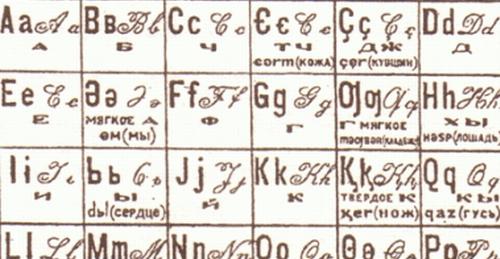



On the International Mother Language Day, Turkey is a country where its citizens have to fear for the safety of their lives when singing a song in their native language on the street.
Young man Emrah Gezer was killed by a former special operations police officer in Ankara in the course of a birthday party celebrated in a bar because he sang a Kurdish song.
Blamed for PKK membership because of singing Kurdish songs
In the first hearing of the case on 11 February at the Ankara 9th High Criminal Court Baran Gezer stated, "We were singing songs at the bar and enjoying ourselves. We sang Kurdish songs as well. Sinem Uludağ, sitting at the table next to us, said, 'Dirty PKK members, I cannot stay in a place together with PKK members'. He started cursing and throwing glasses at us. The two people sitting next to him shouted, 'What kind of man are you. Beat them'. The waiters got in between. The owner of the bar made them leave. When we went out afterwards, we heard the noise of weapons. I saw Emrah falling to the ground. A person called Serkan shot my brother directly".
Both detained defendants Serkan and Levent Akbulut are police officers. They conceded that the incident evolved "because of a Kurdish song". The case is to be continued on 6 April.
Kurdish artist Rojda on trial
The government lifted restrictions on local radio and television programs broadcasting in languages and dialects other than Turkish. A TRT channel for instance is broadcasting in the Kurdish dialect Kırmançi 24 hours a day.
However, Kurdish artist Rojda had recently been arrested for "propaganda for an illegal organization" on the ground of a Kurdish song called "Heval Kamuran". Rojda was released within a couple of hours after her statement had been taken.
BDP co-chairs call for the protection of peoples' mother tongues
A few days before the arrest, Selahattin Demirtaş and Gültan Kışanak, co-chairs of pro-Kurdish Peace and Democracy Party (BDP) had emphasized the importance of protecting the mother tongue.
The Political Parties Law and the Election Law forbid political propaganda in any other language but Turkey in the run-up for elections. The government announced that in the scope of the democratic initiative measures are in progress to allow addressing the Kurdish electorate in their mother tongue.
Backlash for promoting the Kurdish language
Kurdish politician Orhan Miroğlu applied to the European Court of Human Rights after his conviction based on having addressed his electorate in Kurdish in Mersin in the run up to the General Elections in 2007.
Diyarbakır Mayor of the Sur distrtict Adullah Demirbaş and the parents of ten-year-old girl M.Ö. were investigated because the girl gave Kurdish lessons within the scope of a Municipality Project. The Public Prosecution did not see legal grounds to open a case.
Politician Mahmut Alınak was handed down a six months prison sentence by the Kars Magistrate Criminal Court on the grounds of playing Kurdish music on his promotion van in the run-up to the elections. (EÖ/VK)


A graduate of the French Language and Literature Department at İstanbul University. He has served as the Turkey representative for the international organization Reporters Without Borders (RSF), where he began as a reporter in 1996. Since 1999, he has worked at bianet, a project of the IPS Communication Foundation, as the coordinator of the Legal Support Desk, editor for freedom of expression, and editor-in-chief. He has authored more than 4,800 signed news articles and opinion pieces. He has also written for Bizim Gazete and the journal Güncel Hukuk. He currently prepares the Media Monitoring Reports at bianet.


MAY 3 WORLD PRESS FREEDOM DAY
Journalism rights thrive on reader support!
BİA MEDIA MONITORING REPORT 2025
Those who want to silence journalists are now more brazen!
BİA MEDIA MONITORING OCTOBER-NOVEMBER-DECEMBER 2025
The future of journalism is in danger under government pressure!
BİA MEDIA MONITORING JULY-AUGUST-SEPTEMBER 2025
Prolonged detentions and judicial control tighten pressure on journalists
BİA MEDIA MONITORING APRIL-MAY-JUNE 2025
Unprecedented pressure on journalists under the government's watch