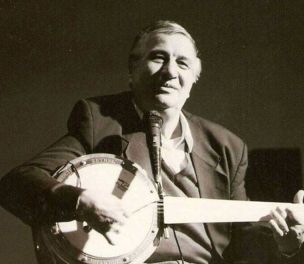






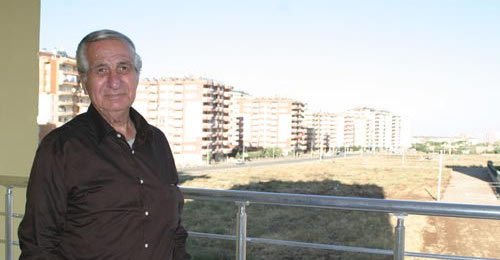



On 6 August, Armenian musician Aram Tigran died in Athens, Greece.
Fırat Anlı, Diyarbakır province chair of the Democratic Society Party (DTP) and member of the funeral organisation committee, told bianet that the funeral mass would take place either today (10 August) or tomorrow, in the Armenian church in Diyarbakır.
Tigran will then be buried in the Armenian graveyard.
Anlı said that Tigran had previously expressed a wish to be buried in his place of birth, in Al-Qamishli, Syria.
However, after participating in a culture and arts festival in Diyarbakır last year and spending around two months in the city on this visit, he told his family and people in the city that he wanted to be buried there.
"Tears in their eyes"
Anlı finds this very meaningful: "Tigran is almost the first name that comes to mind when one speaks about Kurdish music. Everyone over a certain age in this region got to know music in their mother tongue because of Tigran, with his soft, emotional tunes, and the oud he was a master of.
"It was our greatest dream for him to come to Diyarbakır and play at a concert. It took us years to achieve it. Previously, the situation in Turkey made it impossible; he himself hesitated. But his first arrival was a historical event, like a dream. Thousands of people had tears in their eyes when they listened to him."
"Diyarbakır is a mythological city, one of the most important, multilingual, multicultural cities of Mesopotamia. It is very meaningful that artists and intellectuals who have worked for this place, who have agonised with it, want to be laid to rest here."
"We want Diyarbakır to be a meeting point for artists and intellectuals while they are still alive; we invite them to Diyarbakır, the capital of peace, brotherhood and freedom."
"Diyarbakır, I have missed you"
During his stay in Diyarbakır, Tigran gave an interview to Aknews, saying that he loved Diyarbakır very much. He said, "It was the dream of the century to come to Diyarbakır. I always used to say, 'God, will I ever see the place where my parents lived before I die?' Two years ago, after becoming a Greek citizen, I first came to Diyarbakır. I was very touched and wrote a song. One verse of it goes like this (in Kurdish):
'Di xewnên şevan de min bawer nedikir (If I had dreamed it, I would not have believed it) / Bi çavan bibînim bajarê Diyarbekir (Being able to see Diyarbakır) / Rojbaş Diyarbekir me pir bêriya te kir (Good morning Diyarbakır, I have missed you very much) / Te derî li me vekir (You opened your gates to me) / Te me şa kir (You made us very happy)."
Tigran also visited the villages of Bêemde (Kexriban in Armenian) and Kaskê, where his parents had been born. He said about these visits, "When I looked at the mountains, trees, streams and houses, my inside was shaking. I cried. I was extremely pained. I remembered what my father, my mother, what they experienced. I was saddened and bemoaned the fact that we had not grown up on this soil."
Who was Aram Tigran?
Born in Syria in 1934, Tigran sang in Arabic, Armenian, Kurdish and Turkish. His father had been saved in what the Armenians call the "Great Disaster" of 1915.
Tigran's interest in music and the oud began at the age of nine.
In 1966 he moved to Yerevan, Armenia's capital, and worked for Erivan Radio for 18 years. After 1995, he moved to Athens.
This year, he took part in Diyarbakır's 9th Culture and Arts Festival, but because of ill health he only performed three Kurdish songs.
During Newroz celebrations in Batman last year, Tigran sang songs in Kurdish, Turkish, Armenian and Arabic. He also sang the "Sarı Gelin" song in memory of assassinated journalist and human rights activist Hrant Dink. (TK/AG)

_(1)-132.jpg)