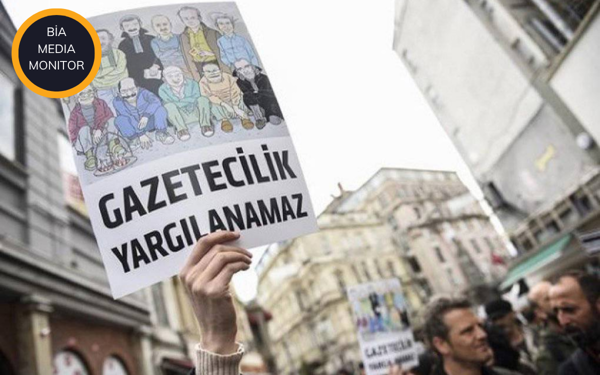






Journalist's Death at Newroz 1992: Evidence of Ergenekon Mentality



Newroz celebrations are to be held on 21st of March. 17 years ago, journalist İzzet Kezer was shot dead by security forces in Cizre in southeastern Turkey, trying the cover the events. A Turkey's Association of Human Rights report that year confirmed his murder by police fire. His colleague, Faruk Balıkçı –who was beside Kezer during his murder- recalls the event for bianet.
How was Kezer murdered?
When İzzet was shot dead on March 23, 1992, I was with him. He and I were holding white flags. The day before, there were clashes in Cizre. And on March 22nd, there was a de facto curfew in the city and around 50 journalists were trapped in a hotel. During the day, we heard a child cry nearby and around ten of us decided to check it out. When we left the hotel we faced gunfire. We took siege in a house. Trying to figure out what to do next, some of us proposed to return to the hotel holding white flags. Me, İzzet and a German colleague were carrying sticks with white cloth attached. Only after a march of 30-40 meters, we faced gunfire from the same point. We threw ourselves to the ground and when I raised my head up, I saw İzzet, bleeding. The fire didn't stop. A metal fence provided shelter, as bullets flied above us. It took 10 minutes for the gunfire to end.
Why were they aiming at you?
Fire was coming from the direction of the military barracks. It was an automatic weapon, firing without any pause. If it were a Kalachnikov –used by rebels-, it would have to stop to reload. Trying to take siege, we couldn't see who was firing at us.
Was there an investigation into this incident?
Only the following day the prosecutor came and took our testimonies. On grounds that there were no bullet shells found, the investigation ended in vain.
How do you evaluate the murder after 17 years?
I can see the relations between those murders and the recent developments. Maybe this is a harsh comment but I believe that those officers who were assigned to work in this region then and who are on trial in the Ergenekon case today are responsible. We're a civilian group, holding cameras and white flags… It wasn't possible to mistake us for something else. There was uneasiness from journalists' presence during that period. They were not welcome. Maybe they didn't want to leave witnesses to the atrocities committed, so there wouldn't be any evidence.
Did the incident go before the European Court of Human Rights?
I don't think so. I don't know how Kezer's family reacted.(EÖ/AGÜ)


A graduate of the French Language and Literature Department at İstanbul University. He has served as the Turkey representative for the international organization Reporters Without Borders (RSF), where he began as a reporter in 1996. Since 1999, he has worked at bianet, a project of the IPS Communication Foundation, as the coordinator of the Legal Support Desk, editor for freedom of expression, and editor-in-chief. He has authored more than 4,800 signed news articles and opinion pieces. He has also written for Bizim Gazete and the journal Güncel Hukuk. He currently prepares the Media Monitoring Reports at bianet.


MAY 3 WORLD PRESS FREEDOM DAY
Journalism rights thrive on reader support!
BİA MEDIA MONITORING REPORT 2025
Those who want to silence journalists are now more brazen!
BİA MEDIA MONITORING OCTOBER-NOVEMBER-DECEMBER 2025
The future of journalism is in danger under government pressure!
BİA MEDIA MONITORING JULY-AUGUST-SEPTEMBER 2025
Prolonged detentions and judicial control tighten pressure on journalists
BİA MEDIA MONITORING APRIL-MAY-JUNE 2025
Unprecedented pressure on journalists under the government's watch