





“Municipality has 1,000 Buses, Disabled Can only Get on 10”



Murat Şahinbaz, head of Ankara’s Turkish Association of Disabled People evaluated the services of local government for bianet in the run-up to the local elections on 29 March.
“Local authorities do something for the disabled, but always without including them. These ‘token’ arrangements and services do not help us.”
Those affected are not consulted
Şahinbaz thus criticises municipal councils which carry out projects without consulting relevant NGOs and people actually affected by disabilities.
He emphasises the need for structural changes that would allow disabled and able people to live together, telling bianet:
“The disabled live in isolation from public life anyway. We do not want schools for the disabled; rather, we want everyone to profit from municipal services equally.”
Urgent demands for improvements
According to the association, municipalities must consider the following issues as a priority:
- Inner-city transport: Public transport vehicles need to be accessible for the disabled. In Ankara, for instance, there are over 1,000 buses, but only 10 have access for the disabled. In addition, buses in most cities charge the disabled. However, so the association, public transport should be free of charge nation-wide.
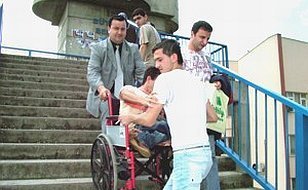
- Pavements: according to the laws, pavements must have an 8 percent slope so that the disabled can use them easily. However, in Ankara in particular, many pavements have a 70 percent slope. This makes life very difficult for those people trying to get around. When there are overhead and underground walkways with escalators, these can often only be accessed after negotiating stairs.
- Representation in councils: local authorities are obliged to represent the disabled. That is why they should consult NGOs and disabled people on their city planning projects.
- Employment quota: The Law on Disability has made it obligatory for workplaces to employ disabled people. The quota has been set at 3 percent. Although there are more than 10,000 people working in the public sector, this quota has not been fulfilled.
- Support teams: In other countries, city councils create support teams for the disabled. The association demands similar implementations in Turkey to make it easier for the disabled to take part in public life.
No more tokenism
Şahinbaz voiced other criticism: “When there is a physiotherapy centre opened, there is one physiotherapist to 60 disabled people. The therapist cannot be of use to all of them. That is why we need more expert professionals employed in services for the disabled.”
He emphasised that many of the current “services” were token gestures and did not contribute to a more positive life experience for the disabled. (BÇ/EÜ/AG)


WORLD DISABLED WEEK 10-16 MAY
Disabled Demand Suitable Implementations Immediately
3 DECEMBER - DAY OF THE DISABLED PEOPLE
Disabled People Succeed with a Combined Struggle
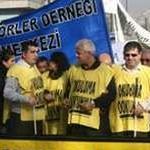
Rights of the Disabled People
UN Convention on the Rights of Persons with Disabilities in Effect

Dısabılıty awareness week
Nothing to Celebrate in Disability Awareness Week
Blind Urge Local Government to See The Disabled

The State Insists On Not Reducing The Load On Disabled Persons
Turkey Signs UN Conv. on Rights of Disabled
Disabled Law Itself a Handicap for Disabled
Turkey Without Handicaps
WORLD DISABLED WEEK 10-16 MAY
Disabled Demand Suitable Implementations Immediately
3 DECEMBER - DAY OF THE DISABLED PEOPLE
Disabled People Succeed with a Combined Struggle
Rights of the Disabled People
UN Convention on the Rights of Persons with Disabilities in Effect
Dısabılıty awareness week
Nothing to Celebrate in Disability Awareness Week
Blind Urge Local Government to See The Disabled
The State Insists On Not Reducing The Load On Disabled Persons