MINISTRY OF JUSTICE
Releasing Arrest Warrants will be more Difficult
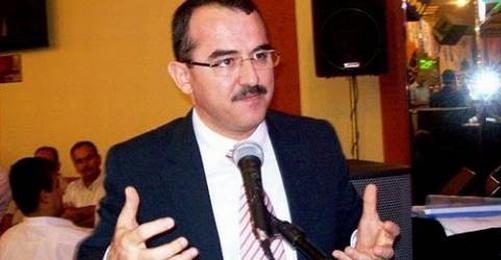



The Minister of Justice, Sadullah Ergin, is going to present an 80-paragraph draft law to the Turkish Parliament aimed at speeding up judicial processes. Details of the draft bill were announced to the public in advance.
Accordingly, the release of arrest warrants will be made more difficult. The justification of "strong suspicion of crime" as noted in arrest warrants will have to be clearly explained in writing.
Ergin said that optional sanctions will be applied for petty crimes that foresee prison sentences of up to two years. He also announced that previously given court decisions regarding the seizure and suspension of publications will be annulled.
The minister furthermore declared that Article 13 of the Anti-Terror Law (TMK) ordering that "Sentences imposed under this law cannot be commuted to a fine, converted to other measures or suspended according to Article 231 of the Criminal Procedure Law (CMK)" was going to be amended.
Consequently, the provision will expand the application of deferred pronouncement of judgement and judgements can be suspended for penalties given by reasons of attending unannounced meetings, distributing leaflets, posting banners etc. University students will not go to prison for petty crimes.
Key points of the draft bill
* The maximum sentence for offences committed via the media decreases from five to three years.
* If a person was found guilty in a civil lawsuit, the judgement will be lifted if the person does not commit the same offence within three years after the decision for the suspension of judgement was given.
* The duration of sentences that can be converted into monetary fines increases from three months to one year. Those with a criminal record shall not benefit from this provision.
* The use of Molotov cocktails is covered by the law on arms.
* Nobody is considered a lifelong past offender. Police records will not be kept for the rest of a person's life but for the duration of five years.
* Releasing arrest warrants will be more difficult. The reason of "strong suspicion of crime" as given in arrest warrants will have to be clearly explained in writing.
* Punishments based on charges of membership of an illegal organization can be reduced by half of the penalty imposed. The application for offenders who committed a crime on behalf of a criminal organization without being a member remains unchanged.
* The time limit for the defence of the final plea at Special Authority Courts will be lifted.
* Optional sanctions and suspension of judgement will be applicable to petty terror crimes that carry prison terms of up to two years.
* Bribery is again accounted for as a crime. The offence of misconduct of office will be replaced by the offence of bribery. Thus, actions involving the acceptance of money will constitute the offence of bribery. Also paying extra money to a doctor for a surgery will be considered bribery. Former prison terms of one to three years will increase to four to twelve years.
* Theft from oil pipes will be sanctioned with imprisonment of five to twelve years instead of three to seven years. Those who damage an oil pipeline will be sentenced to four to twelve years in prison. (EKN/VK)
Sources: T24; Radikal.