MILITARY COUP 1980
Museum of Shame
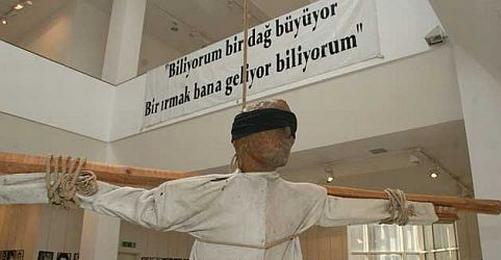



The "Museum of Shame" installed by the Revolutionary 78'ers Federation opened its doors for the second time on Tuesday (6 September) in Ankara to mark the 31st anniversary of the military coup on 12 September 1980.
The Federation organizes the activities around 12 September every year under a different current theme. This year's topic is entitled "Activities in the 31st Year for Peace and Brotherhood of the People" in reference to the Kurdish question.
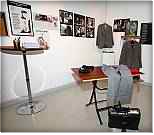
The Museum of Shame is going to exhibit a number of personal belongings of left-wing revolutionaries like the coat of Deniz Gezmiş, the shirt of Mazlum Doğan, the vest of Mahir Çayan or the mimeograph of İbrahim Kaypakkaya.
Special sections of the museum were dedicated to slain Turkish-Armenian journalist Hrant Dink and deceased lawyer Halit Çelenk.
The exhibition can be visited at the Çağdaşlar Arts Centre in Çankaya (Ankara) until 27 September and comes with panel discussions, poetry readings, documentaries and movies.
Gül Erdost: "We feel no hatred"
Gül Erdost, widow of left-wing activist İlhan Erdost who died as the result of torture, bestowed her husband's personal belongings and photographs upon the museum on Wednesday (7 September). She said she wanted the young generation to learn the truth about the period around 12 September 1980.
İlhan Erdost was taken into custody around 12 September and beaten to death by soldiers on 7 November 1980 in Mamak Prison. For the first time, photographs of the soldiers who killed him emerged. Furthermore, Erdost's blood-stained clothes which he wore when he was tortured, one of his shoes and his broken watch are among the exhibits.
"We want the young generation to know the truth about 12 September"
İlhan Erdost was taken into custody together with his brother Muzaffer Erdost by reasons of "providing and publishing banned publications".
Gül Erdost had stored the pictures of the four privates and one sergeant who were responsible for her husband's death in an envelope labelled "This envelope shall not be opened as long as we live". Erdost talked to bianet about the process of handing the personal belongings of her husband and the photographs of his torturers over to the museum. She said that she did not share her husband's belonging with the public at all before because she did not aim to show blood.
However, over the years Erdost changed her opinion and thought that it would be more enlightening for the young generation to get an idea about the facts of 12 September if she showed the items rather than hiding them. Thereupon, she eventually decided to have the personal belongings exhibited.
Erdost said that they thought her husband would be back soon after he was taken into custody from home. "İlhan was dressed lightly when he left home. So I prepared a bag for him and put in a coat, a jumper and some other pieces of clothes", Erdost recalled.
"I did not see these clothes afterwards. After İlhan's death, the bag was given to his brother Muzaffer Erdost who was tortured together with İlhan. Now these things are being exhibited in the Museum of Shame".
"We are ashamed instead of the ones who should feel ashamed"
Erdost indicated that she felt ashamed instead of the people who should have felt ashamed for what happened. She added that she never had the aim to show blood and that she felt no hatred or hostility but that she always wanted to shed light on what actually happened. (NV/EKN/VK)