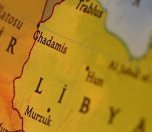
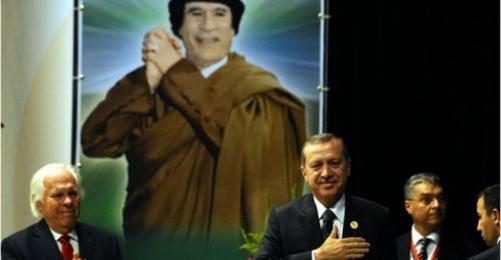



Prime Minister Recep Tayyip Erdoğan was rewarded with the Gaddafi International Human Rights Award. The prize giving ceremony was organized on the occasion of Erdoğan's recent visit to Libya to attend a meeting.
As reported by the Turkish news channel ntvmsnbc, Erdoğan said in his speech held during the ceremony, "We demonstrate a dignified stance against all sorts of injustice and illegality on earth and we are mature enough to question ourselves and our environment if necessary".
The award comes with $ 250,000 prize money. It has previously been bestowed to public figures such as Nelson Mandela, Louis Farrakhan, Hugo Chavez and Fidel Castro.
The award is given to "a person or an institution that show a great effort to protect human rights and freedoms and to advocate for peace all over the world".
In the World Press Freedom Index annually published by Reporters Without Borders (RSF), Libya ranks in 160th position among a total of 178 countries in 2010. Turkey's position is slightly ahead in the 138th place.
According to the Amnesty International (AI) Report 2010 on "The State of the World's Human Rights", in Libya, "freedom of expression, association and assembly continued to be severely curtailed and the authorities showed little tolerance of dissent. Critics of the government's human rights record were punished. [...] Hundreds of cases of enforced disappearance and other serious human rights violations committed in the 1970s, 1980s and 1990s remained unresolved".
For Turkey IA stated in the same report:
"Little progress was made on enhancing human rights protections. Reports of torture and other ill-treatment persisted, as did criminal prosecutions limiting the
right to freedom of expression. The legitimate work of human rights defenders was hampered by excessive administrative scrutiny and judicial harassment".
"In many cases alleged human rights violations by state officials were not investigated effectively, and the chances of bringing law enforcement officials to justice remained remote. Unfair trials continued, especially under anti-terrorism legislation which was used to prosecute children under the same procedures as adults. Prison regimes showed little improvement, and access to appropriate medical treatment was commonly denied".
"No progress was made in recognizing the right to conscientious objection to military service, and the rights of refugees and asylumseekers continued to be violated. Lesbian, gay, bisexual and transgender people faced discrimination in law and practice, and protections for women and girls subjected to violence remained inadequate".
Libya is led by Muammar al-Gaddafi since the military coup in 1969. (EÜ/VK)