MILITARY AND POLITICS
"General Staff Should be Connected to Ministry of Defence"
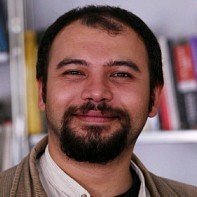
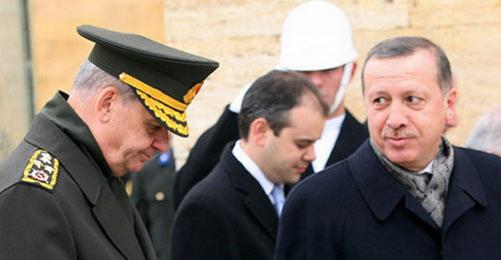



Former military judge Ümit Kardaş commented on Prime Minister Recep Tayyip Erdoğan's pronouncement about deposing the Chief of General Staff from office, saying, "If he is removed from office, he will go to the military judiciary", Kardaş interprets Erdoğan's words as "pragmatism".
According to Kardaş, an amendment of the constitution is not necessary to transfer most of the power to the Ministry of Defence (MSB), allowing a struggle with politics. It is in Erdoğan's hands to take a step for bringing the military judiciary to the level common in democratic countries, where it is only involved in soldiers' disciplinary issues.
The Prime Minister was quoted as follows in a life interview on TRT on 8 November:
"The Chief of General Staff does not come upon an appointment of the prime minister. He comes upon the proposal of the Council of Ministers and the approval of the President. What happens otherwise? This is not the concern of the Prime Minister. So if there is an objection, it appeals to the military judiciary. Those evaluations have to be done very carefully. These steps have to be taken by considering the country's unity and entirety".
Kardaş commented:
There is no example of a Military Council in the world: After the memorandum from 12 March 1971in the course of amendments of the constitution, the Military Supreme Court was established, formerly known as the Military Council. The purpose was to handle legal supervision of military actions by the military and keep it away from civil judiciary. This court consists of 3 military judges and 2 officers. This is what the Prime Minister refers to. There is no other example of an administrative court in the world.
Pragmatism of AKP (ruling Justice and Development Party): We are always talking about these issues since nobody has thought about a reform of the system. The pronouncement of the Prime Minister shows his pragmatic (opportunistic) perspective. We need a reform in the context of ensuring civil supervision, stretching from the educational curriculum to the military judiciary, considering the Military Assistance Agency (OYAK) as well as the constitution. Otherwise, this structure ties up your hands and arms on every topic. You cannot carry out a [democratic] initiative with the current structure.
Powers granted to the General Staff should be returned to the Ministry of Defence: Again after 12 March 1971, many of the powers previously inherent to the Ministry of Defence were transferred by law to the General Staff, including the approval of the military budget. The Ministry of Defence was demoted to a support institution. This institutional autonomy of the General Staff means political autonomy at the same time. However, these powers have to be returned and the General Staff must be connected to the Ministry of Defence. The military budget of democratic countries is prepared by civilians. In our country, the General Staff's weekly press conference is held by civilians in the Ministry of Defence. It is easier to amend that law than to amend the constitution. AKP has the power to do that, by they don't.
A referendum can be initiated if necessary: A change of the military judiciary's purview requires an amendment of the constitution. If this appears to be too difficult to AKP, they can also initiate a referendum. The Prime Minister should speak openly, he should name the problems and concerns. He should tell us what is done and what not. (TK/VK)



KURDISH QUESTION
PKK Ceasefire to be Terminated on 31 October?
KCK CASE
Court Dismissed Request for Defence in Kurdish
7th Istanbul Gathering for Freedom of Thought

CONSTITUTIONAL AMENDMENTS
58 Percent Said "Yes" to Constitutional Reform Package

Rights Organizations 3 Years ahead of Foreign Minister