BIO-POLITICS
Government Prohibits Production of GMOs and Simplifies Import

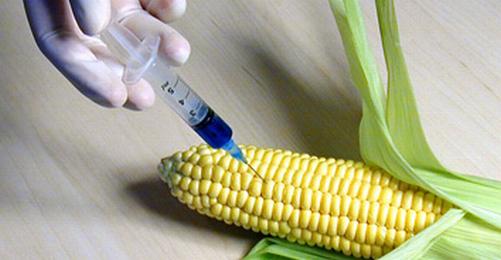



The National Bio-Safety Bill was presented to the Turkish National Assembly on 16 December. The draft law consists of 18 articles regarding regulating issues of Genetically Modified Organisms (GMO) such as import, cultivation, research or storage.
Environmental Law Lecturer Ilgın Özkaya Özlüer from the Ankara University Faculty of Law pointed out that the draft law was shortened compared to previous versions. Özlüer explained that the bill simplifies the processes related to the use of GMOs, formerly requested provisions such as a decision of the Cabinet Council have been abolished.
The bill covers ordinances concerning research, development, processing, introduction to the market, monitoring, use, import, export, transmission, transportation, storage, packing, labelling, warehousing and corresponding proceedings related to genetically modified organisms and products.
Draft bill provides framework but lacks details
The section on interdictions prohibits to use GDOs and referring products or to let it be used in contrary to cabinet decisions. Furthermore, the production of genetically modified plants and animals and any use of GDOs and referring products other than specified by the council in the context of market introduction are forbidden.
Lecturer Özüler indicated that the draft law serves as a framework and that its details will probably be defined by the corporate bylaws.
The State Council argued that "there cannot be corporate bylaws before the law has passed" and stopped the enforcement of the GDO corporate bylaws published by the Ministry of Agriculture on 26 October. (İP/VK)


WOMEN'S SHELTER PROGRAM
"Political Approach towards Abused Women Needs Review"

GENETICALLY MODIFIED ORGANISMS
Regulations on Genetically Modified Organisms Re-Enforced
ENVIRONMENTAL IMPACT ASSESSMENT
Fishermen Win Legal Struggle

WOMEN RIGHTS
Parental Leave for Turkish Fathers

CHILDREN'S RIGHTS
Detained Children Complain from Torture Under Custody