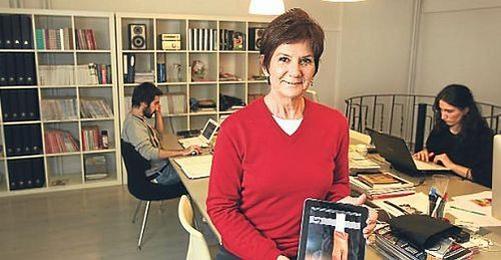






THOMAS HAMMARBERG
Limited Media Freedom in Europe




Thomas Hammarberg, the Human Rights Commissioner of the Council of Europe, introduced the report ""Human Rights and a Changing Media Landscape" in London last week.
Hammarberg said at the meeting, "Advocating for human rights is related to media freedom and pluralism. This situation makes it necessary to oppose the tendency of governments towards restrictions and monopolies".
"Journalists are being killed or threatened. State authorities try to control the media and to prevent the media's access to government information. At the same time we saw that commercial ambitions are the reason for non-ethic and illegal activities in the newsroom - just as the interception scandal of News of the World demonstrated in shocking openness".
Hammarberg invited eight experts to share their personal presentations on six topics: social media, protecting journalists against violence, ethic journalism, access to official documents, the media's duty to the public and media pluralism.
Based on the report and the presentations, Hammarberg claimed, "In today's Europe there is a need to protect press freedom and freedom of expression.
"Impunity encourages to similar offences"
Hammarberg underlined the importance of serious investigations into incidents of violence against journalists. "Impunity encourages the committing of similar offences in the future", he indicated.
Social media, blogs, video and social networks have become the key to political discourse and organizations, Hammarberg pointed out and mentioned that the social media became subject to oppressive attacks of states due to their power.
"Even if we feel the need to protect the social media in terms of personal correctness, its importance regarding freedom of expression must not be underestimated", Hammarberg said.
"Traditional media struggled in the face of the global economy crisis. Thousands of people lost their work and only little space remained for investigations and research in the fields of control and education. The term ethical journalism is very important in this context. The media has to be developed as a system of self control based on ethic values and a mechanism to take complaints and be able to respond".
"I hope that this book is going to shed light on the issue of overcoming the current challenges. The way the media leads needs a serious public debated on its development and the impact of human rights", Hammarberg concluded. (IC/VK)
Click here to read the full report with an introduction of Thomas Hammarberg.


@allah (cc) - Criminal Complaint about 200,000 Twitter Users
FREEDOM EXPRESS
Anti-Terrorism Law Obstructs Freedom of Expression
THOMAS HAMMARBERG
"Systematic Dysfunctions in the Turkish Justice System"
EUROPEAN PARLIAMENT TURKEY REPORT
Violations of Freedom of Expression and Fair Trial Raise Concern
@allah (cc) - Criminal Complaint about 200,000 Twitter Users
FREEDOM EXPRESS
Anti-Terrorism Law Obstructs Freedom of Expression
THOMAS HAMMARBERG
"Systematic Dysfunctions in the Turkish Justice System"
EUROPEAN PARLIAMENT TURKEY REPORT
Violations of Freedom of Expression and Fair Trial Raise Concern
ULUDERE MASSACRE
4 Questions Not Answered for 120 Days
Students Forced to Paid Military Service

EMEK MOVIE THEATER PROTEST
"We Do Not Watch This Movie"
NEWROZ 2012
Newroz Came with Tear Gas and Police Violence
WOMEN QUOTA
Journalists Record: 147 Men, 27 Women