





"Relations between Media and Politics should be Revealed!"
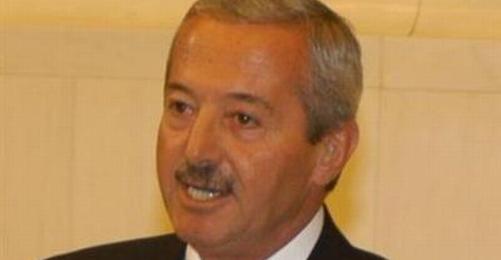



Peace and Democracy Pary (BDP) MP Akın Birdal demanded the Parliament to take responsibility for the involvement of the media into the events around 28 February 1997. The military operation in 1997 led to the stepping down of the coalition government led by Necmettin Erbakan of the Welfare Party. The Turkish Military Leadership issued the 1997 military memorandum which comprised a number of legal amendments such as a compulsory eight-year primary school education or the headscarf ban.
MP Birdal got critically injured in the related incidents. As former President of the Human Rights Foundation (IHD) he was shot on 12 May 1998. He criticized that the prosecutors remained impassive although they had previously received according information from journalists.
Together with BDP MPs Özdal Üçer, İbrahim Binici and Osman Özçelik and Öztürk Türkdoğan, current IHD President, Birdal held a press conference in the Parliament on Wednesday (25 March) regarding a submitted proposal on establishing an investigation commission.
Birdal, as well as journalists Cengiz Çandar and Mehmet Ali Birand were accused of being supported by the militant Kurdistan Workers' Party (PKK) because Birdal annexed statements of PKK member Şemdin Sakık.
At the same time, Sabah newspaper journalist Ergun Babahan and newspaper owner Dinç Bilgin published the memorandum and said they did so even though they knew that the information was not correct. Confessions were made concerning relations between the military and journalists. In his book published later on, PKK member Sakık stated that Yaşar Büyükanıt, later Chief of General Staff, and Ali Kaya and Özcan İldeniz, suspects of the Şemdinli bombing, participated in the inquiry.
"Which journalists work for the Intelligence?"
In the press conference in the parliament on Wednesday Birdal said, "It is well-known now that Şemdin Sakık did not accept the names of journalists and human rights defenders to be added to his statement and that these names were added in the hand writing of then Chief of General Staff Çevik Bir. Like this it was forwarded by press organs to newspaper owners and editorial managers for publication".
"The Public Prosecutors initiate an investigation into every activity of the BDP, but they did not consider a criminal complaint upon Bilgin's and Babahan's utterances and did not even apply for further information", Birdal criticized.
In their investigation proposal, the BDP representatives demanded to clarify the following questions:
* Who gave the memorandum to the newspapers?
* Who were the journalists, newspaper owners and editorial managers that insisted on the publication of the memorandum?
* What privileges have been given to the newspapers and TV channels who reported about the memorandum?
* What are the names of the media people that currently work and used to work on behalf of the intelligence?
*What are the aims of the military and the intelligence to establish relations with the media?
Calling journalists to disclose information
Birdal said that one got inured to the relation between the media and the political leadership, to the military's effort to control the media and to journalists being used as agents.
Birdal referred to the examples of the raid on Tan newspaper in 1946, the incidents of 6/7 September 1955, the military dictating the news to the papers during the military coup on 12 September 1980, offers made to journalists in the Olağanüstü Hal region to work as agents in the 1990s and the killings of journalists. Birdal added:
"It is the people's natural right to learn the answers to these questions. We call the journalists who were voluntarily or by force involved in this kind of relations during ordinary and extra-ordinary times to disclose their information as a first measure to obtain corresponding answers. The obstacles for democratization can be overcome to the extent of the answers to be found. Like this, the public can freely make use out of its right to inform and be informed". (EÜ/VK)


SOCIAL GENDER EQUALITY
Women and Journalists Hand in Hand against Violence
EUROPEAN COMMISSION AGAINST RACISM AND INTOLERANCE
Discrimination and Racism in Turkey Fuel Concern
Unionists in Northern Cyprus Protest PM Erdoğan
Policeman who Beat Juvenile Claimed Self-Protection
HRANT DINK MURDER
Court fully Protects Istanbul Police