






Baykal Calls for "Neighbourly Relations" with Iraq

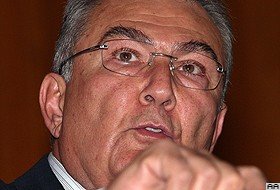



At a press briefing at the headquarters of the Republican People's Party (CHP) on Friday (9 November), party chair Deniz Baykal called for an improvement in relations between Turkey and Iraq, but warned that this should not be perceived as a weakness in the policy against terrrorism.
Call for neighbourly relations
According to CnnTürk, Baykal said that if Turkey approached Iraq with good intentions and friendship, then the support which the PKK enjoyed in Iraq would gradually decrease.
Baykal predicted that if Turkey adopted such a stance, then "Iraq will behave more responsibly on the issue of exporting terrorism; it will feel the need to behave like a good neighbour."
The Iraqi young to be educated in Turkey
Baykal's suggestions for Iraq included targeting young people:
"Turkey could seriously reach out to the Kurdish, Arab, Sunni, Shiite and Turkmen young people in Iraq. It must be decided as a priority that hundreds, thousands of these young people be given the opportunity to get a good education at Turkish universities. Iraq's engineers should be taught at Turkish universities. All universities should have a quota system. Then they should return to their country and become influential in the country's development. They must add to the development of the country."
"People who speak the same language"
"We have to turn into people who understand each other, who speak the same language. Turkish television should be broadcast in Iraq systematically, there must be interactive communication."
Baykal said that the fight against terrorism had gone beyond a day-to-day policy and needed to consider Turkey in "10, 20 30 years". "The target is not the governments, but the people directly."
"Military operations still necessary"
Saying this, Baykal however still supported a military operation, claiming that "military operations are Turkey's right. Besides other countries' intelligence, we have got our own intelligence and precautionary measures."
He said, "In the struggle against terrorism, the military dimension must not be ignored. [However,] the struggle in this new period cannot be ended with only military operations. Terrorism is a basic issue which will keep Turkey busy for many more years. We need a long-term strategy."
On the topic of amnesties for PKK members, Baykal refused to budge: "There must be no weakness brought to the fight against terrorism. An amnesty cannot even be discussed."
PUK welcomed Baykal's statement
Behruz Galali, the Ankara representative of the Iraqi Patriot Union of Kurdistan (PUK), welcomed Baykal's suggestions. In a written statement, Galali said "What a beautiful statement. It is a very positive, very productive and very realistic approach. If such an approach continues, there will be no problems left. As a social democrat I congratulate Baykal."
He added, "If this policy were applied, Iraqi Kurds and Turkey would become even closer." (NZ/AG)


Galatasaray Üniversitesi'nde felsefe yüksek lisansı yaptı. 2012'de Sorbonne Paris 1 Üniversitesi'nde felsefe doktorasını tamamladı. 2003-2004 arasında Cumhuriyet Pazar'da, 2004'te kısa bir süre BirGün gazetesinde çalıştı. 2007-2008 arasında bianet'te çocuk ve kadın haberleri editörlüğü yaptı. Koç Üniversitesi, Boğaziçi Üniversitesi'nde ders verdi. Felsefe ve yazı çalışmalarına devam ediyor.

"Erdogan Against Operations But Not For Peace"
So, Prime Minister, What is the "Comprehensive Plan"?
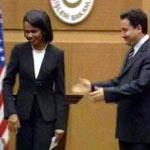
Rice and Babacan: PKK is "Common Enemy"
Battles in Southeast: 4 Soldiers, 17 PKK Militants Dead
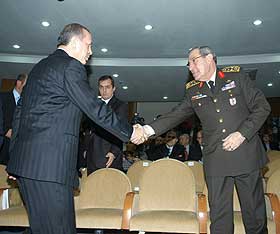
Büyükanit and Erdogan Meet to Discuss Operations
Operations: 20 Million Dollars and 1,800 Displaced People
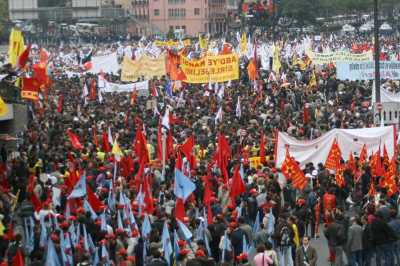
Peace Rally in Ankara
PKK Attack: 1 Soldier, 3 PKK Militants Dead
Barzani Wants Direct Talks with Ankara
White House Signals “Yellow Light”
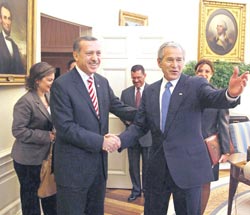
"Erdogan Against Operations But Not For Peace"
So, Prime Minister, What is the "Comprehensive Plan"?
Rice and Babacan: PKK is "Common Enemy"
Battles in Southeast: 4 Soldiers, 17 PKK Militants Dead
Büyükanit and Erdogan Meet to Discuss Operations
Operations: 20 Million Dollars and 1,800 Displaced People
Peace Rally in Ankara
PKK Attack: 1 Soldier, 3 PKK Militants Dead
Barzani Wants Direct Talks with Ankara
White House Signals “Yellow Light”
Warming cold-cases with Mannina

NİLÜFER ZENGİN INTERVIEWS LEADING SYRIZA MP KAVVADIA
'Europe's Resurgent Fascism: A Consequence of the Establishment's Choices'
Children-Under-Risk Denied Access to School Founded for Them