In Some Schools No Teacher, in Some No Students

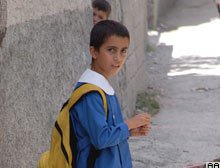



The situation in the province of Sanliurfa (south-east Turkey) is repeated many times over in Turkey, particularly in the south-east of the country. Children are working in the fields and not able to start school on time.
No students...
According to the "Birgün" newspaper, of the 650 pupils at primary school in Konuklu, Sanliurfa, 300 have not been able to start school yet, because the cotton harvest has been late this year. Teachers are going to the fields and trying to persuade the parents to send their children to school.
Justice and Development Party (AKP) MP Cagla Aktemur Özyavuz is also meeting with parents in order to convince them to send their daughters to school. The reluctance to send girls to school is not usually related to the agricultural duties of children, but to the attitude that girls should stay at home.
Furthermore, the poverty of the region means that parents have often been unable to pay the school expenses of children.
Özyavuz said that she is aiming at increasing the rate of girl pupils: "Most families do not knwo that there is financial support for those who send their children to school. We identify girls working in the fields and talk with their families so that they do not have their right to education taken away."
"I want to go to school, but I have to work"
13-year old Halime Isikdag was working in the field. She has finished primary school (8 years) and wants to become a doctor, but says that her family has taken her out of school: "We don't have a father, so I have to work in the fields with my family. We are eight siblings, and I am the only girl who has gone to school."
According to Turkish Institute for Statistics (TÜIK) data from 2006, there are 12,477,000 children in the age range from 6 to 14. Of these, 4,448,000 work at home, while 320,000 have to work in industry, business and agriculture.
There are 182,000 children working as agricultural labourers, with no differentiation made between boys and girls.
According to the same 2006 Child Labour Survey, 945,000 of the children in this age range do not continue with their education, 576,000 of these being girls.
...and no teachers
Another problem affecting education in rural areas is the lack of teachers. In Akcakale district in Sanliurfa, some classes have to be cancelled because there are not enough teachers. Says Akcakale district governor (Kaymakam) Muhammet Aktas: "We try to cover the classes with university graduates. This is all we can do. When we get new teachers, we will send them to the districts and villages.
The "Urfa News"also reported complaints by female teachers who have been sent to the district about the lack of teacher lodgings in villages, forcing teachers to travel between town and village every day. (EÜ/NZ/AG)


EDUCATION AND SCIENCE WORKERS UNION:
Working Conditions for Teachers Need urgent Improvement
Open Society Supports Educational Projects
Crisis Will Increase Child Labour

Foundation Investigates Human Rights in School Books
Seasonal Labour Affects Children’s Schooling
Turkey Has Failed Its Promise to Children
Joint Project to Tackle Child Labour Begins
School Starts at Last for Sanliurfa Children
15 Thousand Girls Dont Go to School
Hungry Children who Work 12 Hours a Day
EDUCATION AND SCIENCE WORKERS UNION:
Working Conditions for Teachers Need urgent Improvement
Open Society Supports Educational Projects
Crisis Will Increase Child Labour
Foundation Investigates Human Rights in School Books
Seasonal Labour Affects Children’s Schooling
Turkey Has Failed Its Promise to Children
Joint Project to Tackle Child Labour Begins
School Starts at Last for Sanliurfa Children
15 Thousand Girls Dont Go to School
Hungry Children who Work 12 Hours a Day
SOCIAL GENDER EQUALITY
Women and Journalists Hand in Hand against Violence
EUROPEAN COMMISSION AGAINST RACISM AND INTOLERANCE
Discrimination and Racism in Turkey Fuel Concern

Unionists in Northern Cyprus Protest PM Erdoğan
Policeman who Beat Juvenile Claimed Self-Protection
HRANT DINK MURDER
Court fully Protects Istanbul Police