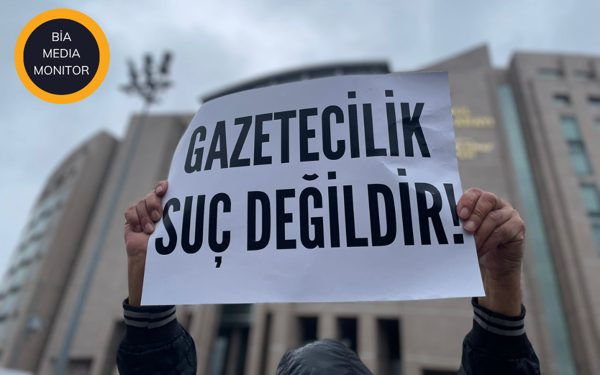










According to the July-August-September 2010 Media Monitoring Report by the Independent Communication Network (BIA) Media Monitoring Desk, the judiciary is after independent media and media that voice different opinions on the "Kurdish Problem." Its justification is "fighting against terrorism."
The 40 page report lists violations under the topics: "Killed journalists," "attacks and threats," "detentions and arrests," "continuing imprisonments and convictions," "freedom of media and freedom of expression cases," "regulations and seeking legal remedies," European Court of Human Rights," "reactions against censorships and monopolisation," and "RTUK practices."
Below are the closure, confiscation and ban decisions given for the different media in the third quarter of 2010 according to the report:
Rojev newspaper was closed down for a month: Rojev newsaper, which began publishing on 24 August, was closed down by an Istanbul court for "making propaganda in favour of PKK." The decision was taken because of the publication of a poster of imprisoned PKK leader Abdullah Ocalan, and pictures of Ocalan, PKK members and the PKK flag.
Eighth closure for Azadiya Welat: Azadiya Welat, which is the only daily Kurdish newspaper, was closed down for a month, for the eighth time in August.
Azadiya Welat has been closed down three times since the beginning of the year. Various Kurdish media, since the beginning of 2009, have been closed down for a total of at least 16 times.
An Istanbul court justified its decision by saying that the newspaper was "making propaganda in favour of PKK/KONGRA-GEL."
Guney magazine has been confiscated: The January-February-March 2010 issue of Guney magazine, which is a quarterly magazine, was confiscated by a decision taken at a Mersin court on 19 August. The printing house in Mersin seized the issues of the magazine.
The decision of confiscation was based on an article by Ali Dagdeviren, titled "Children's Rights of Kurdish Children!"
YouTube censorship was solidified through a court decision: In mid-July, an Ankara court rejected objections made against the decision by a lower court to block access to 44 IP addresses belonging to YouTube. The court's rejection of Internet Technology Association's (INETD) objection solidified the YouTube ban.
The site was banned for publishing anti-Ataturk videos. Transportation Minister Binali Yildirim, in a number of occasions, stated that the site was banned because YouTube does not pay taxes over its advertising revenues, does not open a representation in Turkey and does not comply with Turkish laws.
Altayli had 97 entries in Eksi Sozluk deleted: Journalist Fatih Altayli, demanded that 97 entries written under his name in Eksi Sozluk are deleted claiming that they violated his personal rights.
Haberturk newspaper's executive editor Altayli, asked and Istanbul court to have the 97 entries deleted.
Sanliurfa.com site banned: Access to this site was banned because of a news report about Sanliurfa deputy governor Yildiray Malgac and related reader comments. (BA/EA)