Prosecution Wants to Close Ruling AKP






Friday's (14 March) evening news programmes were all occupied with the breaking news that the Chief Prosecutor of the Supreme Court of Appeals has filed a court request at the Constitutional Court to close down the ruling Justice and Development Party (AKP).
The prosecutor, Abdurrahman Yalcinkaya, has argued that the party has become “a hotbed of anti-secular activities.”
Üskül: There will be political results
One of the AKP parliamentarians, Prof. Dr. Zafer Üskül, spoke to NTV yesterday, saying: “I don’t see that it’s possible to close the party. However, it will have political results, and people may be confused.”
He pointed out that the AKP had always expressed its commitment to laicism and added, “The AKP has taken important steps in democratisation; it is meaningless to claim that it has become distant (from laicism).”
“The laws of the constitution are being followed. The AKP has not violated them with any of the laws it has passed, otherwise they would be overturned by the Constitutional Court anyway.”
The fact that there has been constitutional amendment in order to allow women wearing headscarves to attend university has perhaps led to the prosecutor’s request for closure at this time.
However, Üskül said: “The latest constitutional amendments have aimed at strenghtening the principle of equality and safeguarding the right to education, and this cannot be interpreted as a violation of laicism.”
“The judiciary is expected to do what the law requires. Prosecutors may differ in their political opinions, but they have to be neutral in the judiciary process.”
Aktar: Party will exploit victimisation
Bianet spoke with Dr. Cengiz Aktar, a lecturer at Galatasaray University in Istanbul. Aktar predicted that the AKP would not be closed, but that it would be able to benefit from being perceived as a victim in the closure case.
A similar reaction happened in the general elections on 22 July 2007. After the Constitutional Court prevented the election of Abdullah Gül as President, the AKP benefited in an increase of votes, finally netting 47 percent, “probably more than it would have without the Gül controversy.”
The Constitutional Court will now examine the indictment, and should it accept it, it would be sent to the AKP in order for the party to prepare a preliminary defense. This has to happen within a month. (EÜ/TK/AG)


Renewed Controversy Over Presidency
AKP: “Closure Trial will Give Us 70 Percent of the Vote”
Columnists Against Closure of DTP

“Closing Parties Does Not Solve Kurdish Issue”

AKP’s Defense against Closure is Hypocritical
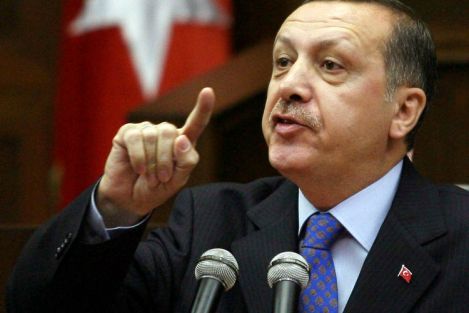
Ruling AKP Defends Against Prosecutor’s Indictment

Reactions to AKP Closure Request
AKP Closure: What Do the People Think?

Constitutional Court Closed 24 Parties in 44 Years
IHD and TIHV: Do Not Close DTP
Renewed Controversy Over Presidency
AKP: “Closure Trial will Give Us 70 Percent of the Vote”
Columnists Against Closure of DTP
“Closing Parties Does Not Solve Kurdish Issue”
AKP’s Defense against Closure is Hypocritical
Ruling AKP Defends Against Prosecutor’s Indictment
Reactions to AKP Closure Request
AKP Closure: What Do the People Think?
Constitutional Court Closed 24 Parties in 44 Years
IHD and TIHV: Do Not Close DTP
SOCIAL GENDER EQUALITY
Women and Journalists Hand in Hand against Violence

EUROPEAN COMMISSION AGAINST RACISM AND INTOLERANCE
Discrimination and Racism in Turkey Fuel Concern

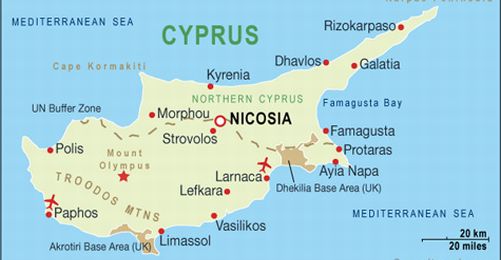
Unionists in Northern Cyprus Protest PM Erdoğan
Policeman who Beat Juvenile Claimed Self-Protection

HRANT DINK MURDER
Court fully Protects Istanbul Police