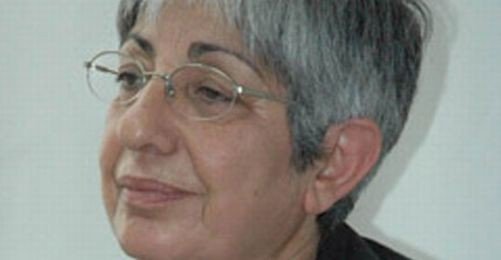
37 Years after Military Coup




Cagla Yasar is a 23-year old law faculty graduate. She first heard about the “12 March” at university, in her constitutional law class.
“I only knew that the army set an ultimatum because the freedoms of the 1960s seemed to be too much, and student activism had increased.”
There has been an increase in interest in Turkey’s recent past with a popular weekly TV series called “Remember Darling” (Hatirla Sevgili). Like others, Yasar has decided to find out what happened 37 years ago. She said that she was not alone, that she started reading and debating with her peers.
So, what is actually narrated in the series, and what is left “off screen”?
As far as Yasar could gather from the series, the military ultimatum which brought down the government of then President Süleyman Demirel was directed “against the leftists”: “The military intervention was against (student revolutionary leader) Deniz Gezmis and his friends, the Turkish People’s Salvation Army (THKO) and against intellectuals.”
Yalciner: Labour movement slowly crushed
Mustafa Yalciner, one of the actors in the series and at the same time a consultant to the project, had said on television that it was inevitable that people and dramatic stories dominated the story.
According to Yalciner, the 12 March military intervention aimed at destroying the labour movement, but that it was unsuccessful. For the next ten years, there was renewed struggle, “but the violence of the military coup of 12 September 1980 fulfilled the aim.”
Aral: State terrorism became institutionalised
Fahri Aral, who left his position as consultant to the series, said that the events could not be reflected in a TV series:
“A series asks questions in a different way; there may some people who have become admirers of Demiz Gezmis, but the main issue is to interpret history properly. That takes comprehensive projects and debates.”
Aral finds it important to recount the experiences of that time in order to “prevent a loss of memory.” For him, 12 March represents “the institutionalisation of state terrorism.”
The 78ers Foundation, which represents the generation of people most affected by both the events on 12 March 1971 and the repressive military coup of 12 September 1980, has remembered 1971 thus:
“Rallies in the East against ‘National Oppression’, and General Memduh Tagmac (the then Chief of General Staff) saying that ‘social developments overtaking economic developments need to be put an end to’. Süleyman Demirel promising US representatives to ‘punish the revolutionaries’ (who had kidnapped four US soldiers). Prime Minister Nihat Erim, who said, ‘if necessary, democracies have to be veiled.’ The resistance of parliament against the ultimatum. The hopes which Bülent Ecevit raised when he promised to take executioners and torturers to account, but the fact that the left never faced up to the coup.”
In Istanbul and Adana, there were occupations of factories, there were protests by janitors and taxi drivers. The Turkish People’s Salvation Party – Front (THKP-C) was formed, as were the Turkish Workers’ Party (TIP), the Confederation of Revolutionary Workers’ Trade Unions (DISK). There was police pressure on students who were members of Dev-Genc (Revolutionary Youth). Fascist students occupied dorms.
Yasar has been affected by “what was done to people my own age in order to silence them.” “There was torture, violence, ….these things need to be told.” (EÜ/GG/AG)


SOCIAL GENDER EQUALITY
Women and Journalists Hand in Hand against Violence
EUROPEAN COMMISSION AGAINST RACISM AND INTOLERANCE
Discrimination and Racism in Turkey Fuel Concern
Unionists in Northern Cyprus Protest PM Erdoğan
Policeman who Beat Juvenile Claimed Self-Protection
HRANT DINK MURDER
Court fully Protects Istanbul Police