General Staff Will Change Tactics



Change of tactics
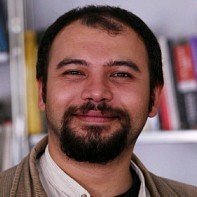
Sancar does not believe that this is a change of line or a compromise; rather, the message is "let us wait and see". He predicts that the General Staff, which sees the presidential office as its own, will change tactics and act in a more circumspect manner.
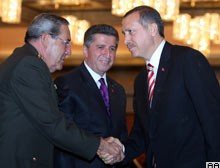
After the election results of 22 July, in which the Justice and Development Party (AKP) netted 46.6 percent, it would be risky for the General Staff to speak out as clearly against the AKP as it did in a press statement on 12 April, in the "e-memorandum" on 27 April and on 8 June.
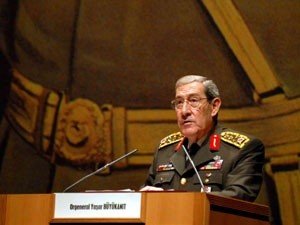
On the 12 April, Büyükanit had called for a president who was "laicist in essence rather than in words". In the "e-memorandum" published on its website in the night following the boycotted presidential elections, the General Staff had expressed its fear for laicism in Turkey. In an Internet article in June, it had spoken out against human rights activists and had called for a "mass reflex" against terrorism.
Prof. Dr. Sancar believes that Büyükanit's present reaction shows that he has learnt a lesson. "Creating a crisis at this point would not leave them room to maneuver. I believe they are adjusting their tactics to the balance of power. Other than that, I don't think they are giving up on 27 April.
Why is Cankaya so important?
Sancar explained why Cankaya, the presidential residence, represented a crisis for the army:
- Cankaya designed after 12 September 1980 coup: "The presidential office was redesigned as a kind of guardian's office with the 1982 constitution and the president was given extraordinary powers. It was designed with the assumption that the republic would remain in the control of its 'wardens'. No one apart from someone from the 12 September regime or someone under their control was meant to go to Cankaya."
- Cankaya is the critical threshold: "If Cankaya is controlled by someone not from their circle, then their faith in their own system is weakened. This is the critical threshold. They believe that they will not only lose their influence with the presidential office, but also with other institutions feeding the bureaucratic power: the judiciary, the army, universities."
- Vital area of control: "The struggle for Cankaya is perceived as an absolute and vital struggle for power by the army and their circle. They have not given up the idea of making a move in order to protect their power."
Indirect obstruction
Sancar predicts that rather than publishing threatening statements, the General Staff will try to monitor and obstruct the AKP government. "Rather than forcing them to do what they want, they will force them not to do anything they do not want. I don't believe they have changed their mind since the e-memorandum."
Sancar believes that Prime Minister Erdogan, unlike some Islamic circles, does not ascribe such importance to Cankaya, but that he wants smooth management. "This is also connected to the AKP's neoliberal articulations."
They also need an environment in which to solve problems important to the base, such as the headscarf and the imam hatip schools.
AKP government is pragmatic
On the other hand, the AKP has never clashed with the security bureaucracy over the legal arrangements which have led to human rights violations. Sancar says,
"The AKP is a pragmatic party. Depending on the conditions, it may make concessions in the area of democracy. This became obvious in the cases of the temporary security zones, the increase of police powers, and the appeasement of the army and security apparatus. This is why human rights activists and democratic powers need to apply a programme of opposition towards the AKP, towards the government." (TK/AG)

General Staff: 436 People Killed in Clashes in 2007

Military Interferes Everywhere!
General Staff Warns of "Increase in Attacks"

Abdullah Gül to Wait for Third Ballot
General Staff Rejects Journalist's Analysis
AKP Silent Because It Fears Crisis
Military Warning Was a Press Release
Army Calls for Mass Reaction to Terror
European Reaction to Military Interference
General Staff: 436 People Killed in Clashes in 2007
Military Interferes Everywhere!
General Staff Warns of "Increase in Attacks"
Abdullah Gül to Wait for Third Ballot
General Staff Rejects Journalist's Analysis
AKP Silent Because It Fears Crisis
Military Warning Was a Press Release
Army Calls for Mass Reaction to Terror
European Reaction to Military Interference
KURDISH QUESTION
PKK Ceasefire to be Terminated on 31 October?
KCK CASE
Court Dismissed Request for Defence in Kurdish
7th Istanbul Gathering for Freedom of Thought
CONSTITUTIONAL AMENDMENTS
58 Percent Said "Yes" to Constitutional Reform Package
Rights Organizations 3 Years ahead of Foreign Minister