








Istanbul Not Prepared for Earthquake
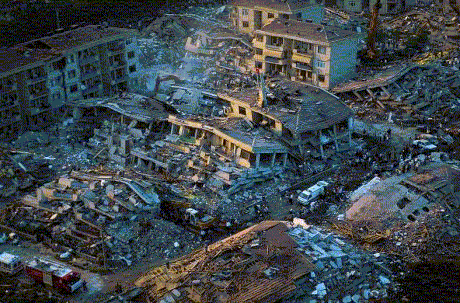



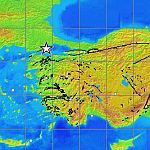
On 17 August 1999, the Marmara Sea Region in the north-west of Turkey began shaking at 3:02 am. The earthquake, a 7.4 on the Richter scale, lasted for 45 seconds. According to official information, 18,373 people died, 48,901 people were injured and hundreds of thousands of people became homeless.
There will be another earthquake…
Experts are saying that there is a 60 percent likelihood of a strong earthquake in Istanbul within the next 30 years. Academics have compiled exact information on the expected quake and the possible damages, but, says Prof. Dr. Mustafa Erdik from the earthquake research institute in Kandili, Istanbul, there is no political will to act on the information.
Zeytinburnu at risk
The institute is working on a pilot project in Zeytinburnu, a district in the north-west of Istanbul. Zeytinburnu is predicted to be one of the worst-affected areas in a future earthquake. Of the 16,000 buildings examined in the study, 2,295 were badly damaged.
“It was concluded that those buildings would need to be torn down and rebuilt in an earthquake-proof manner, and that half of the remaining buildings would have to be strengthened. However, because of administrative, legal, financial and logistical hurdles, this has not been done.”
People we talked to in Zeytinburnu are worried. Those who can afford it strengthen their own houses. All of them believe that public buildings are just as unsafe.
Public buildings not safe
They are not mistaken. The Istanbul Project to Reduce Seismic Risk and Prepare for Emergency (ISMEP), started in 2006, foresees the strengthening of 840,000 buildings in its first phase. More than 3,000 hospitals, schools and administrative buildings need to be fortified, but only 1 percent has so far been worked on.
Master plan not heeded
Leading universities in Turkey, the Bosphorus, Istanbul Technical and Yildiz Technical universities in Istanbul, as well as the Middle East Technical University in Ankara, have presented an Istanbul Earthquake Master Plan, but no action has been taken in response.
The expected Istanbul-Marmara earthquake will not only lead to loss of life and material damage, but is also likely to destroy cultural heritage sites. It would severly cripple the local economy and small-scale entrepreneurs would not be able to survive the disaster. (ET/EÜ/AG)