





DTP Closure Case at ECHR

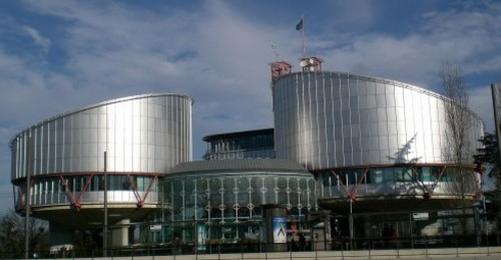



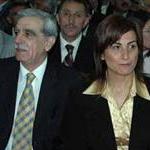
The closure decision for pro-Kurdish Democratic Society Party (DTP) taken by the Constitutional Court at the end of last year has been brought to the European Court of Human Rights (ECHR). Former DTP member Hasip Kaplan applied to the court in Strasbourg with three different files covering the DTP incorporate body and the situations of co-chairs Ahmet Türk and Aysel Tuğluk. As many of the DTP members did after the closure of the party, Kaplan joined the Peace and Democracy Party (BDP).
On 11 December 2009 the Constitutional Court unanimously decreed for the closure of DTP by reason of "focussing on terrorist activities". A 5-year political ban was imposed on 37 party members. Co-chairs Türk and Tuğluk were removed from office as MPs. The decision was published in the Official Gazette on 14 December.
Lawyer Kaplan added that the party members subject to the political ban will apply to the ECHR separately. He said that he requested to discuss the applications with urgency and priority.
Application
In an announcement made on Monday (18 January) subsequent to submitting the application, Kaplan stated that the reasoning of the Constitutional Court lacks a concrete basis and that it consists of speeches and declarations made at various times.
The application of the former DTP members claims a violation of the following articles of the European Convention on Human Rights:
Article 6 on the right to a fair trial; article 10 regarding freedom of expression; article 11 concerned with freedom of assembly and association and article 14 related to prohibition of discrimination.
Kaplan furthermore claims violations of article 1 of the 1st appendix protocol of the convention regulating the protection of ownership of people and corporations and article 3 on the right to free elections. The DTP properties were transferred to the Treasury upon the closure decision.
"No resemblance to Batasuna"
Members of the Constitutional Court and government officials compared the case with the ECHR decision related to the Basque nationalist political party Herri Batasuna in Spain. Kaplan commented:
"If a comparison can be drawn it is between the fascist regime of Franko before 1978 and the Turkish regime prior to the coup on 12 September 1980. However, the regime changed after Franko. A broad regional autonomy was recognized, particularly for the Basque country. The followers of Herri Batasuna were not contented with this outcome and wanted a separation. Whereas we, as the DTP, neither asked for a separation nor did we approve of violence". (EÜ)


Status as Member of Parliament not Restored for Kurdish Politicians
CONSTITUTIONAL REFORM PACKAGE
Political Party Closure Article Dropped
FREEDOM OF ASSOCIATION
DTP Closure Made Official, Political Ban Effected
DTP CLOSURE CASE
Pro-Kurdish DTP Closed down by Constitutional Court

DTP CLOSURE CASE
İHD: Democratic Society Party Essential for Democratic Initiative

Status as Member of Parliament not Restored for Kurdish Politicians
CONSTITUTIONAL REFORM PACKAGE
Political Party Closure Article Dropped
FREEDOM OF ASSOCIATION
DTP Closure Made Official, Political Ban Effected
DTP CLOSURE CASE
Pro-Kurdish DTP Closed down by Constitutional Court
DTP CLOSURE CASE
İHD: Democratic Society Party Essential for Democratic Initiative
SOCIAL GENDER EQUALITY
Women and Journalists Hand in Hand against Violence
EUROPEAN COMMISSION AGAINST RACISM AND INTOLERANCE
Discrimination and Racism in Turkey Fuel Concern

Unionists in Northern Cyprus Protest PM Erdoğan
Policeman who Beat Juvenile Claimed Self-Protection
HRANT DINK MURDER
Court fully Protects Istanbul Police