We Must Debate 1915 Ourselves




Just the opposite, she said, as we have seen in the past it will inflict harm. Because the nationalist circles in Turkey use such bills and decisions as an excuse and increase the repression and expression of resentment of Armenians. Unfortunately we hear such expression from official mouths.
Cetin, also the author of the Turkish book Anneannem (My Grandmother) based on the true story of her maternal grandparent being converted to Turkish Islam in the broader concept of Christians and Armenians later becoming Turks and Muslims, believes it is wrong to "turn such grief in history into material for political purposes and that Armenian, Turkish and French intellectuals need to work together to preempt the goals of this latest legislation and similar other.
"Turkey should do the same thing she said. Intellectuals should preempt all legislation that can block mutual discussion, dialogue, refreshing of memory and empathy.
According to Cetin Turkey needs to come to the point where it can solve the problem itself and that the only way forward for this is to conduct work based on refreshing of memories and empathy.
"Unless we solve this problem ourselves, it is tying up Turkeys feet. It is being turned into material of political benefit to some parliaments. This is very painful. Turkey should as a priority solve the problem and should get rid of these things that tie her down.
Cetin says a solution to the problem related to what the Ottoman Armenians encountered in 1915 is based on two things:
Memory revival: "We need to work on memory based on mutual dialogue in Turkey.
Developing empathy: "We have an empathy problem in the society. We need to be able to see and feel the grief of others for real outside of the bounds of all political conflicts and nationalist prejudice. We need to be able to listen to each others grief, see it and feel it. Such initiatives have started and it has been seen they have very positive effects. People have started to isten to the grief of each other. The path should be opened for this.
Cetin believed that what happened in 1915 "is sensitive and painful, requiring a priority solution but that the sharing of memories on mutual dialogue and developing empathy between the communities is an essential part of that solution.
"If we look at the law adopted at the French Parliament she adds, it can be seen this serves neither memory work nor developing empathy.
Aktar: We need to debate the massacre
Bahcesehir University European Union Center President Dr. Cengiz Aktar also believes that France took a mistaken decision which he describes as being foolish.
In an interview with the Turkish NTV television on the issue, Aktar said that rather than allow third parties to take over the issue we must talk ourselves that there was not a genocide but that there was a serious massacre. If this happens, we will not leave the discussion up to lawmakers at the French Parliament.
Aktar believes it would be a mistake to regard the issue only in the context of Franco-Turkish relations or give impulsive reactions. He says the Turkish government can overcome this period.
"In France there has been no debate that Turkey would be further excluded or that it would be excluded from the EU process. But if we give a response in the same way, it will mean a continuation of a no-solution he said.
Noting that there could be economic reaction to the decision, Aktar recalled French capital had over 5 billion euro in investments in Turkey and said it would be mistaken for us to touch the industry. (TK/II/YE)

Oral History Workshops Draw Public Interest

Apologizing to Armenians Under Prosecution

Intellectuals Launch A Campaign To Apologize To Armenians

ADL Retracts Genocide Recognition
Historian Halacoglu Refuses to Resign
Historian Halacoglu's Comments "Racist"
Historian Halacoglu's Comments "Racist"
Oral History Workshops Draw Public Interest
Apologizing to Armenians Under Prosecution
Intellectuals Launch A Campaign To Apologize To Armenians
ADL Retracts Genocide Recognition
Historian Halacoglu Refuses to Resign
Historian Halacoglu's Comments "Racist"
Historian Halacoglu's Comments "Racist"
KURDISH QUESTION
PKK Ceasefire to be Terminated on 31 October?
KCK CASE
Court Dismissed Request for Defence in Kurdish
7th Istanbul Gathering for Freedom of Thought
CONSTITUTIONAL AMENDMENTS
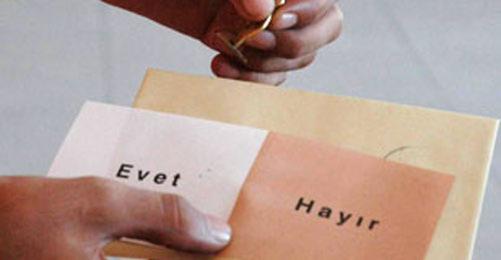
58 Percent Said "Yes" to Constitutional Reform Package
Rights Organizations 3 Years ahead of Foreign Minister