





220 Armenian Intellectuals Exiled in 1915 Commemorated

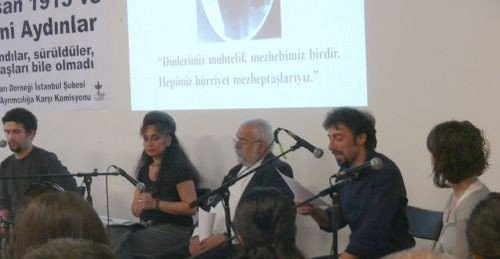



The Human Rights Association’s (İHD) Committee against Racism and Discrimination commemorated 24 April 1915, the day that Armenians worldwide recognise as the beginning of the forced exile of Armenians from the Ottoman Empire, with an event in the Tobacco Depot in Istanbul.
On that day, 139 Armenian intellectuals were arrested in Istanbul and forcibly taken to Çankırı and Ayaş in central Anatolia. They were then killed.
A loss for all of society, then and today
Lawyer Eren Keskin spoke at the event entitled “24 April 1915 and Armenian Intellectuals: They were arrested, they were evicted, they did not even get a grave stone.”
She said that the death of these intellectuals represented a loss not only for the Armenian language, culture, thought and science world, but also for the Ottoman society of the time and for “the world of all of us today.”
An exhibition displayed stories and pictures from a book entitled “Memory of 11 April”, written by Teotig in 1919 and dealing with the deaths of the intellectuals.
Music eliminating borders
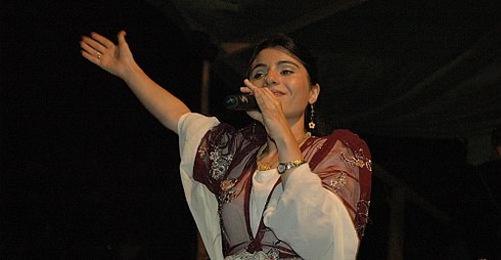
The commemorative event started with a concert of the Kardeş Türküler folk group which performed songs in Armenian, Kurdish, Suryani, Arabic and Turkish.
The group members said that they had fulfilled a wish of murdered Turkish-Armenian journalist Hrant Dink in December, when they had organised a tour in Armenia together with the Turkey-based Armenian choir Sayat Nova.
“We saw that the Ararat mountain embraces Yerevan just as much as it does Ağrı province.”
Keskin said, “We, who believed what we were told, and who stayed quiet even if we did not believe it…we are all guilty.”
Stories of lives cut short
Publisher Ragıp Zarakol and members of the Bosphorus Performance Arts Society (BGST) theatre department read life stories and poems of and by Rupen Sevag, Siamanto (Atom Yerjeyan), Taniel Varujan, Teotig (Teotoros Lapçinyan) and Krikor Zohrab, all of them killed in 1915.
Around 100 people attended the event, among them Hrant Dink’s widow Rakel Dink and his brother Orhan Dink, journalist Sarkis Saropyan, academic Ayşe Gül Altınay and lawyer and IHD branch head Gülseren Yoleri.
After Zarakol recounted the life of Armenian musician Gomidas, Keskin ended the commemoration with a quote from the musician:
“It was spring, but here it was snowing.” (BÇ/AG)



CATHEDRAL OF THE HOLY CROSS
Armenian Christians Celebrate First Mass after 95 Years in Akdamar
Quiet Commemoration 95 Years after Armenian Deportation
ragıp zarakolu writes
An Eulogy for Comrade Sarkis

Dashnak Party Withdraws from Armenian Government

CATHEDRAL OF THE HOLY CROSS
Armenian Christians Celebrate First Mass after 95 Years in Akdamar
Quiet Commemoration 95 Years after Armenian Deportation
ragıp zarakolu writes
An Eulogy for Comrade Sarkis
Dashnak Party Withdraws from Armenian Government