









Facing the past for Spain means confronting its traumatic 20th-century past, specifically the Spanish Civil War (1936–1939) and Francisco Franco’s dictatorship (1939–1975). After the death of Franco, the transition to democracy and a social consensus on forgetting the past period, which lasted around 25 years, were the main issues of the transitional processes. Briefly, in Spain, "historical memory" is constructed on the search for justice and studying the meaning of the difficult period of the Spanish Civil War. On the other hand, Spain does not yet recognize colonial abuses and crimes, and repeatedly rejects the demands raised by the Mexican leadership to apologize for 16th-century conquests.
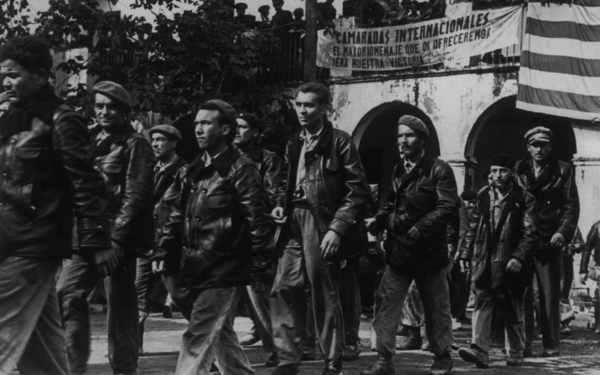
The Spanish Civil War (1936-1975) was a brutal internal conflict between the Republican government, supported by leftist, socialist, and anarchist factions, and the Nationalists, a right-wing coalition led by General Francisco Franco. The war erupted after years of political polarization and social unrest in Spain, caused by tensions between conservative and progressive forces over issues like land reform, secularism, and workers' rights. The Nationalists, with military and logistical aid from Nazi Germany and Fascist Italy, sought to overthrow the democratically elected Republican government. Meanwhile, the Republicans received limited support from the Soviet Union and international volunteers. The war resulted in a Nationalist victory, the establishment of Franco's authoritarian regime, and the loss of hundreds of thousands of lives.
Francisco Franco, a military dictator who came to power during the conflict, remained in control until his death in 1975. His rule is known as a period of terror, corruption, fear, and censorship. He believed in a strong centralized state, rejected democracy, promoted Catholic values, and was strongly opposed to socialism and communism. Following the end of the war, Franco's regime engaged in systematic kidnapping, torture, imprisonment, and exile.
Francisco Franco’s four-decade rule left deep and lasting negative effects on Spanish society, which still continue to shape the country’s politics, as seen in a strengthened far right. Fifty years after the death of the dictator, experts are split over how to educate younger generations about the legacy of his ideology. Unlike other infamous 20th-century leaders such as Hitler and Mussolini, whose regimes collapsed in the flames of war, Franco’s dictatorship endured for around four decades. Spain remained under his rule from the end of the Spanish Civil War until 1975, when he died peacefully in his bed.
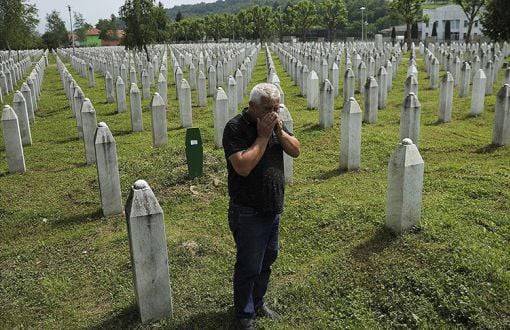
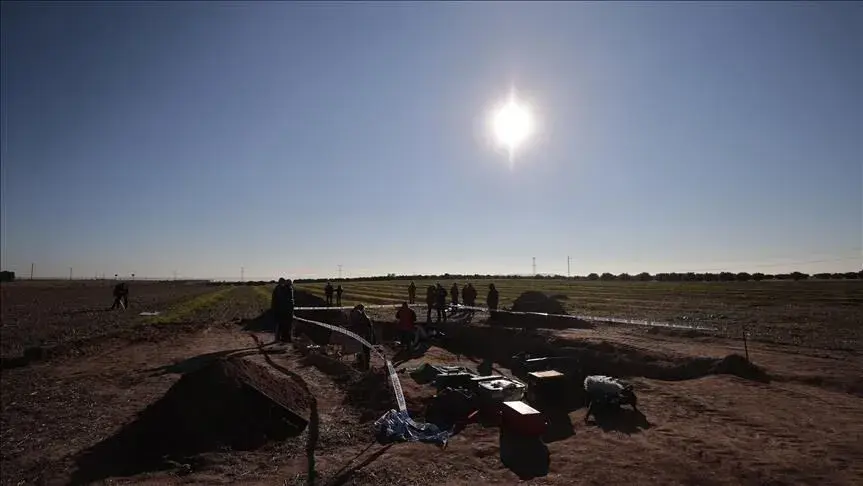
The Franco regime was among the most violent of modern times: between 115,000 and 130,000 people disappeared, 150,000 were assassinated, some 30,000 children were stolen from their parents, and thousands of political opponents were put in prison. According to the Platform for the Truth Commission, there are approximately 2,800 Franco-era mass graves around Spain.
Following Franco's death in 1975, King Juan Carlos and leading political figures initiated a process of transition to a constitutional democracy, and they enacted the 1977 Amnesty Law. This law pardoned political crimes committed during the dictatorship era, intending to secure a peaceful transition to democracy. Briefly, the Amnesty Law freed all political prisoners of the regime and allowed exiles to return to the country. However, it also granted legal impunity for human rights abuses and crimes committed by state officials and security forces during the Spanish Civil War and the Francoist dictatorship.
This blanket legal immunity granted to state officials and perpetrators of political violence committed during the dictatorship and Civil War is strongly criticized today by circles searching for justice and accountability for Franco-era crimes, as it still exists as a legal barrier preventing prosecution.
With the Amnesty Law, Spain entered a phase known as the "Pact of Forgetting," which is seen as the main step of Spain's political transition and is described as an informal agreement and collective intentional silence. In other words, the Pact of Forgetting was a kind of consensus between both the left and right parties in Spain to avoid confronting Francoism and prosecuting Francoist-era abuses to ensure a peaceful transition to democracy. This silence was initiated in an attempt to end division and establish peace between all social and political groups. It was accepted that Spain had a collective sense of denial and a lack of awareness about the past owing to the pact of forgetting. However, since the turn of the century, an increase in demands for justice and accountability has been observed among the descendants of victims and left-wing activists.
Facing the past is seen today as an ongoing, deeply polarized battle over the historical memory of the Franco dictatorship and the Spanish Civil War, as well as a struggle to recover the dignity and memory of the victims. Early initiatives were marked by the first exhumation in October 2000, conducted by journalist Emilio Silva, the grandson of one of the victims. This exhumation led the way for a series of mass grave exhumations of Civil War victims. Also, Emilio Silva’s articles on the political dimensions of historical memory were valued as foundational references and had a significant effect on raising awareness. By using the term “disappeared,” the articles brought the victims buried in ditches onto international human rights and transitional justice platforms.
Official recognition of victims and enacting laws
Since its inception in 2000, the movement for historical memory has had a huge social and political impact, leading to the establishment of many memory associations throughout Spain, and hundreds of mass graves have been exhumed. National and international political pressure from these associations has resulted in official acknowledgements of the victims and the adoption of national laws.
Legal initiatives to prosecute Franco’s crimes and repeal the amnesty law also secured the support of international human rights organizations and justice tribunals. Although these international channels have not yet been successful, they have contributed to giving the movement more visibility.
The Historical Memory Act of 2007, although considered an important step, delegated the responsibility and initiative of the exhumations to activist associations. This caused many ethical and logistical difficulties due to the lack of national protocols and coherent coordination. Today, the government only assumes a “facilitating” role, relying on the self-management of the associations.
The Democratic Memory Law of 2022 expanded state responsibility for locating mass graves, declared Francoist court sentences illegal, and aimed to clear remaining ambiguities. It also enshrines the right to investigate human rights violations committed during the Franco regime and the transition period, including torture and enforced disappearances. However, it fails to remove the longstanding legal and institutional barriers that have prevented victims from accessing truth, justice, and reparation.
The World Organisation Against Torture (OMCT) urges Spain to repeal the 1977 Amnesty Act and advises that acts of torture and enforced disappearance must never be subject to amnesties or statutes of limitation. It also asks Spain to honor its obligations regarding the victims' rights to truth, justice, and reparation, to amend Article 174 of the Penal Code to adequately define the crime of torture, and to establish the legal and institutional mechanisms to recognize and guarantee the right to reparation. Article 174 of the Spanish Penal Code defines and penalizes the crime of torture committed by public authorities or officials. It targets individuals who abuse their official position to inflict severe physical or mental suffering, impair cognitive abilities, or attack moral integrity.
At the start of 2025, Socialist Prime Minister Pedro Sánchez declared that the year would be dedicated to remembering the impact of the dictatorship and celebrating Spain’s progress since the transition to democracy. In an opening ceremony at Madrid’s Reina Sofía Museum, he announced a nationwide program of around 100 commemorative events. However, the conservative Popular Party (PP) and far-right Vox denounced the initiative as a political stunt by Sánchez. Vox even called it a form of “necrophilia” which “divides Spaniards” by restricting “freedom of thought.”
Exhumations of Civil War victims and related legal and reconciliation initiatives require a separate, dedicated study, as they involve complex legal, ethical, and political dimensions distinct from ordinary historical research. Transitional justice work carried out through the Truth Commission set up under the Democratic Memory Council is expected to be effective enough to investigate all human rights violations from the Civil War and the Franco dictatorship. (NT/VK)