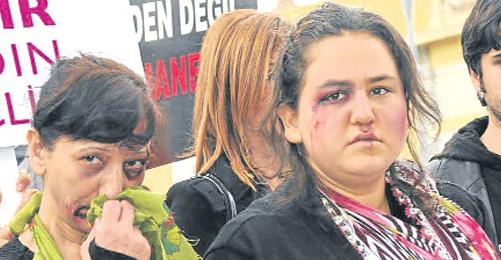



European foreign affairs ministers gather today (11 May) in Istanbul to sign a ground-breaking new Council of Europe Convention on preventing and combating violence against women and domestic violence. The treaty, open to all 47 countries of the Council of Europe and also to non-member states, should improve domestic legislation by imposing civil and criminal measures to fight violence against women across Europe, Human Rights Watch (HRW) announced on 10 May.
"All European governments should sign and ratify the convention as soon as possible," said Gauri van Gulik, women's rights advocate and researcher at Human Rights Watch. "(...) Human rights defenders throughout the region can use this convention to protect women and fight for better laws and practices in their countries."
The Turkish state does not protect women from domestic violence
"Practical in nature, this is a convention that has the potential to make a concrete contribution to the eradication of violence against women in Europe," said van Gulik, author of a new report "He Loves You, He Beats You" on family violence in Turkey and access to protection. "It addresses major gaps in protection of women and girls facing violence in the home."
This report documents brutal and long-lasting violence against women and girls by husbands, partners, and family members and the survivors' struggle to seek protection. Turkey has strong protection laws, setting out requirements for shelters for abused women and protection orders. However, gaps in the law and implementation failures by police, prosecutors, judges, and other officials make the protection system unpredictable at best, and at times downright dangerous.
First legally binding instrument in the region
Some 20 to 25 percent of women across the European region suffer physical or sexual violence at some point in their lives, according to the explanatory memorandum accompanying the Convention.
The convention is the first legally binding instrument in the region that creates a comprehensive legal framework to combat violence against women through prevention, protection, prosecution, and victim support. It defines and criminalizes multiple forms of violence against women: physical, sexual and psychological violence, as well as forced marriage and female genital mutilation. The treaty also establishes an international group of independent experts to monitor its implementation at the national level.
The Convention addresses gaps in domestic violence legislation and implementation, such as weak laws, bad implementation of protection laws, lack of coordination, lack of access to justice, low funding for domestic violence responses, lack of shelters, and lack of prevention measures.
To implement the convention, countries will establish hotlines, shelters, medical and forensic services, counseling, as well as legal aid.
In order for the convention to enter into force, at least 10 governments, including 8 member states of the Council of Europe, have to sign it. The European Union as a legal entity itself can also become a party to the Convention. (BB)
Source: Human Rights Watch.
Click here for the report "He Loves You, He Beats You. Family violence in Turkey and access to protection.
Click here for the HRW reports on women rights.