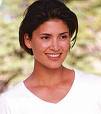
Young Mediterranean Women
Women in Their 20s: Voices from the Mediterranean



Women journalists from different countries in the Mediterranean have come together to investigate what it means to be women in their twenties in this region. Articles from Turkey, Algeria, Italy, the Lebanon, Spain, Egypt, France, Morocco and Palestine will contribute to telling their stories.
The first series of articles around the theme of “love” came out on 8 March, International Woman’s Day. They have been published in the different countries at the same time and can here be found in English.
"To Risk Love in Palestine" by Neila Khalil
"Lebanon: The Secret Emancipation" by Sahar Al-Attar
"Morocco: Between Survival and Self-assertion" by Kenza Sefrioui
"Women, Being Twenty in Italy"
"France: Young Women Come out of the Dark" by Sarah Ben Ammar
"To Be 20 in the Mediterranean: Women in Egypt" by Eman S. Morsi
"Turkey: The Country of “Child Women” and Women Who Forgot Their Womanhood" by Burcin Belge
"Being 20 in Spain" by Perrine Delangle
Bianet’s former women editor Burcin Belge is writing about Turkey. The articles are translated into Arabic, Italian, English, Spanish, Catalan, French and Turkish and published in bianet, babelmed, Akfar/Ideas and L’Orient Le jour.
The project is being supported by the Swedish Anna Lindth Foundation, IEMed (the European Institute of the Mediterranean) and the Friedrich Ebert Foundation.
Women journalists met in Barcelona on 5 and 6 February to prepare for a project of 45 articles which will deal with the lives of Mediterranean women in their 20s.
Women are stereotyped and underrepresented
Bianet also participated in the meeting which discussed the (in)visibility and representation of women in the media.
How active and effective are women in the media? How are women represented in the media, and why are they usually pushed into certain roles?
These were often-repeated questions. Although there has been an increase in the number of female journalists in the “Mediterranean media,” women are not really represented in the “serious world.”
The project of representing Mediterranean women in their 20s in a series of articles is thus also a way of counteracting the stereotyping of women in the mainstream media.
Different topics and different languages
The meeting in Barcelona was preceded by a six-month period of preparation, discussion and exchange.
After two days of discussing the problems which women/journalists face in their own societies, the following topics were decided on:
“The realities of women, inter-generational relations, covering/conservatism and religion, domestic violence, migration, love, role models, creativity, living with conflict.”
At the end of the project in April, the contributing journalists will meet again in Rome. There may be a book project and further collaborations.
Participants in the project
Sahar Al-Attar (Lebanon – L’Orient Le Jour), Stefanella Campana (Italy – Paraleli), Catherine Cornet (Italy – Babelmed), Nathalie Galense (Italy, France – Babelmed), Ghania Khelifi (Algeria – Le midi), Nadia Khoury-Dagher (France – Le Monde 2/Elle), Nadire Mater (Turkey – bianet), Eman Shaban Mohammad Morsi (Egypt – Daily Star), Kenza Sefrioui (Morocco – Journal Hebdomadaire), Lurdes Vidal (Spain – Afkar Ideas).
Naela Husin Ali Khalil of the Al-Ayyam newspaper in Palestine was not able to join the meeting because she had difficulties leaving the country. (NM/TK/NZ/AG)