"Media, Government and Judiciary May not Connive at Rape"





The Turkish Association of Psychiatrics (TPD) and the Society for Sexual Education, Treatment and Research (CETAD) demanded to refuse permission to the process of making rape become an ordinary issue and using it as an ingredient of tabloid television.
Both non-governmental organizations referred to the series "What is the guilt of Fatmagül?" in particular, saying that rape has been turned into a topic picked up by the tabloid television. In a written statement, TPD and CETAD criticized that according examples were increasing day by day, also mentioning the program "Chat in the shade" by Ali Poyraz in this context. The organizations remarked that the topic of rape has reached the level of comedy.
TPD and CETAD called on professional organizations and legal authorities to take action against programs that connive at violence and rape or praise and encourage violent actions.
Sexual harassment widespread, victims are hidden
In their announcement, the NGOs emphasized that sexual harassment was rather widespread but that the victims were hiding the violence out of concern for being excluded from society, stigmatized, humiliated or blamed. They called upon the government, media institutions and the judiciary to develop effective policies for the struggle against violence against women.
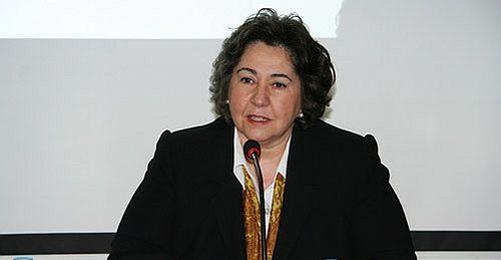
The statement was signed by CETAD President Dr Nesrin Yetkin, Dr Şahika Yüksel as the Coordinator of the TPD Women's Mental Health Scientific Research Unit, the Coordinator of the TPD Sexuality and Sexual Problems Scientific Unit, Dr. Ejder Akgün Yıldırım and Dr. Doğan Şahin as the Coordinator of the TPD Human Rights and Ethics Scientific Research. The announcement included the following key points:
* Especially women become victims of sexual violence. Presenting this sort of violence as an ordinary incident, turning it into a humoristic issue and using it as a pornographic stimulus lead to an increase of crimes related to sexual violence and their approval.
* The increasing forms of violence - physical, sexual, emotional, social and economic - bring about a huge responsibility to the media institutions.
* Some programs reinforce and strengthen social gender roles by encouraging violence against women and making it an ordinary issue.
* Media institutions have to fulfil their responsibility regarding the increased number of programs and should not broadcast programs that represent violence and the social gender role. This also concerns commercial advertisements, series, movies and game shows.
Government and judiciary called on duty
* Both the institutions and the society should support the protection of rape victims. Necessary measures have to be taken urgently to prevent this sort of crime.
* Since mainly women become the victims of sexual violence, they should adopt the approach that their body only belongs to them when they are going out. Preventive and protective policies have to be worked out which protect the woman and any individual from violence.
* First application centres and social support institutions should be established for victims of sexual violence in particular. The development of women rights based on gender equality should be a state policy.
* The women's health, their lives and rights have to be guaranteed. Sexual crimes should not benefit from any mitigation of punishment. Mitigation because of provocation or other excuses for lowering the punishment should not be approved. (BB/VK)


"Women Complicit with Rapists" - Part of Academic Freedom?

Sexual Harassment at Trade Union Confederation

From the Classroom to the Newsroom 2010
"Know Your Rights and Responsibilities"

Rights Journalism for Graduates

Women Demonstrate against Abuse and Rape

Women Take First Steps For Rape Crisis Centers

Women Journalists Enjoy Rights Training
"Women Complicit with Rapists" - Part of Academic Freedom?
Sexual Harassment at Trade Union Confederation
From the Classroom to the Newsroom 2010
"Know Your Rights and Responsibilities"
Rights Journalism for Graduates
Women Demonstrate against Abuse and Rape
Women Take First Steps For Rape Crisis Centers