Half of Turkey's Population Younger than 29

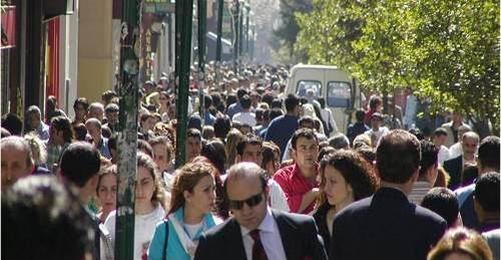



The Turkish Statistical Institute (TÜİK) announced current information about Turkey's population in 2009.
According to a survey carried out via the "Address Based Population Registration System", the population of Turkey amounts to 72,561,312 people which means a population growth of 14.5 per thousand. Reference date is 31 December 2009.
50.3 percent of the population is male, 49.7 percent is female.
Population decreased in 14 provinces
While the population increased in 67 provinces, a decrease was registered for 14 provinces. The provinces with the largest decrease were Tunceli (40 per thousand) in central Anatolia, and Ardahan (37 per thousand) and Kars (18 per thousand) in the northeast of the country. The most significant population growth was observed in the provinces of Çankırı (49.4 per thousand) in the north of Ankara, Bilecik (45 per thousand) close to the south-eastern tip of the Sea of Marmara and Isparta (32 per thousand) in the south-west of Turkey.
The most crowded city: Istanbul
18 out of 100 people are living in Istanbul. The city's population amounts to 12,915,158 people. The metropolis on the banks of the Bosporus is followed by the country's capital Ankara with 4,650,802 inhabitants, İzmir on the coast of the Aegean Sea with 3,868,308 people, Bursa at the south-east of the Sea of Marmara with 2,550,645 people and Adana at the south-eastern Mediterranean coast with 2,620226 inhabitants.
The smallest province is Bayburt in north-eastern Anatolia with 74,710 inhabitants.
Population density of almost 2,500 people per square kilometre in Istanbul
The population density in Turkey averages at 94 people per square kilometre. In Istanbul, this ratio is multiplied by a factor of 26 to 2,486 inhabitants per square kilometre. In Kocaeli on the eastern coast of the Sea of Marmara, the density of population adds up to 421 people per square kilometre, in Izmir it is 322, followed by Hatay next to the Syrian border with 249 and Bursa with 245 inhabitants per square kilometre.
The province of Tunceli brings up the rear with a population density of 11 people per square kilometre.
In Konya as the largest province in terms of surface area, 51 people live on one square kilometre, in the smallest province of Yalova it is 239 people.
76 out of 100 people live in the centres of cities and provinces.
A quarter of the population younger than 15
67 percent of the population is at "working age" between 15 and 64 years old. With 26.65 percent, slightly more than a quarter of the population is less than 15 years old whereas only 7 percent are older than 65.
Half of the Turkish population is younger than 29. The average age for males is 28.2, women are only slightly older with 29.3 years on average. (TK/VK)

KURDISH QUESTION
PKK Ceasefire to be Terminated on 31 October?
KCK CASE
Court Dismissed Request for Defence in Kurdish
7th Istanbul Gathering for Freedom of Thought
CONSTITUTIONAL AMENDMENTS
58 Percent Said "Yes" to Constitutional Reform Package
Rights Organizations 3 Years ahead of Foreign Minister