









Appeals Court Refuses to Recognize Alevi Houses of Worship





The Seventh Civil Chamber of the Supreme Court of Appeals overturned a local court decision on Wednesday and ruled against the Çankaya Cemevi Construction Association in a suit filed by the Ankara Chief Prosecutor's Office to shut the organization down.
The Çankaya Cemevi Construction Association's charter includes articles that run counter to Turkish laws, and the charter itself is therefore in conflict with current legislation, the appeals court said.
The Çankaya Cemevi Construction Association is engaged in the construction of "Cem Houses," the places of worship where members of Turkey's historically persecuted Alevi minority perform their religious rites.
The Supreme Court of Appeals further argued that no place other than a mosque or a masjid could be recognized as a house of worship in the verdict that it passed through a majority vote.
The Ankara Chief Prosecutor's Office had filed the suit against the Çankaya Cemevi Construction Association on the grounds that the organization's charter referred to Alevi cem houses as houses of worship. A local court, however, had rejected the case file, but the Supreme Court of Appeals has now agreed with the prosecution to press charges against the defendants.
Veli Ağbaba, a deputy of the main opposition People's Republican Party (CHP) from the eastern province of Malatya, had also issued a Parliamentary question to Prime Minister Recep Tayyip Erdoğan several days ago regarding the quantity and distribution of cem houses across Turkey over the years.
Parliament Speaker Cemil Çiçek had also sparked some controversy when he rejected a proposal earlier this month by CHP deputy Hüseyin Aygün to open a cem house in Parliament. Çiçek had cited a "fatwa" (religious decree) issued by the Directorate of Religious Affairs which stated that mosques constitute the sole proper houses of worship in the Islamic faith of which the Alevis were a part. (YY)
HATE CRIME
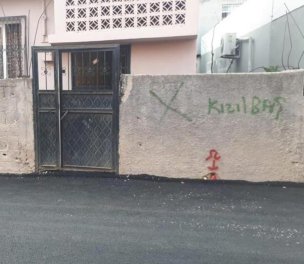
Alevi homes marked in Adana in 38th similar incident in a decade
Assailants Attempt to Torch Alevi Culture Association
Alevi Homes Marked in Istanbul
ALEVİS RESPOND TO PM ERDOĞAN
“The State is Responsible for Unlicensed Alevi Houses of Worship”
Attack on Kurdish Alevi Family Draws Protests, Condemnation
“We Did Not Ask for Alevi Courses”
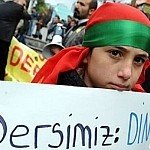
Dersim Massacre Protested
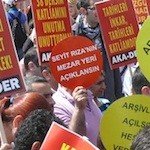
Attacks on Alevi Cem House
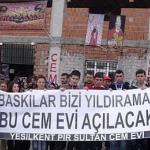
Governor Averts Commemoration on Maraş Massacre
DERSIM MASSACRE
Prime Minister: "I Apologize for Dersim"

HATE CRIME
Alevi homes marked in Adana in 38th similar incident in a decade
Assailants Attempt to Torch Alevi Culture Association
Alevi Homes Marked in Istanbul
ALEVİS RESPOND TO PM ERDOĞAN
“The State is Responsible for Unlicensed Alevi Houses of Worship”
Attack on Kurdish Alevi Family Draws Protests, Condemnation
“We Did Not Ask for Alevi Courses”
Dersim Massacre Protested
Attacks on Alevi Cem House
Governor Averts Commemoration on Maraş Massacre
DERSIM MASSACRE
Prime Minister: "I Apologize for Dersim"