Kurdish Politician Türk Tried here, Acquitted there
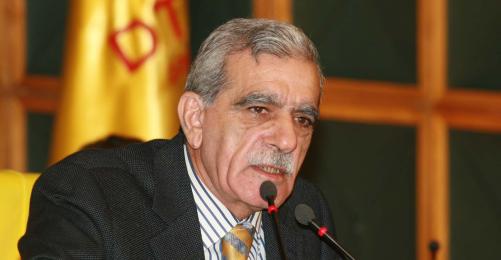



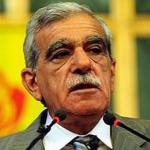
The Ankara Public Prosecution filed a trial against Ahmet Türk, former co-chair of the pro-Kurdish Democratic Society Party which was closed in December 2009 by the Constitutional Court. Türk stands accused of violating the Political Parties Law on the grounds of his speech delivered in Kurdish in parliament on the occasion of the "International Mother Language Day".
In a Parliamentary Group Meeting in the Turkish Grand National Assembly (TBMM) on 24 February 2009, Türk had said, "21 February is the Mother Language Day and people should voice their own thoughts and ideas in their own languages". After that, he addressed the parliamentary group and the journalists in Kurdish.
The lawsuit was filed by Public Prosecutor Levent Savaş. According to the indictment, Türk opposed article 81 of Law no. 2820 on Political Parties with his speech in Kurdish.
As stipulated in article 81 entitled "Prevention of the Creation of Minorities" political parties a) Cannot put forward that minorities exist in the Turkish Republic based on national, religious, confessional, racial, or language differences; b) Cannot by means of protecting, developing, or disseminating language or cultures other than the Turkish language and culture through creating minorities in the Republic of Turkey have the goal of destroying national unity or be engaged in activities to this end; c) Cannot use a language other than Turkish in writing and printing party statute or program, at congresses, at gatherings in open air or indoor gatherings; at meetings, and in propaganda..."
Türk is facing prison sentence of at least six months according to article 177 of the Political Parties Law applied for the same reason. Türk is tried before the Ankara 3rd Criminal Court of First Instance.
Türk acquitted in Istanbul
The Istanbul 9th High Criminal Court litigated Türk over his statement of appreciation regarding the militant Kurdistan Workers' Party (PKK) organization's proclamation of a ceasefire. The court acquitted the Kurdish politician on 6 May; he had been in the dock since 16 January 2008. The court eventually decided that Türk "did not intend to make propaganda".
Türk had attended an iftar meal (breaking of the fast during Ramadan at sunset) organized by the Ümraniye district on the Asian side of Istanbul on 30 September 2006. Related to the ceasefire declared by the PKK, Türk told the journalists, "Great democrats and intellectuals supported the people who saw Turkey moving towards a disaster. Also Mr Öcalan sent his support for our call from Imralı a few days ago. The PKK announced the ceasefire in order to give a chance to and develop a democratic South-East, for peace, for brotherhood, for a democratic Turkey. I want to say that we are very happy about this". This statement was broadcasted on the Kurdish ROJ TV station one day later. (EÖ/VK)


A graduate of the French Language and Literature Department at İstanbul University. He has served as the Turkey representative for the international organization Reporters Without Borders (RSF), where he began as a reporter in 1996. Since 1999, he has worked at bianet, a project of the IPS Communication Foundation, as the coordinator of the Legal Support Desk, editor for freedom of expression, and editor-in-chief. He has authored more than 4,800 signed news articles and opinion pieces. He has also written for Bizim Gazete and the journal Güncel Hukuk. He currently prepares the Media Monitoring Reports at bianet.

23-Year Prison Threat for Kurdish Politician
Trial on Seven Speeches of Kurdish Politician Postponed
Yet Another Trial for Pro-Kurdish Politicians Türk and Tuğluk
Former DTP Co-Chairs Face Heavy Prison Sentences
Kurdish Politician Speaks Mother Tongue in Parliament, Live Broadcast Cut

23-Year Prison Threat for Kurdish Politician
Trial on Seven Speeches of Kurdish Politician Postponed
Yet Another Trial for Pro-Kurdish Politicians Türk and Tuğluk
Former DTP Co-Chairs Face Heavy Prison Sentences
Kurdish Politician Speaks Mother Tongue in Parliament, Live Broadcast Cut
MAY 3 WORLD PRESS FREEDOM DAY
Journalism rights thrive on reader support!
BİA MEDIA MONITORING REPORT 2025
Those who want to silence journalists are now more brazen!
BİA MEDIA MONITORING OCTOBER-NOVEMBER-DECEMBER 2025
The future of journalism is in danger under government pressure!
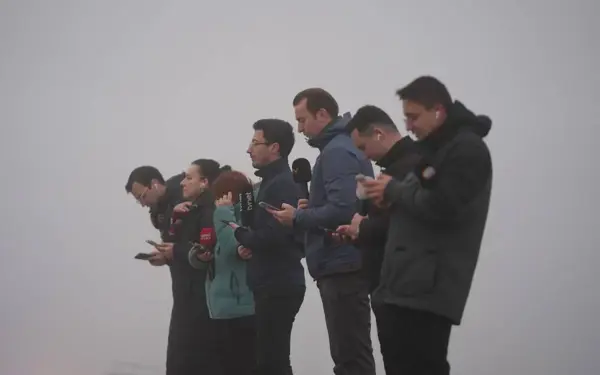
BİA MEDIA MONITORING JULY-AUGUST-SEPTEMBER 2025
Prolonged detentions and judicial control tighten pressure on journalists
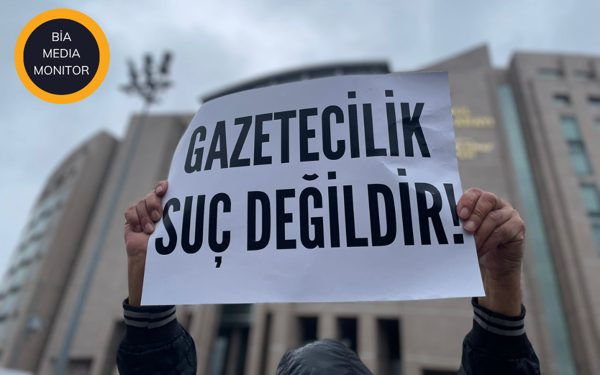
BİA MEDIA MONITORING APRIL-MAY-JUNE 2025
Unprecedented pressure on journalists under the government's watch