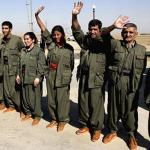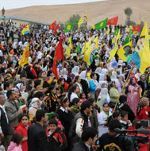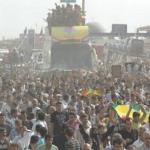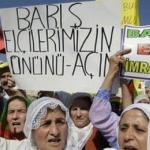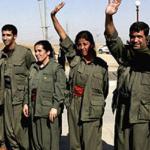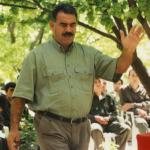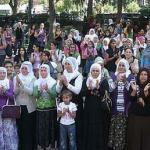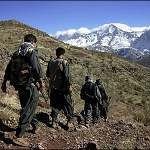






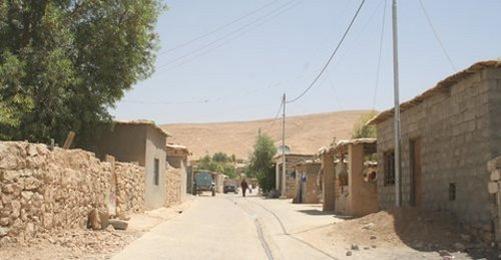



"Peace groups" enter Turkey today at the city of Başverimli (Tılqebin) in the Silop district of Şırnak in the southeast of the country. The idea of installing peace groups was brought up by imprisoned Abdullah Öcalan, leader of the militant Kurdistan Worker's Party (PKK).
According to Fırat News Agency (ANF), 8 members of the PKK will come from the city of Kandil and 26 refugees from the United Nations Mahmur Camp will join.
As reported by ANF, the Mahmur group will deliver letters to the president, the prime ministry and the parliament. The group is going to move on to Ankara to talk to MPs in the parliament. This group consists of refugees that had to migrate to Iraq after their dislocation between 1992-1995.
Öcalan suggested that one group should also come from Europe.
DTP meets peace groups
Pro-Kurdish Democratic Society Party (DTP) co-chairs Ahmet Türk and Emine Ayna are going to meet the groups this morning in Silopi.
Ayna and Türk declared:
"We should not exploit the PKK's good intentions and we should not approach this process with a reasoning of elimination. Peace groups were sent to Turkey before in 1999, but the state did not cease that opportunity properly. It was turned into the opposite when the peace delegates were imprisoned. After 10 years Turkey has another important opportunity now. This opportunity must not be wasted; Turkey should not repeat the mistakes made in 1999. Our expectations, hopes and wishes lay on this matter. We call the state and the government for approaching this step responsibly and ceasing this opportunity for peace and finding a solution".
Kalkan: groups come for dialogue and negotiation
According to information from ANF, Duran Kalkan, one of the leading PKK members, said that the groups' purpose is to create dialogue and the start of negotiations. He explains the aims of the visit as follows:
- Stopping military operations, mutual end of conflicts and ceasefire
- Announcement of Öcalan's road map and it's delivery to the addressees
- Start discussions on the constitution
- Recognizing the Kurdish identity guaranteed on the base of the constitution; speaking and developing the Kurdish language freely everywhere; giving Kurdish names to children from the Kurdish society, education in their Kurdish mother tongue, living the Kurdish culture, history and arts freely
According to an article of Murat Yetkin from Radikal newspaper based on the evaluation of a high-rank officer whose name and position remain undisclosed, the government expects an acceleration of the "homecomings" (PKK members dropping their guns and 'go home') if the process is not "sabotaged".
Different news agencies and TRT declared the arrival of the "peace groups" as a start for PKK members to give in. When President Abdullah Gül was asked to comment the issue, he said, "Very well, it's nice". (TK/VK)