Kurdish question and mhp
"MHP and CHP Should Be Most Supportive of Kurdish Initiative"

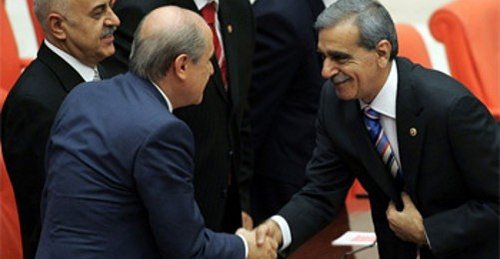



Assoc. Prof. Tanju Tosun from the Aegean University's International Relations department, argues that Devlet Bahçeli, leader of the Nationalist Movement Party (MHP) is worried about losing the support of his party basen and that is why he is opposing the government's Kurdish initiative.
"I believe that Bahçeli wants to control his social base. He thinks that the MHP will lose support if it moves from its past stance on the Kurdish question. He is not interested in gaining a new base, new voters. In order to preserve the support he has, he appears in public with a discourse of opposition."
Bahçeli insists on "one flag, one language..."
Speaking at a press conference in parliament on Tuesday (11 August), Bahçeli frequently used terms such as "treachery" and "separatism". He said that they would "oppose to the last" developments that questioned "the principles of 'one country, one state, one nation, one flag and one language'."
The academic also made the following observations:
MHP's populism: Although it is reasonable that democratisation steps need to be taken for social peace, and although the MHP also believes that, it is unable to say so. Recently, Bahçeli is making use of populism.
MHP is moving away from the centre: While the MHP has gradually moved towards the centre, it is now moving back. Being a party of the centre requires courage, a tendency to make compromises and the ability to placate supporters. With its muted populism, it is making pragmatic gains, but is not making any progress with its political imagination.
The role of separatists: With such reactions, society is constantly being divided into "us" and "them, and the question of how we can all live together is constantly deferred. At a time when there is most need for compromise, the party is constantly creating new opposition. While Bahçeli is speaking of the "danger of separatism", he is himself playing that part.
CHP and MHP should most support the initiative: I believe that the MHP and the CHP need to support a solution of the Kurdish question most of all because their supporters are able to legitimise the search for social compromise and are in their nature closer to dropping their opposition. It is clear that they could solve the Kurdish question more easily than the AKP, whose initiative is pragmatic. Are the MHP and the CHP supportive of a solution or not? If they are, their suggestions would be clear and sincere. The MHP must understand, without letting our differences dominate too much, that we have to coexist, and it must take part in a solution.
Possible role of the DTP: If the Democratic Society Party (DTP) made its demands clear, this may persuade the MHP to take part in a solution. Those who really have to meet for a solution are the CHP, the MHP and the DTP.
AKP not really interested in democracy: If we look at the steps taken by the AKP, we cannot expect any initiatives that would turn the current system upside down. It is taking relatively courageous steps, but not because it is democratic This is exactly what Ahmet İnsel has called "opportunist conservatism". In order to hold on to power in the system, it is making these efforst, not because it has appropriated democratisation essentially. Abdülkadır Aksu, today party deputy chair, speaks of democraticisation, but it was him, who as Minister of the Interior in the time after the military coup of 12 September 1980 helped to destroy any gains in democraticisation. Nevertheless, wherever the motivation for these steps has come from, they need to be seen as something positive.
Responsibility of media and NGOs: The more the media, opinion makers and NGOs are involved in the process, the more chances of success there are. Beyond politics, society must hear frequent messages of compromise. The attitude of society and of political actors can change. (TK/AG)

ERTUĞRUL KÜRKÇÜ On Government's Kurdish İnitiative
Possibility of a "Solution" Needs to Be Taken Seriously
Government's "Kurdish Initiative"
Minister Atalay Meets with TOBB
Kurdish Question
"Real Issue Is PKK's Participation in Legal Politics"
kurdish question
Minister Atalay Speaking to Political Parties about Initiative
Kurdish question
Öcalan's "Road Map" Obstructed by "Inclement Weather"

Kurdish Initiative
Minister Atalay Listens to Journalists' Suggestions
Kurdish Question
Öcalan: "It Has Taken a Long Time, But It Will Be Good"
Government's Kurdish Initiative
Minister of Interior Meets with DTP
How CHP and MHP Can Be Part of the Solution
Analysis by Zafer YÖRÜK
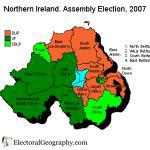
Kurdish Question: Lessons to Be Learnt from Northern Ireland
ERTUĞRUL KÜRKÇÜ On Government's Kurdish İnitiative
Possibility of a "Solution" Needs to Be Taken Seriously
Government's "Kurdish Initiative"
Minister Atalay Meets with TOBB
Kurdish Question
"Real Issue Is PKK's Participation in Legal Politics"
kurdish question
Minister Atalay Speaking to Political Parties about Initiative
Kurdish question
Öcalan's "Road Map" Obstructed by "Inclement Weather"
Kurdish Initiative
Minister Atalay Listens to Journalists' Suggestions
Kurdish Question
Öcalan: "It Has Taken a Long Time, But It Will Be Good"
Government's Kurdish Initiative
Minister of Interior Meets with DTP
How CHP and MHP Can Be Part of the Solution
Analysis by Zafer YÖRÜK
Kurdish Question: Lessons to Be Learnt from Northern Ireland
KURDISH QUESTION
PKK Ceasefire to be Terminated on 31 October?
KCK CASE
Court Dismissed Request for Defence in Kurdish
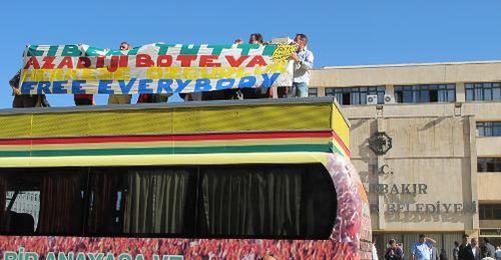
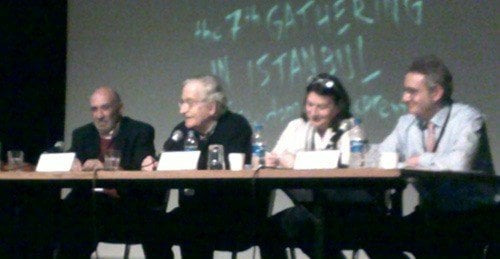
7th Istanbul Gathering for Freedom of Thought
CONSTITUTIONAL AMENDMENTS
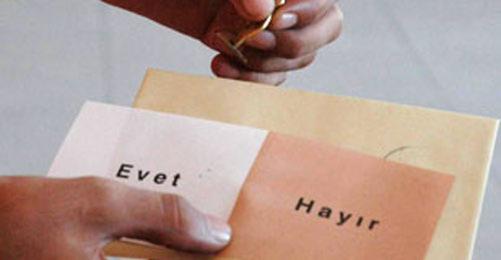
58 Percent Said "Yes" to Constitutional Reform Package
Rights Organizations 3 Years ahead of Foreign Minister