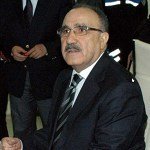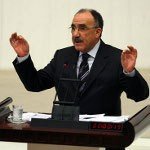










Is the government credible and sincere in its "initiative? Everyone who has had their fingers burnt before is asking this question, and one cannot but sympathise with their doubts if one looks at the past. However, the statements of the Minister of the Interior, Beşir Atalay, seem to suggest that the government is taking the subject seriously, whether it is sincere or not.
It is important that there seems to be encouragement of social debate and pluralist participation in the initiative, as well as the suggestion that the pro-Kurdish Democratic Society Party (DTP) will be involved.
Not a solution per se
However, despite supporters ready to shout out, one needs to be aware of naively believing that an initiative can by itself represent a solution. Rather, we should see the current period as a time when the "problem" is being discussed and comprehended, and where conditions are being created to focus on solutions.
Currently no freedom of debate
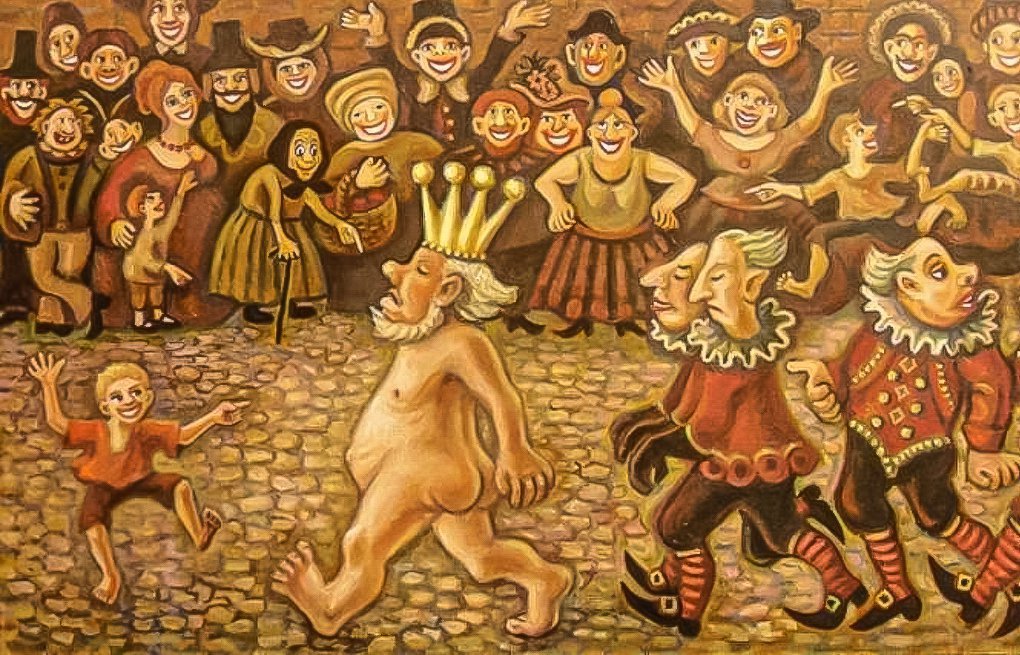
This period will also be a test of the government's sincerity. Even in order just to discuss the issue, and for all parts of society to join this discussion, a series of laws that limit the freedoms of expression and organisation need to be changed; Articles such as 301 and 3713, which would permit even the defining of the issue to be accused of "separatism" and "terrorist propaganda" need to be abolished.
Not only the government, but also the media and universities need to give up on hegemonic approaches and encourage a climate of pluralism, liberalism and debate.
All of this is not easy. Where is the regime, which categorised not only studies of, but even the thinking about these issues as criminal for thirty years, going to find the thousands of people necessary to carry out a series of sophisticated studies, institutionalisations and implementations; how is it going to enable people to work without fear of punishment under the current legislation? The process we are going through first needs to address these issues.
The manner in which the Minister of the Interior made his statement suggests that he is aware of the "long and thin path" ahead. We seem to be watching an attitude that should be taken seriously.
Attitude of the army
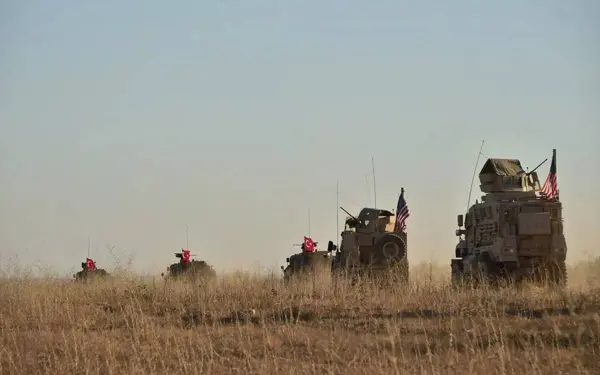
It is not known whether the Turkish Armed Forces (TSK) support the government's initiative, because everything is negotiated behind closed doors; however, we know that the TSK and the government have long shared opinions and acted together as far as the Kurdish question is concerned, particularly in the area of the military and security.
They displayed complete collaboration in the creation of sharing mechanisms of intelligence between the USA, Iraq, the Iraqi Kurdistan Regional Government and Turkey in order to restrict the PKK's armed existence and activities and with the aim of eventually destroying it.
It is also known that the TSK supported the ruling Justice and Development Party (AKP) in the local elections in March 2009 in the region. Although there are differences in approaches and interpretations, there is no indication that there is a great divide between TSK and AKP as far as an initiative or a solution are concerned. The media has long reported on the fact that the Turkish secret service, MİT, has been working on procedures for the approach for nearly two years. The fact that the General Staff has not made any statements that show displeasure with the course of events is also noteworthy.
However, the AKP and the TSK agree on an approach based on security considerations, rather than one on more freedom. We can predict that the TSK will not oppose arrangements that stay faithful to the "unitary state" and guarantee "security".
[...]
CHP and MHP
The reaction of the general accountant of the main opposition Republican People's Party (CHP), Mustafa Özyürek, to the statements of Minister of the Interior Atalay [...] also show that the republican elite has chosen not to oppose being a part of a solution categorically. This is positive, and also shows that the CHP is moving away from the Nationalist Movement Party (MHP).
MHP leader Bahçeli seems determined to hold the monopoly on fascist reactionary attitudes to the current process. He said, "The Prime Minister, who does not have the determination to fight against terrorism, is going to work for separatist demands and surrender to terrorism." [...] The fact that his attitude is that of a minority can be counted as a blessing in Turkey's increasingly conservative climate.
Eventually a new constitution
It seems as though the government will not create suggestions for a solution on its own, but only after pluralist negotiations. This also means, however, that the period of debate may be manipulated. However, the fact that Beşir Atalay announced that 'the problem can be solved by extending democratic rights and making everyone feel equal and free' gives us an idea about the basis of the planned "package": the process will necessitate a new constitution; In the short run, there will be changes in laws and government policies, and in the long run, after the 2011 general elections, constitutional change will be on the agenda.
Urgent measures
It is to be expected that the government's packages will include measures that will lead to a guaranteed 50 percent vote in the 2011 elections. There are several pressing issues.
With secret and open talks, military operations and fighting in the region must be ended in order to make the deaths of soldiers and guerillas stop being an everyday occurence. There must be political and administrative measures that ensure the continuation of the lack of fighting in the southeast. There must also be administrative and economic provisions to encourage a return to the region. There must be more public investment in the area. Obstructions to border trade with Iraq and Syria must be lifted. There must be a general amnesty prior to the 2011 elections or changes to the penal system to achieve the same results. Local authorities must be allowed to use Kurdish.
The role of socialists
Up to now, the government has been carrying out activities behind closed doors. However, from now on, socialists and the democratic opposition also have great responsibility. Although we should avoid exaggerations, it is true that a window of opportunity has been opened. Democracy is not an end in itself; seeing as it is a port of call for the liberation of labour, Turkish and Kurdish socialists must reach out to each other. It is their duty and their right to head the democratic struggle by defending the rights of the oppressed and the freedom of expression. [...] (EK/AG)