Kurdish Question
Diyarbakır Hopeful after Minister's Speech



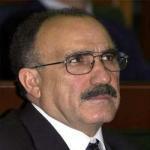
Yesterday, Minister of the Interior Beşir Atalay spoke to the press in Ankara about a planned government package to solve the Kurdish question.
The speech made the headlines in the mainstream newspapers today (30 July).
People hopeful in Diyarbakır
In Diyarbakır, the largest Kurdish-majority city of the southeast of Turkey, people seem to have received the speech with optimism.
Mehmet Emin Aktar, president of the Diyarbakır Bar Association, said:
"Whomever I talked to yesterday in Diyarbakır after the speech was hopeful. People said, 'Something will change'."
Speech important
Speaking to bianet, Aktar said that the Kurdish issue was too complex to be solved with one initiative, but that it could be solved within a process.
For the lawyer, the minister's speech was important because of the following:
1. The government called the issue by its name, i.e. the "Kurdish question" (rather than the "Eastern question, etc.).
2. He emphasised that all state institutions need to collaborate for a solution.
3. The government would speak to groups from all sections of society and allow them to contribute.
4. Examples of social conflict and its solution from around the are being considered before then developing a unique model for Turkey.
Referring to the minister's promise to speak to NGOs and professional associations, Aktar said that the bar association would like to meet with the government, but that there was as yet no official contact.
For the lawyer, the first precondition for dialogue is an end to fighting. This, he believes could be achieved by the military refraining from operations, and by the armed Kurdistan Workers' Party (PKK) withdrawing so as to avoid physical contact.
The Minister of the Interior spoke of short-, mid- and long-term implementations. Aktar believes that several changes in the short term would decrease social tensions:
* Settlements should be allowed to use their former, Kurdish names.
* Kurdish language and literature departments should be opened at appropriate universities, particularly ones like Diyarbakır.
* Legal obstructions for Kurdish radio stations and TV channels need to be lifted. Private companies must be allowed the same rights as TRT 6, the Kurdish language state channel broadcasting since 1 January 2009. The status of TRT 6 must be legally safeguarded.
* Kurdish must be allowed as a language of education, but this may be a mid- or long-term strategy. (TK/AG)

KURDISH QUESTION
PKK Ceasefire to be Terminated on 31 October?
KCK CASE
Court Dismissed Request for Defence in Kurdish
7th Istanbul Gathering for Freedom of Thought
CONSTITUTIONAL AMENDMENTS
58 Percent Said "Yes" to Constitutional Reform Package
Rights Organizations 3 Years ahead of Foreign Minister