DTP Has Proven That It Represents Kurds



1. Kurds are not happy about the government’s approach to the Kurdish question.
2. The Democratic Society Party (DTP) is the primary actor in the Kurdish question.
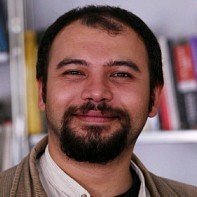
Yeğen is a member of the Turkish Peace Parliament and author of books and articles on Turkish nationalism and the Kurdish question. He believes that the election should be read as a referendum.
The academic speaks of the “puny” cultural rights which the Justice and Development Party (AKP) has finally acceeded to Kurds, with the approval of the army and the State Security Board, giving the new state channel broadcasting in Kurdish (TRT 6) as an example. This and the reduction of the Kurdish question to one of “development” are examples of the “embarrassed recognition” of the issue by the government.
Failure of approaches to Kurdish question
“The results have shown how the Kurdish question will not be solved. The oppression and marginalisation of the 1990s, but also the ‘embarrassed recognition’ of the AKP have failed.”
Yeğen believes that both Kurdish and Turkish voters are disillusioned with the AKP’s attitude towards the Kurdish question.
He also warns that a solution must involve a multi-actor approach, including the security bureaucracy, the army, parliament and political actors to create a solution based on liberal policies.
Polarisation will only increase
The Turkish Peace Parliament and DTP MPs have previously suggested that parliament devote a special study and sessions to the Kurdish issue.
As long as no steps are taken, Yeğen warns, Kurdish-majority areas will increase their support for the DTP. “This may seem positive for the DTP, but in terms of Turkey’s general political landscapte it leads to camps and polarisation.”
Why has AKP lost votes?
Yeğen points to several reasons for the loss of votes the AKP has had to face, arguing that the economic crisis is a general backdrop. In addition, he cites the follwing:
- The extraordinary factors that caused the votes for the AKP to rise in the general elections in July 2007 are absent now. At the time, the army had issued a warning on its website, and the election of President Gül was contested.
- Voters have protested against the fact that the AKP is moving away from reform politics and placing “its people” in bureaucratic positions. The lack of compromise the AKP has been displaying has also lost it votes. More people have started to believe that the AKP represents a threat to their way of life.
Opposition needs to learn from Istanbul
On the other hand, the clear loss in votes for the AKP is not really due to a strong opposition. Yeğen evaluates both the Republican People’s Party (CHP) and the Nationalist Movement Party (MHP) as weak. He cites the successful increase in points for the CHP in Istanbul, with mayoral candidate Kemal Kılıçdaroğlu, as an indication of how the CHP should work. “Opposition based on laicisim does not benefit the CHP. It needs to create social policies and policies that oppose corruption, emphasise poverty and the daily problems of urban life.” (TK/AG)

Two Dead as Police Prevents Öcalan Birthday Celebrations

That Makes Two: Only One New Female Province Capital Mayor

Six Armenians in Istanbul’s Municipal Councils

Türk: AKP Did Not Solve Kurdish Question, Kurds Took Votes Elsewhere
CHP Demands Recount in 5 Istanbul Districts

400 Thousand Disabled Denied the Right to Vote

ERTUGRUL KURKCU's analysis
Electorate Buries Erdoğan's Arrogance at Polls

The Municipalities Erdoğan “Definitely” Wanted…

Local Election Results:
AKP Loses Points, CHP, MHP and DTP gain

Two Dead as Police Prevents Öcalan Birthday Celebrations
That Makes Two: Only One New Female Province Capital Mayor
Six Armenians in Istanbul’s Municipal Councils
Türk: AKP Did Not Solve Kurdish Question, Kurds Took Votes Elsewhere
CHP Demands Recount in 5 Istanbul Districts
400 Thousand Disabled Denied the Right to Vote
ERTUGRUL KURKCU's analysis
Electorate Buries Erdoğan's Arrogance at Polls
The Municipalities Erdoğan “Definitely” Wanted…
Local Election Results:
AKP Loses Points, CHP, MHP and DTP gain
KURDISH QUESTION
PKK Ceasefire to be Terminated on 31 October?
KCK CASE
Court Dismissed Request for Defence in Kurdish
7th Istanbul Gathering for Freedom of Thought
CONSTITUTIONAL AMENDMENTS
58 Percent Said "Yes" to Constitutional Reform Package
Rights Organizations 3 Years ahead of Foreign Minister