






“Turkey Not Abiding by ECHR Decrees”




Funded by the European Commission's Sixth Framework Programme, the Centre for Global Studies at Yıldız Technical University (YTU) in Istanbul is carrying out a three-year project on the effects of decrees by the European Court of Human Rights (ECHR).
The project, called JURISTRAS "Litigation in the ECtHR and Domestic Implementation in Human Rights Case Law" is being carried out in Britain, France, Germany, Austria, Italy, Greece, Bulgaria and Romania as well as Turkey. In Turkey, Prof. Dr. Haldun Gülalp, Dean of YTU’s Faculty of Economic and Administrative Sciences, Dr. Dilek Kurban from the Economic and Social Studies Foundation of Turkey (TESEV), and Assistant Professor Dr. Ozan Erözden are responsible for the project.
Project introduced
At the conference, Gülalp introduced the project. In the first year, the team analysed whether ECHR decrees were being abided by. The second year was used for fieldwork. In the third year, experts have been interviewed and a report prepared.
Kurban spoke of the interviews with members of different groups in Turkey (minorities, conscientious objectors, etc.), as well as Ministries (of Foreign Affairs, of Justice, of the Interior and Finance). she said that the Islamic population had been discouraged to apply to the ECHR after rejection decrees concerned with the Supreme Military Court and veiling practices.
Veiling cases
After Leyla Şahin, a medical student, appealed to the ECHR in 1998 after being excluded from Istanbul University for wearing a headscarf, the international court decreed in 2005 that the headscarf ban did not represent a violation of the freedom of conscience and religion. Nevertheless, after the court decree was announced, applications in similar cases started to increase again.
Kurban pointed out that the project was concerned with Articles 8, 9, 10,11 and 14 of the European Convention on Human Rights. When the ECHR rejected a case by the Welfare Party (Refah), who argued that its closure violated the “right to organisation”, the Virtue Party (Fazilet) withdrew its application to the international court.
As for the case of Merve Kavakçı, an MP elected for the Virtue Party in 1999 who was denied confirmation of her office because she entered parliament in a headscarf, the ECHR decreed that the right to the freedom of religion and conscience had not been violated. However, the court decided that the right to vote and be elected had been violated. Her appeal still represents an exception in Islamic circles and the decree in her case has not really set a precedent for others.
Obligatory RE classes
Kurban then discussed the applications by Alevis to the ECHR in complaint of the obligatory religious education classes in Turkey. The recent decree of an Antalya administrative court is likely to act as a precedent and lead to successful applications within Turkey.
As for ECHR decrees on the freedom of expression and the freedom of religion and conscience, Kurban said that Turkey did not fulfill its obligations or solve problems.
Surname case ignored
The case of Izmir lawyer Ünal Tekeli, who appealed to the international court because she did not want to use her husband’s surname, has created a precedent. However, women’s organisations had not shown interest in her struggle or the decree.
Comparison of countries
In the second part of the conference, Gülalp presented a report comparing freedom of religion and conscience in France, Turkey, Greece and Bulgaria. While France has not received any sentences in any such cases, Greece and Bulgaria have been sentenced several times for stipulating Orthodox Christianity in their constitutions.
Gülalp further said that the German Constitutional Court was so effective that only few people took cases further to the ECHR. As for Austria, practices there show an astonishing contradiction between the freedom to veil and a prevalence of racism.
Participants
Participants at the conference also shared their views on the report. The reports, written in English, can be accessed at the JURISTRAS Turkey website.
The conference at YTU took place on 27 February. Participants were Kerem Altıparmak from Ankara University, Şebnem Gökçeoğlu Balcı from Galatasaray University, Evren Balta from YTU’s Centre for Global Studies, Ayşen Candaş Bilgen from Bosphorus University, Orhan Kemal cengiz from the Human Rights Agenda Assocation, Naz Çavuşoğlu from Istanbul University, Yılmaz Ensaroğlu from the Human Rights Common Platform (İHOP), Erol Önderoğlu from bianet, Günay Göksu Özdoğan from Marmara University, and Ruhşen Doğan Yıldız from the Foundation for Research on Society and Law (TOHAV). (EÖ/AG)


A graduate of the French Language and Literature Department at İstanbul University. He has served as the Turkey representative for the international organization Reporters Without Borders (RSF), where he began as a reporter in 1996. Since 1999, he has worked at bianet, a project of the IPS Communication Foundation, as the coordinator of the Legal Support Desk, editor for freedom of expression, and editor-in-chief. He has authored more than 4,800 signed news articles and opinion pieces. He has also written for Bizim Gazete and the journal Güncel Hukuk. He currently prepares the Media Monitoring Reports at bianet.

The Verdict of ECHR and Turkey are Different
ECHR Considering Turkish Cases
Turkey Convicted of Censorship and Intervention against Demonstrators

ECHR Condemns Censorship and Punishments Under Emergency Law
UNSOLVED MURDER
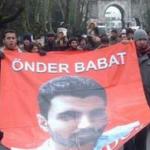
Turkey Sentenced by ECHR for Önder Babat Murder Case
ECHR Punishes Turkey in Conscientious Objection Case
ECHR: Turkey to Pay Nearly 14,000 Euro Compensation

“Prime Minister Should Apply Message of Tolerance at Home”

First Female Judge from Turkey in ECHR

Turkeys New ECHR Bill: 33,000 in a Week
The Verdict of ECHR and Turkey are Different
ECHR Considering Turkish Cases
Turkey Convicted of Censorship and Intervention against Demonstrators
ECHR Condemns Censorship and Punishments Under Emergency Law
UNSOLVED MURDER
Turkey Sentenced by ECHR for Önder Babat Murder Case
ECHR Punishes Turkey in Conscientious Objection Case
ECHR: Turkey to Pay Nearly 14,000 Euro Compensation
“Prime Minister Should Apply Message of Tolerance at Home”
First Female Judge from Turkey in ECHR
Turkeys New ECHR Bill: 33,000 in a Week
MAY 3 WORLD PRESS FREEDOM DAY
Journalism rights thrive on reader support!

BİA MEDIA MONITORING REPORT 2025
Those who want to silence journalists are now more brazen!

BİA MEDIA MONITORING OCTOBER-NOVEMBER-DECEMBER 2025
The future of journalism is in danger under government pressure!

BİA MEDIA MONITORING JULY-AUGUST-SEPTEMBER 2025
Prolonged detentions and judicial control tighten pressure on journalists
BİA MEDIA MONITORING APRIL-MAY-JUNE 2025
Unprecedented pressure on journalists under the government's watch