Headscarf Debate Diverts Attention from Kurdish Issue and Economic Crisis

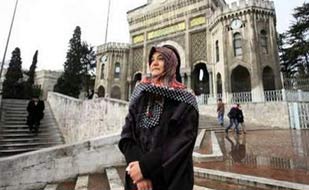



The ruling Justice and Development Party (AKP) and one of the opposition parties, the National Movement Party (MHP) join hands for a constitutional amendment as well as a change in the Higher Education Law (YÖK) in order to lift the present ban on wearing of headscarves at universities.
The draft bill moved by AKP and MHP proposes amendments to Articles 10 and 42 of the constitution, referring to the equality before the law and the right to education respectively, as well as Article 17 of YÖK law relating to attire.
Consequences would become clear soon
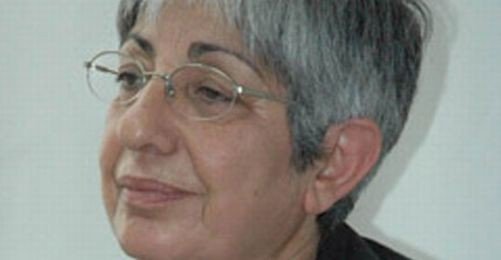
In a conversation with bianet, Prof. Dr. Nilüfer Narlı, head of the sociology department of Bahcesehir University in Istanbul, has evaluated the proposed constitutional amendment.
She believes that by initiating such legislative change the government has brought the issue to the fore. The change may, so Narli, relax the increasing polarisation in society; it would become clear very soon whether the worries of the laicist camp were real or not.
“We will see whether the freedom to wear a headscarf will be limited to universities. Graduates wearing headscarves will want to work, will want to enter the public sector. That is when we will see the result of this legislation.”
The academic is of the opinion that time will put to the test both those who have been labelled “enemies of freedom” for opposing the headscarf and those who are using the excuse of “victimhood” to do politics.
Headscarf debate a useful diversion?
According to Narli, the ruling AKP emerged strenghtened from the general elections on 22 July. The legislative changes which the party has suggested both in the constitution and the YÖK law will have two immediate results:
First, the public will be distracted from the Kurdish issue, which had gained in importance again with the military operations in Northern Iraq.
Second, attention will be diverted from the global economic crisis at Turkey’s doorstep. Despite the growth of the Turkish economy, poverty and unemployment have increased; according to Narli, this trend will become even more apparent.
For Narli the proposed change represents a compromise which the government has decided on in order to placate its base.
“Despite all the objections, a ‘First Lady’ wearing a headscarf entered Cankaya, the presidential residence. In its first term in government, the AKP avoided such issues, but after winning a second time, the AKP is taking steps.”
An increase in conservatism in Turkey
Narli spoke of an increase in conservatism in Turkey in the last 10 years, particularly in the last five. Research showed that this conservatism was being fed by a new kind of religiosity.
“Now the expression of religiosity has become important, as well as religious symbols. People want to show how religious they are.”
“Some people think that wearing a headscarf brings social status. This may not be true, but it is based on political perceptions. There are quite a few women wearing headscarves now who represent role models and inspiration for young girls.”
The fact that religious elements have been present in all areas of life, including education, for a long time, means that this perspective has become normalised: “Thus there will also be some radicalisation emerging.” (EÜ/AG)


Family Says "Cover", School Says "Take off the Headscarf"
We will not Give up Headscarf Struggle
Compulsory Religious Education is Hypocritical Violation of Rights
Headscarf Problem Caused by State Monopoly on Religion
General Shrugs Off Questions on Headscarf and “Egenekon” Gang
Anti-Headscarf Rally at Atatürk’s Mausoleum
Academics: We Need Freedom as Well as Laicism
President Gül Ratifies Headscarves at University

ECHR Rules for Turkish Headscarf Ban
Women Oppose Categorisation into Covered/Uncovered
Family Says "Cover", School Says "Take off the Headscarf"
We will not Give up Headscarf Struggle
Compulsory Religious Education is Hypocritical Violation of Rights
Headscarf Problem Caused by State Monopoly on Religion
General Shrugs Off Questions on Headscarf and “Egenekon” Gang
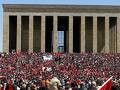
Anti-Headscarf Rally at Atatürk’s Mausoleum
Academics: We Need Freedom as Well as Laicism
President Gül Ratifies Headscarves at University
ECHR Rules for Turkish Headscarf Ban
Women Oppose Categorisation into Covered/Uncovered
SOCIAL GENDER EQUALITY
Women and Journalists Hand in Hand against Violence
EUROPEAN COMMISSION AGAINST RACISM AND INTOLERANCE
Discrimination and Racism in Turkey Fuel Concern
Unionists in Northern Cyprus Protest PM Erdoğan
Policeman who Beat Juvenile Claimed Self-Protection
HRANT DINK MURDER
Court fully Protects Istanbul Police