





Alleged Terror Crimes
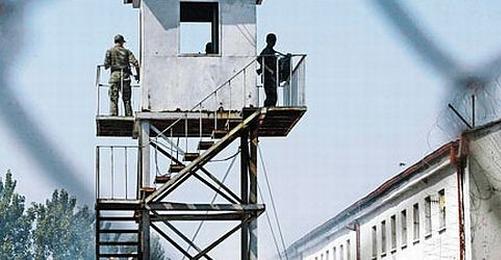
Judiciary Restricts Amendment on Period of Arrest
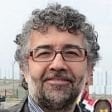


Lawyer Ercan Kaner talked to bianet about a legal amendment of the Criminal Procedure Law (CMK) that was enforced on Monday (3 January). According to the decision of the Court of Appeals 9th Chamber, the period of arrests for defendants on trial at High Criminal Courts has been limited to ten years, Kanar explained. In the course of the amendment of Article 102 of the CMK, four of Kanar's clients were released pending trial.
It was expected that also defendants having been detained for six years would be released according to the amendment, yet Kanar indicated, "Unfortunately, the Court of Appeals is calculating with ten years [as the upper limit]. The court decided to release 26 people. Four of them were my clients".
"Doğan, Yıldız, Can and Kurt will be released"
Kanar said that he had made a legal approach for the release of his clients on 30 December. Together with the supreme court's decision to be faxed to the prisons, the following defendants for terror crimes will be released: Şahap Doğan who has been incarcerated for 14.5 years in the scope of a trial regarding the armed outlawed Kurdistan Workers Party (PKK); Ercümnet Yıldız who has been arrested for 14 years and three months because of his alleged membership of the PKK; Fırat Can, detained for 13.5 years because of his supposed affiliation with a group that split from the Turkish Workers' Peasants' Liberation Army (TİKKO); and Muhabbet Kurt who has been detained for 12.5 years in the scope of a trial regarding the Marxist Leninist Communist Party (MLKP).
"The article can be interpreted very flexibly but he judiciary considers a very narrow margin"
Lawyer Kanar holds the view that the amendment of the CMK should also encompass defendants who have been detained for more than six years without conviction, as it is the case for six other clients of his.
"We made an approach for the defendants who have been incarcerated for six years as well but unfortunately, only ten years were taken into consideration. According to our interpretation, defendants with periods of arrest of six or even four years should be released. Unfortunately, the judiciary proceeds within a very narrow margin even though the article can be interpreted rather flexibly".
"Liberal interpretation would allow release after four years"
Kanar argued that a liberal interpretation of the amended article would mean the release of defendants also after four years of detention. As an example, the lawyer pointed to the case of journalist Füsun Erdoğan who has been incarcerated for four years in the scope of the MLKP trial, as well as journalist İbrahim Çiçek and other defendants who would be released "Let alone four years, they do not even accept six years", Kanar criticized.
Kanar emphasized that according to the upper limit of the period of detention set by the Court of Appeals at ten years, the following people remain in prison still: journalist Veli Özdemir, arrested for 7.5 years in the scope of the TİKKO trial; Figen Çağrı who has been behind bars for 6.5 years related to the MLKP trial; and director Murat Aktaş, incarcerated for 6.5 years on the grounds of his alleged membership of the Communist Labour Party of Turkey (TKEP) Leninist Organizaiton.
At the same time, it was announced that Taylan Kutlar was released after ten years in prison. He is being tried at the Istanbul 12th High Criminal Court as an alleged co-founder of the Turkey Communist Party/Marxist-Leninist (TKP/ML) organization. There are also defendants of the Hezbollah trial among the 26 defendants released until now.
CMK Article 102
Article 102 of the CMK is entitled "Period of detention on remand" and comprises the following provisions: (1) (Amendment clause 06/12/2006 - 5560 S.K.18.md) In cases which do not fall under the jurisdiction of the heavy criminal court, the maximum period of detention on remand is one year. However, where there are compelling reasons, such period may be extended for a period of six months by citing its justification.
(2) In cases which fall under the jurisdiction of the heavy criminal court, the maximum period of detention on remand is two years. Where there are compelling reasons, such period may be extended by citing its justification; however, the extended period in total cannot exceed three years.
(3) The decisions concerning the extension periods foreseen in this article shall be given after consulting the views of the public prosecutor, the accused or the suspect and the defence lawyer. (EÖ/VK)


A graduate of the French Language and Literature Department at İstanbul University. He has served as the Turkey representative for the international organization Reporters Without Borders (RSF), where he began as a reporter in 1996. Since 1999, he has worked at bianet, a project of the IPS Communication Foundation, as the coordinator of the Legal Support Desk, editor for freedom of expression, and editor-in-chief. He has authored more than 4,800 signed news articles and opinion pieces. He has also written for Bizim Gazete and the journal Güncel Hukuk. He currently prepares the Media Monitoring Reports at bianet.

CRIMINAL PROCEDURE LAW
Lawyers Criticize Judiciary's Approach on Period of Arrest
Chief Editor of Women Magazine Detained since March!
MLKP trial
Radio Journalist Erdogan in Detention for Third Year
Journalist Balbay not Released – Internet Publishes "His Notes"

CRIMINAL PROCEDURE LAW
Lawyers Criticize Judiciary's Approach on Period of Arrest
Chief Editor of Women Magazine Detained since March!
MLKP trial
Radio Journalist Erdogan in Detention for Third Year
Journalist Balbay not Released – Internet Publishes "His Notes"
MAY 3 WORLD PRESS FREEDOM DAY
Journalism rights thrive on reader support!
BİA MEDIA MONITORING REPORT 2025
Those who want to silence journalists are now more brazen!
BİA MEDIA MONITORING OCTOBER-NOVEMBER-DECEMBER 2025
The future of journalism is in danger under government pressure!
BİA MEDIA MONITORING JULY-AUGUST-SEPTEMBER 2025
Prolonged detentions and judicial control tighten pressure on journalists
BİA MEDIA MONITORING APRIL-MAY-JUNE 2025
Unprecedented pressure on journalists under the government's watch