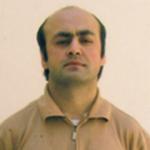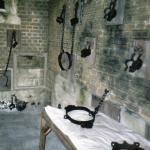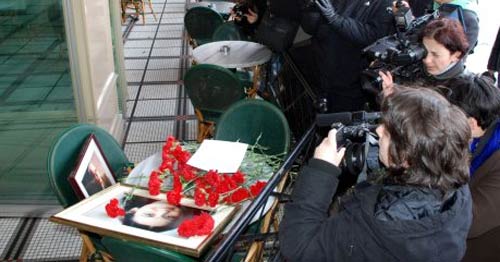




A total of 60 public servants were tried in the case of Engin Çeber, who died from torture experienced in the Şehit Muhittin Bodur police station and in Metris Prison (Istanbul). Four defendants received aggravated life sentences which were mitigated to life sentences.
Prison guards Nihat Kızılkaya, Selahattin Apaydın and Sami Ergazi and Metris Prison vice director Fuat Karaosmanoğlu were charged with "causing death by torture".
Three police officers received a prison sentence of seven years and six months each; one police officer was handed down a sentence of two years and six months imprisonment.
Defence speeches
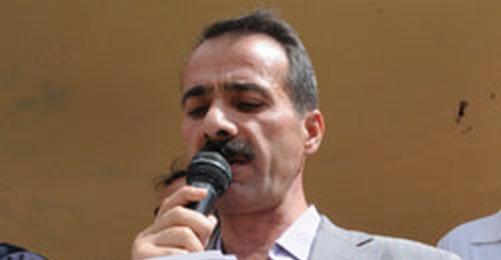
The hearing on 1 June at the 14th High Criminal Court of Bakırköy (Istanbul) was attended by detained defendants Murat Çise, Nihat Kızılkaya, Sami Ergazi, Fuat Karaosmanoğlu, Selahattin Apaydın and Yavuz Uzun besides a number of un-detained defendants. All defendants requested their acquittal.
Karaosmanoğlu's lawyer Efkan Günaydınoğlu claimed that detained defendants Şükrü Zeren and Gıyasettin Şakiroğlu gave false evidence on the incident. He stated that it was impossible for Zeren and Şakıroğlu to see Karaosmanoğlu when he told Çeber "That is what happens to those who do not get up for the count" while he was apparently swinging his prayer beads around his fingers. "These statements are a defamation", the lawyer said.
Lawyer Günaydınoğlu claimed that the incident had been constructed. "The core point is that my client had not been informed by the prison personnel that Çeber had been beaten. The prison is actually very big and the incident had not been communicated to my client. Thus, he cannot be held responsible. In fact, my client fulfilled his responsibilities more than necessary".
Hüseyin Inan Izmiroğlu, lawyer of un-detained defendant Yılmaz Aydoğdu, argued that Aydoğdu signed his first statement out of fear and that he altered it later because of reasons of conscience. "The court has to fulfil a historic duty today. If Yılmaz [Aydoğdu] will be sentenced, the torturers will go scott-free. My client fulfilled his responsibility of informing, even if it was after Çeber's death. Once the psychological pressure on him was lifted, he told the truth", lawyer İzmiroğlu argued.
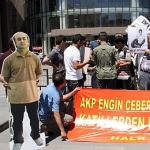
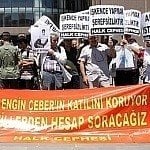
A group of the People's Front that gathered in front of the court posted banners reading "Punishment for the ones who beat Ferhat and killed Engin" and shouted slogans like "Engin Çeber is immortal".
Detailed descriptions of torture
Ceber was arrested together with Aysu Baykal, Cihan Gün and Özgür Karakaya after he had issued a press release protesting that the shooting of left-wing human rights activist Ferhat Gerçek by the police, which resulted in his paralysis, has not been investigated or punished by the authorities.He was sent to a prison in Istanbul, where he was severely beaten. After complaining to his lawyer, he was sent to a hospital, where he fell into a coma, dying of brain hemorrhage on 10 October 2008. Gün and Karakaya had made detailed decriptions of the toture imopsed at the Şehit Muhsin Bodur police station and in Metris Prison.
After the Forensic Medicine report proved evidence for torture, Turkey's Minister of Justice Mehmet Ali Sahin admitted the torture and apologized.
Footage had been published showing police officers kicking Çeber and his friends while they were sitting on the floor with handcuffs. (BT/TK/VK)