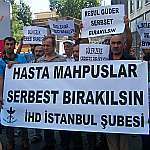




The Human Rights Association (IHD) issued its annual report on rights violations in Turkish prisons in 2009.
According to the report, 24 people died in prison throughout 2009. Eleven of them died of severe illness, for instance. Three people allegedly committed suicide, four men supposedly died in fights. Another four prisoners were "found dead" in their cells.
2,640 applications for violations
In 2009, the association received 2,640 applications from prisoners all over Turkey regarding the violations of rights.
The majority of applications was based on disciplinary punishments and bans of opinions with 586 registered incidents and 554 cases of violating the right to health and withholding medical treatment. 397 people applied due to torture and mal-treatment. 236 prisoners reported violations stemming from nutrition, heating and physical conditions. 173 applications were concerned with the prohibition to speak Kurdish and violations related to communication.
107 people became subject to bans of letters and books (201 documents in total). 162 cases of violations related to circular no. 45 were registered. Violations of implementations including rejected request for exile and transportation (to hospitals or other prisons) were reported by 105 people. 98 applications were filed for violations regarding body searches and preventing visits. The remaining 128 applications were made for miscellaneous reasons such as exams, courses, not being taken to court etc.
2,800 children in prison
IHD emphasized that the very high number of prisoners in general constitutes a violation of rights in itself.
By the end of 2009, 119,000 people were imprisoned, compared to a total of 103,235 people in the previous year. With 58,331 people, less than half of all inmates have actually been convicted. 60,598 are kept in detention.
2,544 children are detained in prison, 245 children serve prison sentences.
IHD: Forensic Medical Institute is part of the problem
49 inmates are critically ill. IHD issued the following proposals to solve the problem:
"The unlawful implementations of the Forensic Medical Institute are the most important reason that critically ill inmates are not being released from prison".
"The authority regarding critically ill prisoners held by the Forensic Medical Institute should be transferred to the Presidency of the universities' Forensic Medical Departments and to the Education and Research Hospitals belonging to the Ministry of Health. This would be an important contribution to the solution of the problem".
"Moreover, in case the President uses his legally binding authority to pardon, the requirement of a report from the Forensic Medical Institute should be lifted". (TK/VK)