









Court Accedes 56 More Suspects to Ergenekon Case



An Istanbul court accepted a second indictment in the Ergenekon case today; 56 more suspects are accused of conspiring against the government. The first hearing of the case will be held on July 20. Until then, interrogations of the suspects will be completed. The court is expected to decide to annex this indictment to the ongoing case or to proceed with a separate case in the first hearing. 19 of the suspects are under arrest as of now. The court rejected requests of release for those suspects.
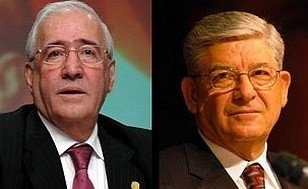
In the 1909 page-long indictment, retired generals Hurşit Tolon and Şener Eruygur are accused of leading the alleged organization and planning a coup. Public prosecutor's office demanded a thousand and 47 years of prison sentences as well as life imprisonment on 14 incidents for the two generals.
The indictment involves two coup plans dubbed as "Yakamoz" and "Eldiven". Former navy commander Özden Örnek's alleged diaries, which contain coup plans in 2003 and 2004 are quoted in the indictment. Despite allegations of involvement in those plans, Örnek and other army commanders Aytaç Yalman and İbrahim Fırtına aren't among the suspects.
Furthermore, journalist Mustafa Balbay's alleged diaries are also featured in the indictment. Already under arrest, Balbay denied any involvement in coup plans and claimed that his "notes" were distorted in the press. Published "notes" reveal conversations on coup plans between Balbay and several army commanders.
More over, accordingto a confession by Alaatin Kanat, Turkish Armenian journalist Hrant Dink's murder in 2007 was initiated by former general Veli Küçük and the illegal gendarmerie intelligence unit, JİTEM.
Another allegation involves the Ergenekon organization's efforts to influence the main opposition Republican People's Party (CHP) and the far-right Nationalist Movement Party (MHP). The organization supposedly tried to seize the leadership of those parties.
Full list of the accused are as follows:
Levent Temiz, Hakan Şanlı, Adnan Türkkan, Süleyman Solmaz, Hatice Bahtiyar, Emcet Olcaytu, Adil Serdar Saçan, Hamza Demir, Fatma Sibel Yüksek, Erol Mütercimler, Mahir Akkar, Mesut Özcan, Sinan Aydın Aygün, Mustafa Ali Balbay, Emin Şirin, Osman Gürbüz, Ufuk Mehmet Büyükçelebi, Ercüment Ovalı, Muhammed Murat Avar, Ahmet Tuncay Özkan, Birol Başaran, Adnan Bulut, Selim Utku Gümrükçü, Ertaç Giray, Mehmet Ali Çelebi, Merdan Yanardağ, İlker Güven, Siyami Yalçın, Halis Yavuz Işıklar, Kemal Aydın, Murat Ağırel, Tunç Akkoç, Arif Doğan, Gürbüz Çapan, Neriman Aydın, Hasan Atilla Uğur, Barbaros Hayrettin Altıntaş, Ahmet Hurşit Tolon, Mehmet Şener Eruygur, Durmuş Ali Özoğlu, İbrahim Özcan, Levent Ersöz, Turhan Çömez, Doğukan Yorulmaz, Muzaffer Öztürk, Tanju Güvendiren, Eren Mumcu, Hasan Hüseyin Uçar, Noyan Çalıkuşu, Yaşar Tozkoparan, Evrim Baykara, Önder Koç, Hüseyin Nazlıkul, Yüksel Dilsiz, Hüseyin Keskin, Ferda Paksüt.(TK/AGÜ)
Supreme Court of Appeal Annuls Ergenekon Decision
Ergenekon Reveals “Connections with PKK and Marxist-Leninists”

Former JITEM Commander Temizöz in Custody
"Public Support for a Coup Was Created"

Second Indictment in Ergenekon Case Ready

Ergenekon: New Arrests

Supreme Court of Appeal Annuls Ergenekon Decision
Ergenekon Reveals “Connections with PKK and Marxist-Leninists”
Former JITEM Commander Temizöz in Custody
"Public Support for a Coup Was Created"
Second Indictment in Ergenekon Case Ready
Ergenekon: New Arrests