8 MARCH 100th INTERNATIONAL WOMEN'S DAY
Equality Report: Once More a Confession of Failure for Turkey




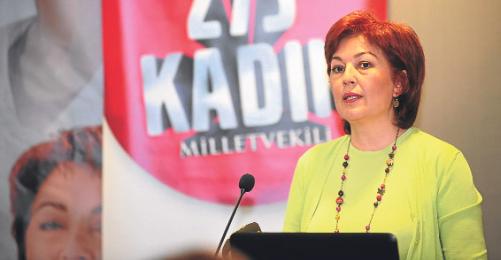
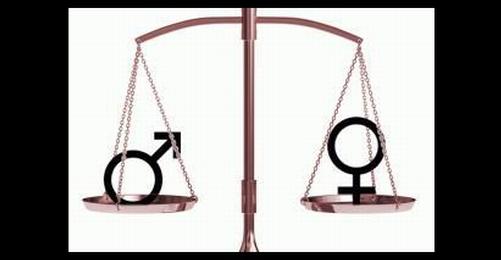
The Association for Support and Education for Women Candidates (KA.DER) issued the third "Report on the Representation of Gender Equality in Turkey" since 2008. Once more, Turkey gained zero credits:
- After the General Elections in 2007, the percentage of women represented in the Turkish Grand National Assembly (TBMM) amounts to 8.85 percent;
- Subsequent to the General Elections in 2009, 0.90 percent of all mayors are female;
- There are no women at all represented in 40 out of a total of 81 provincial councils, there is only one single female member each in the remaining 25 provincial councils;
- There is not one female governor in 81 provinces;
- There is no female member in the Court of Appeals and the Court of Auditors, there is only one women in the State Council;
- Considering the parties represented in the TBMM, 100 percent of the ruling Justice and Development Party (AKP) and the Nationalist Movement Party (MHP) provincial chairs are male. Peace and Democracy Party (BDP) has three, Republican People's Party (CHP) two female provincial chairs;
- There are no women represented on the boards of the Confederation of Progressive Trade Unions (DİSK), the Hak Workers Trade Union Confederation (Hak-İş), the Turkish Confederation of Labour Unions (Türk-İş), the Public Workers Unions Confederation of Turkey (Kamu-Sen), the Civil Servant Unions Confederation (Memur-Sen) and the Civil Servants Rights Unions Confederation (Hak-Sen);
- There is no female undersecretary;
- There is no woman on the boards of the Association of Independent Industrialists and Businessmen (MÜSİAD), the Turkish Union of Chambers and Commodity Exchanges (TOBB), the Turkish Union of Chambers of Agriculture (TZOB) and the Turkish Trade and Crafts Confederation (TESK);
Effective representation of women for improvement of democratization
In the perspective of the general elections in two years time the latest, KA.DER pushes a number of claims in order to provide an effective representation of women in the Turkish National Assembly, to improve democratization and to apply a separation of powers:
- Amendments of the Political Parties law and the Election Law should be made in the Constitution. This way, an equal gender representation should be achieved by legal and constitutional compulsion. The woman quota should amount to at least 40 percent.
- The application of equal gender representation and the referring quota should become prevalent in all areas including legislation, executive, judicial organs, public institutions, public institutions related to professional organizations, trade unions, political parties and takings of public and private workers.
- The Constitution should consider the demands of the more than 200 women's organizations and numerous individual activists, lawyers, academics and experts who are members of the Constitutional Women's Platform.
- The election threshold should be decreased from 10 percent to 5 percent in order to provide fairness of gender representation.
- The Ministry for Women and Family should ensure efficient measures regarding the prevention of violence against women, education and equality in economic and political life instead of "protecting conservative family values". (BB/VK)


GENDER EQUALITY
Lots of Room to Improve for Turkey...
Women Protest PM Erdoğan in Women's Meeting
Women Converge on Turkey's Capital for Women Rights

Women Demand Equal IDs for Turkish Men and Women

Turkey Gains "0" Points on Gender Equality - Again
More than 50 Percent of Women Work off the Record
No Gender Equality in Education Yet
EUROPEAN FEMINIST MEETING
Feminists from 22 Countries Meet in Istanbul
"What We Need is a Women Ministry"
A Woman's Right and Obligation to Carry her Husband's Name

GENDER EQUALITY
Lots of Room to Improve for Turkey...
Women Protest PM Erdoğan in Women's Meeting
Women Converge on Turkey's Capital for Women Rights
Women Demand Equal IDs for Turkish Men and Women
Turkey Gains "0" Points on Gender Equality - Again
More than 50 Percent of Women Work off the Record
No Gender Equality in Education Yet
EUROPEAN FEMINIST MEETING
Feminists from 22 Countries Meet in Istanbul
"What We Need is a Women Ministry"
A Woman's Right and Obligation to Carry her Husband's Name