





“Voters Want Pluralist Government”





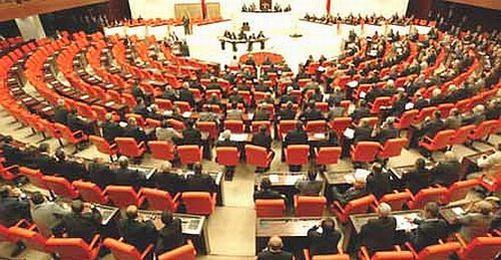
“Voters in Turkey have reacted to the one-party system of the Justice and Development Party (AKP).”
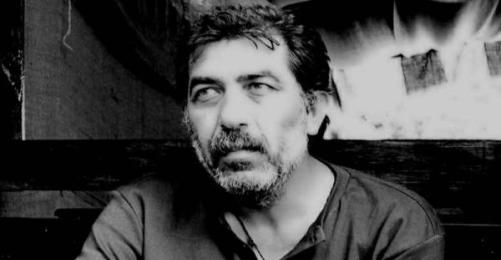
Speaking to bianet, Narlı argued that voters wanted to see a “more pluralist picture”.
The academic added that despite the active involvement of women at the party base, they were not represented in offices. Only two women have won mayoral office in province capitals in these elections, which is an increase of one. “Women organised the election campaigns, and men have sat down in the seats,” she said.
AKP's votes went to others
In the votes for province municipalities, the AKP received 38.79 percent, the Republican People’s Party (CHP) 23.13 percent, the Nationalist Movement Party (MHP) 16.05 percent, the Democratic Society Party (DTP) 5.67 percent, and the Felicity Party (SP) 5.16 percent.
Unlike the other parties, the AKP lost votes in the elections. Narlı explained why votes went from the AKP to other parties:
CHP: The party has increased its votes in the provinces on the Marmara Sea, Aegean and Mediterranean coasts. When we look at the life style in these provinces, it is not religiously conservative, but secular. By voting for the CHP in these elections, people living on the coast said, “We are worried about our life style being threatened by you.”
Discussions on “peer pressure” to cover up in the context of allowing head scarves at university and the ban on alcohol consumption in some areas has created this reaction. We can also see this as a reaction of people who have been living in the large cities for two to three generations and who are defending their way of life.
DTP: The increase of votes for the party in the southeast is due to the fact that the Kurdish identiy has become a nearly existentialist importance. The voters have said, “We want the DTP to be taken seriously.” On the other hand, the fact that the AKP did not lose so many votes in the area, could be interpreted as partial satisfaction with the party’s initiatives in the area.
MHP: We can say that the votes for the MHP have increased as a reaction to Kurdish nationalism. Although there have been serious increases for the party in some provinces, their share has generally gone up by 2 or 3 points in most of Turkey. From that we can infer that voters do not want extreme politics.
SP: This party has benefited most from the votes lost by the AKP. The party’s success is largely due to the party chair Numan Kurtuluş and Greater Istanbul Municipality’s mayoral candidate Mehmet Bekaroğlu. Both of them sent out unthreatening, humanist messages. This was even evident from their body language. On the other hand, they also used the claim against the AKP that they were the party supporting “real Islamic values.” They used discourses on taking care of the poor and working towards a fairer distribution of incomes with the slogan “We are with the oppressed, we oppose injustice.” They thus increased their votes.
Male-dominated parties leave no room for women
Professor Narlı pointed out that many women
were active in pre-election campaigns, and that their efforts had an effect on
the results.
“In all political parties, women mobilised in order to protect the values they
supported. However, when we see that only two women were voted as mayors of
province capitals, we realise that this is a policy determined by men: Women
should work at the base, but they should not be part of the decision-making
process. Women have either stopped demanding this anyway, or they have not
wanted to take active positions because they have not been able to stand being
excluded from the male-dominated policies.” (BÇ/AG)


"Consent to AKP Has Cracked"

That Makes Two: Only One New Female Province Capital Mayor

Six Armenians in Istanbul’s Municipal Councils

Türk: AKP Did Not Solve Kurdish Question, Kurds Took Votes Elsewhere
CHP Demands Recount in 5 Istanbul Districts

400 Thousand Disabled Denied the Right to Vote

ERTUGRUL KURKCU's analysis
Electorate Buries Erdoğan's Arrogance at Polls

The Municipalities Erdoğan “Definitely” Wanted…

Local Election Results:
AKP Loses Points, CHP, MHP and DTP gain

"Consent to AKP Has Cracked"
That Makes Two: Only One New Female Province Capital Mayor
Six Armenians in Istanbul’s Municipal Councils
Türk: AKP Did Not Solve Kurdish Question, Kurds Took Votes Elsewhere
CHP Demands Recount in 5 Istanbul Districts
400 Thousand Disabled Denied the Right to Vote
ERTUGRUL KURKCU's analysis
Electorate Buries Erdoğan's Arrogance at Polls
The Municipalities Erdoğan “Definitely” Wanted…
Local Election Results:
AKP Loses Points, CHP, MHP and DTP gain