Women’s Platform against Sexual Violence Formed




One of the topics discussed at the panel “Local Elections and the Feminist Struggle”, organised by the Feminist Collective, was sexual harrassment and rape.
 Esen
Özdemir of the Women’s Platform against Sexual Violence said that the platform
had grown out of women who had been raped contacting the Armagi Feminist
Collective.
Esen
Özdemir of the Women’s Platform against Sexual Violence said that the platform
had grown out of women who had been raped contacting the Armagi Feminist
Collective.
Rape crisis centres and emergency counselling
The platform aims to raise awareness about harrassment and rape, create deterrents and put an end to victimisation. This would be done, so Özdemir, by organising meetings, working in neighbourhoods and with the media.
“We are thinking of increasing our demands for rape crisis centres and emergency counselling phone lines. We are examining examples in Europe to see how this can be made possible.”
Sexual violence takes different forms
Speaking on policies in local authorities to reduce sexual violence, Özdemir said:
“There could be a special focus on the muhtars, the neighbourhood officials. Women live in neighbourhoods, and they can reach the muhtars. Like all other local problems, sexual violence also manifests itself in different ways. There are differences in what has to be done in Van (a province in the east of Turkey) as opposed to Trabzon (a province on the Black Sea in the north of Turkey) in terms of sexual violence. Ever since the border gates were opened (and prostitution increased), incest cases went down in Trabzon. In Kars (in the east of Turkey) there is a tradition of ‘kidnapping a girl from outside of her school’, then raping her and forcing her into marriage. The violence that the transsexuals of Beyoğlu, Istanbul, are exposed to is different from the incest cases in the populations forced into migration.”
However, despite those differences, so Özdemir, a general women’s policy must be at the least to accept harrassment and rape are male problems.
She said that the campaign would combine local and national levels, working with neighbourhoods, and NGOs, but also taking their demands to parliament.
Courts too lenient on perpetrators
At 11 am today (18 March), the platform will meet at Garajistanbul to launch the campaign.
Özdemir finally said, “Although there are serious punishments for sexual violence crimes in the new Turkish Penal Code, the suspects who harrass and rape us are still able to use the excuse of ‘unfair provocation’. Instead of questioning the rapists, the women who have been raped are questioned in court. Perpetrators are always being given reduced sentences, which further legitimises sexual violence.” (EZÖ/AG)
Photo by Funda Ekin.


Incest in Turkey
Incest: The Most Invisible Abuse

New Journal: “Feminist Politics”

“Sexual Violence In Detention”

“Rape News Are Used As Pornographic News”

When The Topic Is Rape, Media Makes A woman Out Of A Child

Turkeys Feminist Magazine Goes Online
Domestic Violence Starts with Forced Relation
Incest in Turkey
Incest: The Most Invisible Abuse
New Journal: “Feminist Politics”
“Sexual Violence In Detention”
“Rape News Are Used As Pornographic News”
When The Topic Is Rape, Media Makes A woman Out Of A Child
Turkeys Feminist Magazine Goes Online
Domestic Violence Starts with Forced Relation
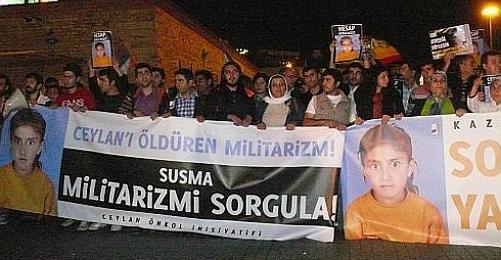
Politician and NGOs Urge for Clarification of Önkol's Death
EU PROGRESS REPORT
Women's Rights Must be Implemented in Daily Life

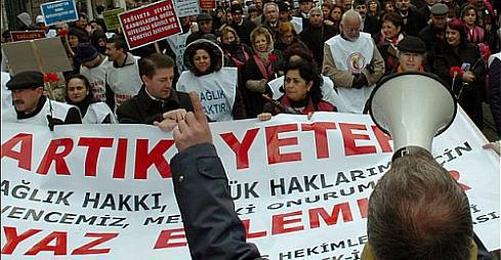
Protests against Health Care Contribution Rate
Greens Launch Trial for Palovit Valley

"When Will Mohsen Abdolkhani and Hamid Karimnia Be Released?"