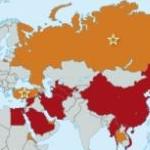



Reporters Without Borders (RSF) released their 2012 annual report on countries that are "Enemies of the Internet" and "under surveillance". The report marked the World Day against Cypercencorship on 12 March.
"In April 2011, the BTK forwarded to web-hosting companies and Internet service providersa list of 138 keywords to be banned from Turkish domain names as part of the fight against pornography. Already laughable because it included words like "skirt" (etek), "sister-in-law" (baldiz) and "animals" (hayvan), this list posed serious Internet information access problems. (...) When the media began covering this issue, the BTK stated that the list had been cited within the context of an internal communication urging state bodies responsible for suppressing online content to be on the alert. For now, it would appear that no further action has been taken regarding this list." RSF announced.
Internet filtering system
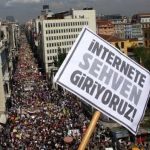
"The new centralized filtering system "for the safe use of the Internet" launched by Turkey's Information Technologies and Communications Authority (BTK) on November 22, has also raised strong reactions both in the country and abroad. (...) Controversy over the 5651 Law has abated. Its main focus has been optional filtering and a list of banned keywords. Its introduction, initially planned for August 22, 2011, was postponed three months so it could be submitted to public consultation".
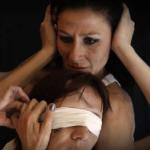
"The most impressive online initiatives were the website'Hands Off My Internet", which made Internet users aware of the risks associated with the filtering system and the Senin Yüzünden ("Because of You") site, which invited netizens to post photos of blindfolded people".
"Restricting freedoms"
"On November 4, a complaint was filed with the Turkish State Council to request the elimination of the system, which, although optional, remains a threat to freedom. Tests conducted by Reporters Without Borders have shown that certain websites were abusively blocked, such as those of evolutionist Richard Dawkins (richarddawkins.net) and of Yasam Radyo ("Radio Life," which broadcasts cultural programs on minorities). The "child" option does not provide access to Youtube or Facebook, and these social networks are only accessible under the "family" option if the user requests it. The filtering solution is inappropriate and a threat to online freedom of expression as the European Union Court of Justice recently affirmed, since it increases overblocking risks. The decision as to what is, or is not, "objectionable" must be left to families, not to the State".
Number of access bans doubled
"As of February 10, 2012, the website engelliweb.com had tallied 15,596 sites suspended by the authorities, either by court order, or by decision of Turkey's Information Technologies and Communications Authority (BTK) - a number double what it was last year (...). Most of these are betting, pornographic, or pedophile content websites".
"Kurdish question" a taboo
"Some 15 supposedly pro-Kurd news websites were banned by court order in 2011, including Firat News (new URL: www.firatnews.ws), gundem-online.net and welat.org. Among the topics considered taboo and therefore censored are Atatürk and the minorities' (notably Kurd) issue. The filtering of the Blogger platform was lifted on March 14, 2011 after two weeks of blocking and strong mobilizations both on and offline". (AS)
Source: RSF.
Click here to read the full press release of the RSF.