










According to a decision by the Higher Education Council (YÖK), students wearing a headscarf may no longer be sent out of class. Faculty members who oppose the new regulation will face disciplinary procedures. This decision came upon the complaint of a student who wears a headscarf herself.
The circular was sent to the Istanbul University (IÜ) and initiated a new implementation regarding the controversial headscarf ban at Turkish universities. YÖK decided to lift the ban on 23 July upon the complaint of Zeynep Nur Incekara, student at the Cerrahpaşa Medical School.
The headscarf ban was imposed as one of the results of the military operation on 28 February 1997 which led to the stepping down of the coalition government led by Necmettin Erbakan of the Welfare Party. The Turkish Military Leadership issued the 1997 military memorandum which comprised a number of legal amendments such as the headscarf ban for university students and women working in the public sector.
Student Incekara had attended courses with a wig for two years. However, in 2009, she wanted to enter classes with a hat. She was ordered out of class because she supposedly opposed the university's dress code. She applied to the Prime Ministry Human Rights Directorate because she saw her right to education restricted.
The Prime Ministry Human Rights Directorate officially asked the YÖK Directorate for their opinion. YÖK decided the matter as follows:
"A disciplinary offence by the faculty member is constituted by sanctions which are not based on laws and regulations, such as not admitting a student to the lesson, ordering a student out of class or registering a present student as absent".
The YÖK decision sent to the Istanbul University in a circular was forwarded to all staff members.
Tahtacı: A positive decision
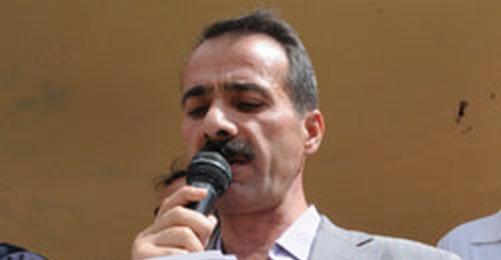
Çetin Tahtacı, Kocaeli Branch President of the Association of Human Rights and Solidarity for Oppressed Peoples (MAZLUMDER), appreciated the decision. MAZLUMDER has been campaigning for "Freedom for the headscarf" for more than five years.
"This is a positive decision. The teaching staff can keep a record. Yet, it is not clear yet what will come out of the records. Every university has different applications. We need a standard decision relevant for all universities", Tahtacı said in an interview with bianet.
YÖK President Yusuf Ziya Özcan said on Tuesday (5 October) that the circular could be sent to other universities as well and emphasized that it was "concerned with a student wearing a hat".
"In line with the laws"
The political parties are racing to gain their laurels on the headscarf topic, Tahtacı argued.
She continued, "This issue cannot be resolved because the politicians got hold of it. Headscarves at universities cannot be banned by a decision of the constitutional court but by the law. Thus, there is no actual prohibition. And it does not oppose the law".
Yeşildere: "The decision opposes the legal system"
IÜ Prof. Tahsin Yeşildere, President of the University Academic Staff Association, talked to bianet about the circular from YÖK. In his opinion, "the circular can be assessed as a breach of the current legal system".
Yeşildere criticized, "This situation damages the relationship between teachers and students. Which lecturer could take a record against a student and forward it to the dean at this stage?"
Yeşildere is expecting an announcement on how to proceed with the records. "Actually, keeping a record is not a solution either, but at least the lecturers can proceed accordingly".
Yeşildere calls on the politicians to resolve the issue. "Right now the politicians are involved into the discussion about who can solve this problem best. If they cannot solve the problem they will play the ball back to YÖK. YÖK publishes a circular and the Prime Minister backs off. Why did YÖK send such a circular, was it perhaps upon a directive? The problems at universities are covered up by the headscarf problem". (SP/BT/VK)
* This news is partly based on Milliyet newspaper and the news channels NTV and CNN Türk.